Patients didn’t need motivation. They needed clarity.
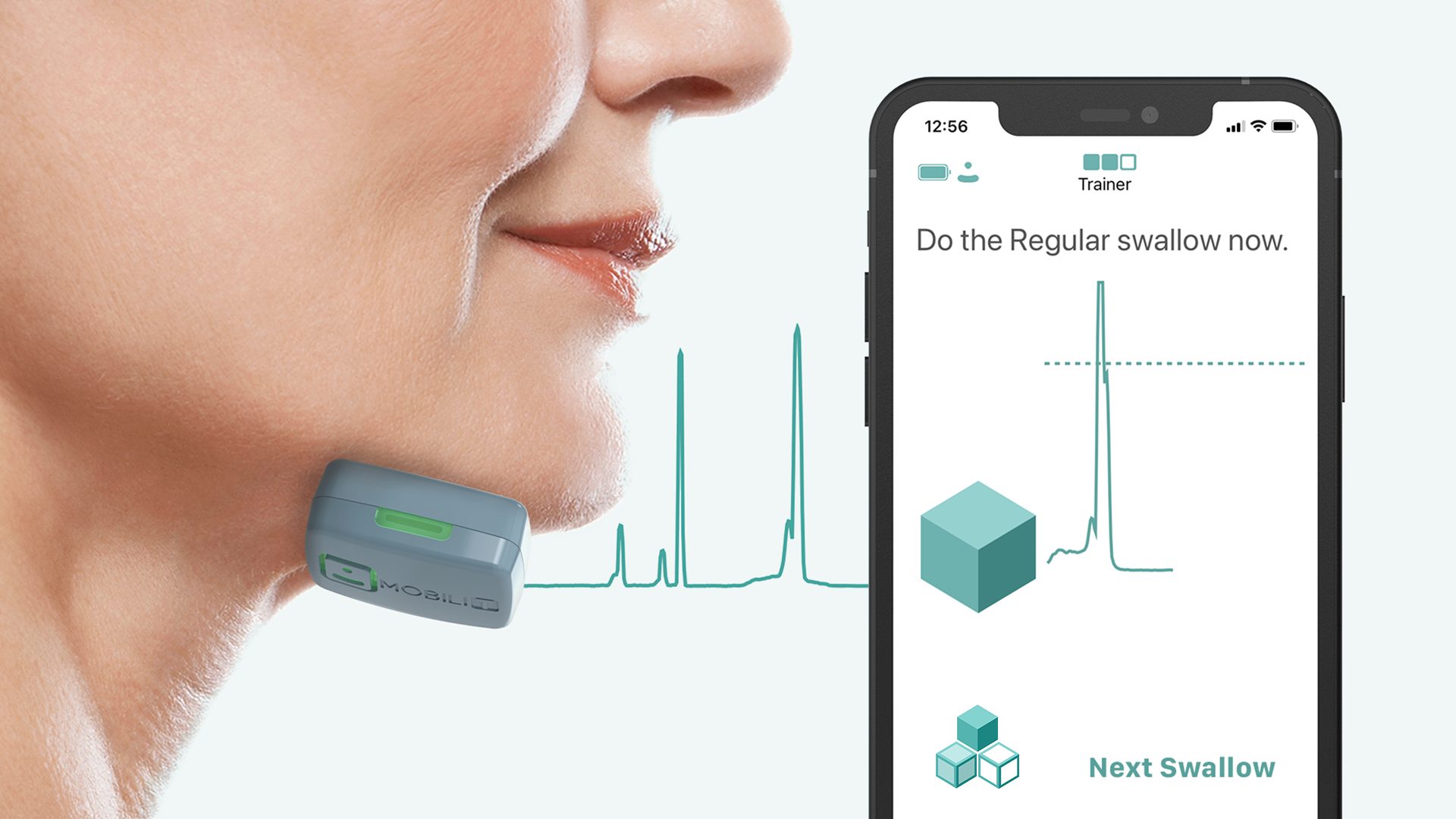
Mobili-T brings swallowing therapy for people with head and neck cancer out of the clinic and into daily life, through a wearable sensor, a patient app and a clinician portal.
- Role
- Product design lead, research to clinical deployment
- Adoption
- 50+ healthcare organizations
- Funding and IP
- Helped raise $4M+, 3 patents
- Recognition
- Core77 Design Awards, NACO Startup of the Year
Therapy that breaks down at home
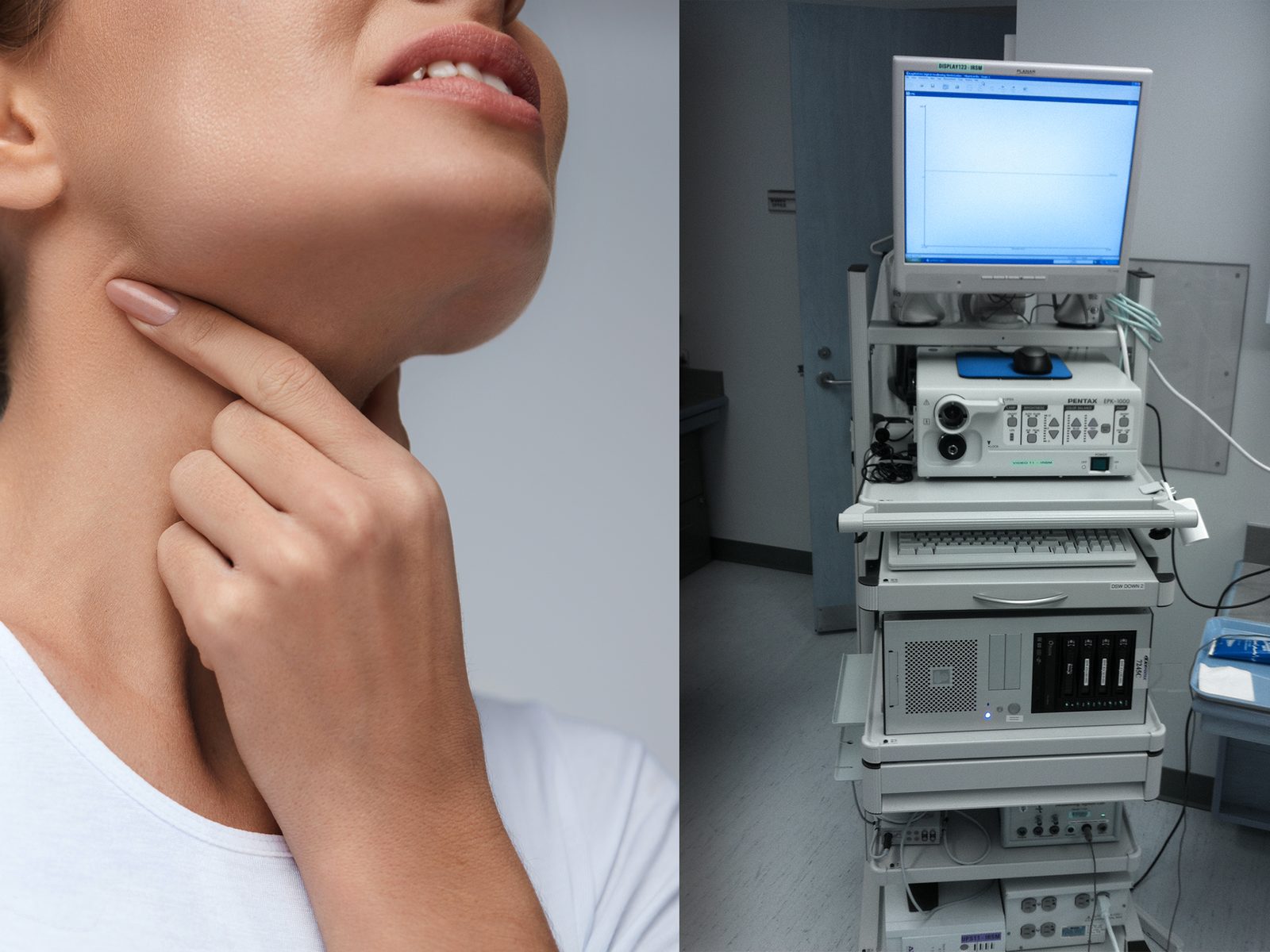
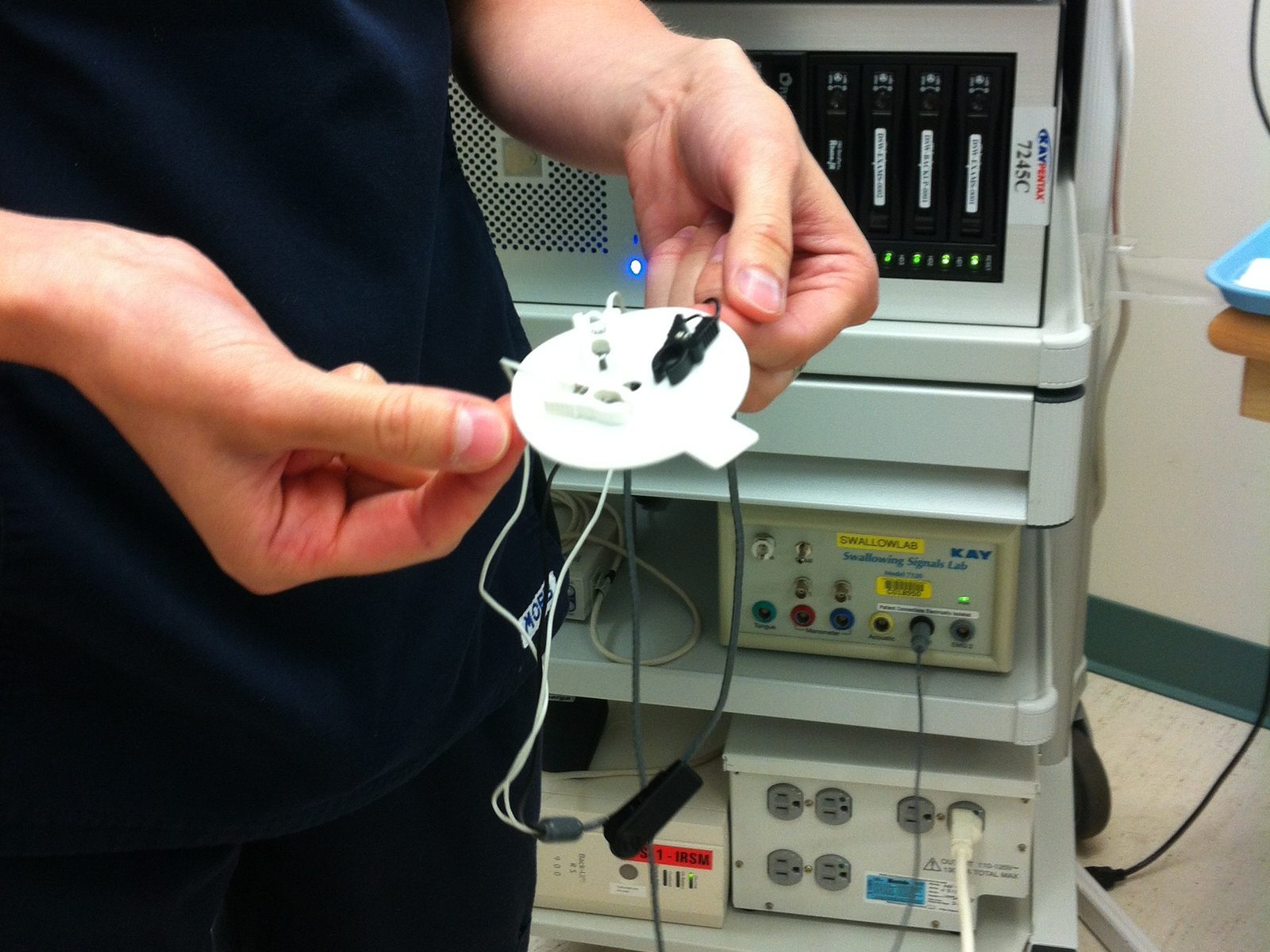
Swallowing therapy rebuilds the muscles people need to eat, drink and speak. Clinic biofeedback needs bulky equipment and a clinician in the room, so at home, patients practised without feedback and clinicians only saw progress at the next visit.
Listening first
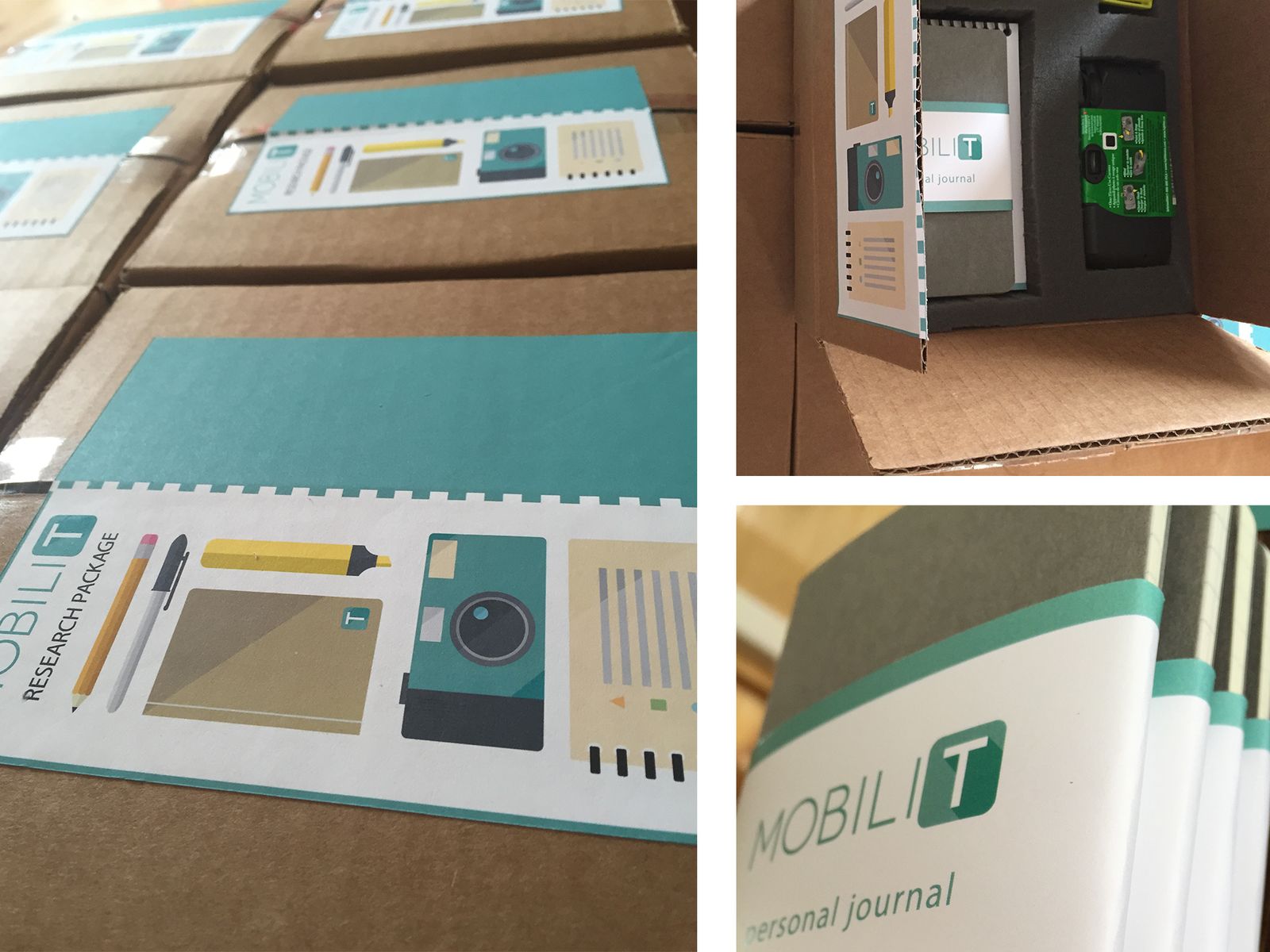
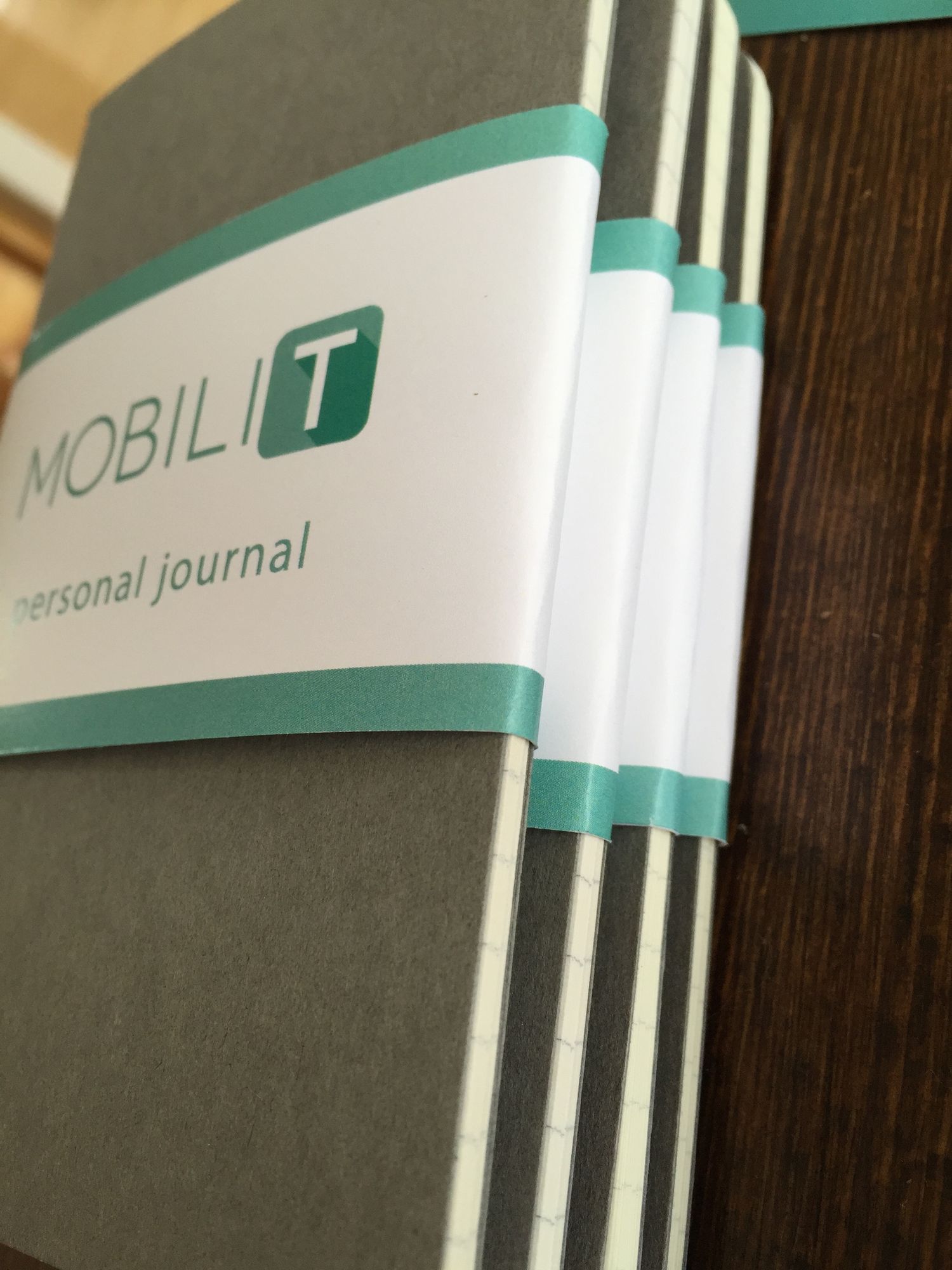
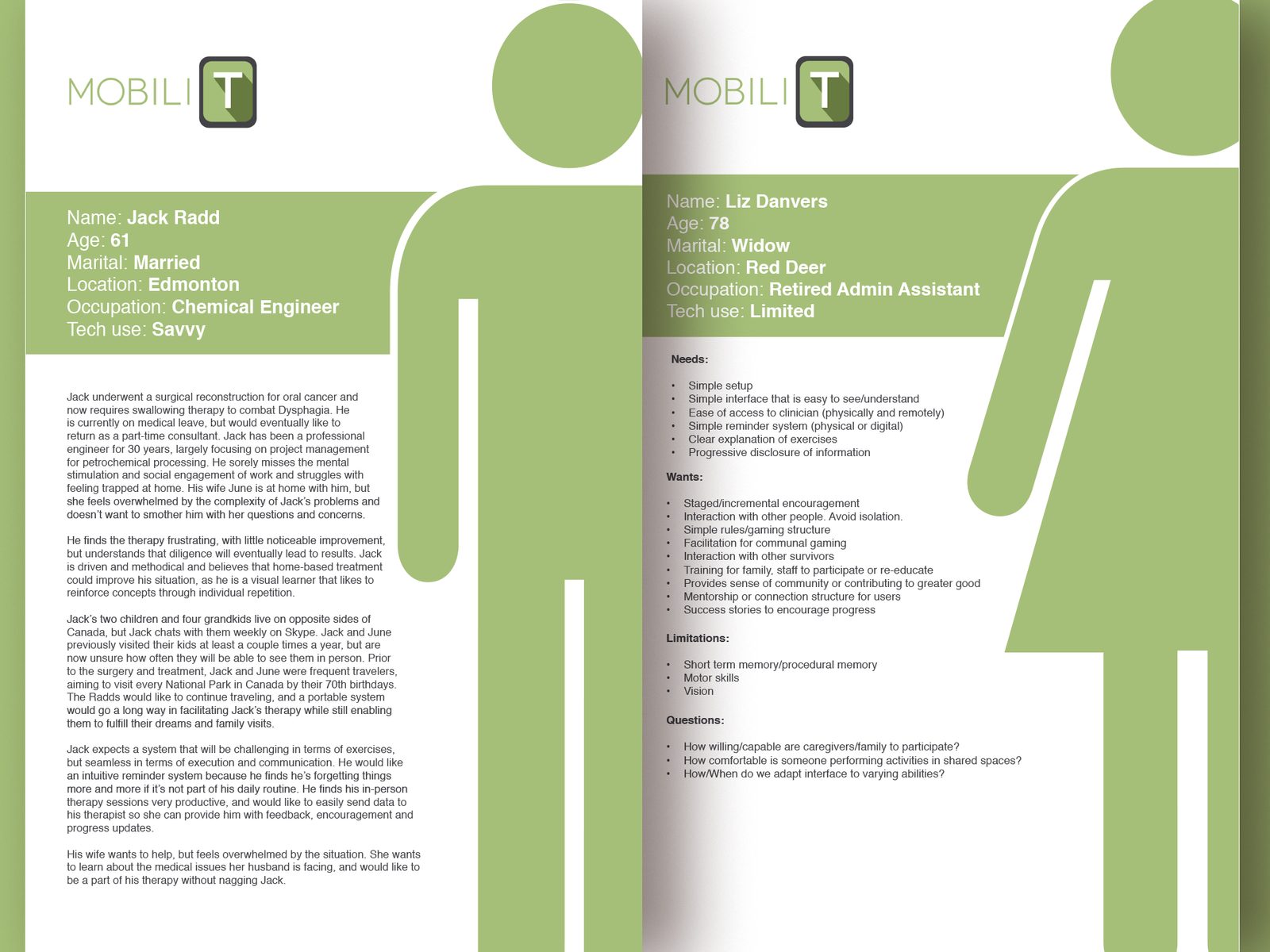
For many head and neck cancer patients, even a sip of water can mean fear and distress. With Gabriela Constantinescu, Molly McMahon and Chris Brodt, I made cultural probe kits so patients too fatigued for interviews could share their days on their own terms.
The key decision
Remove gamification
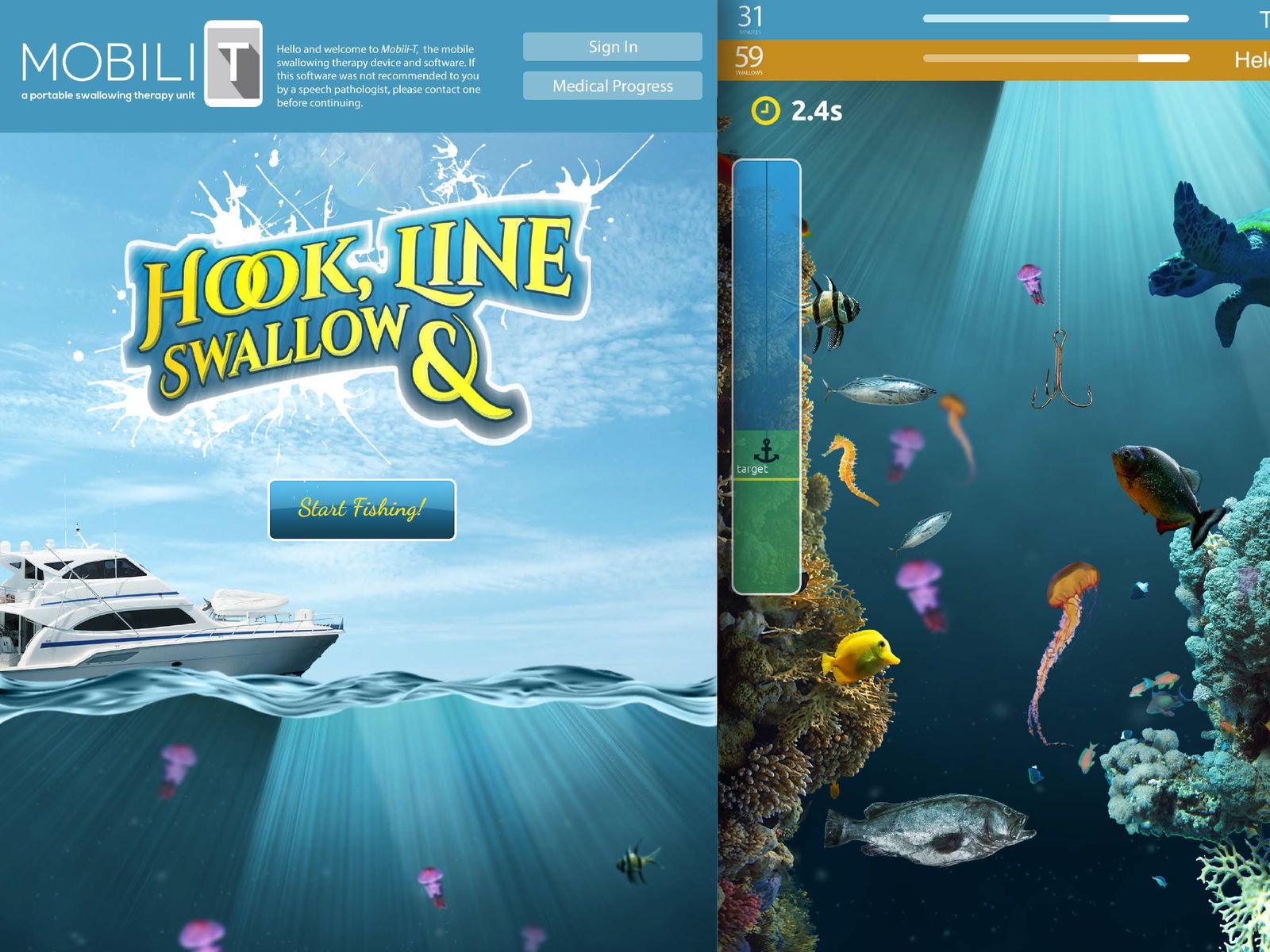
An external studio pitched a fishing game. Testing showed fishing felt unrelated, and its water associations brought up fears of choking. Other game concepts made failure feel punitive and raised anxiety. From cultural probes and interviews we learned that patients needed three things: what to do, whether they did it right, and how close they were.
Honest feedback
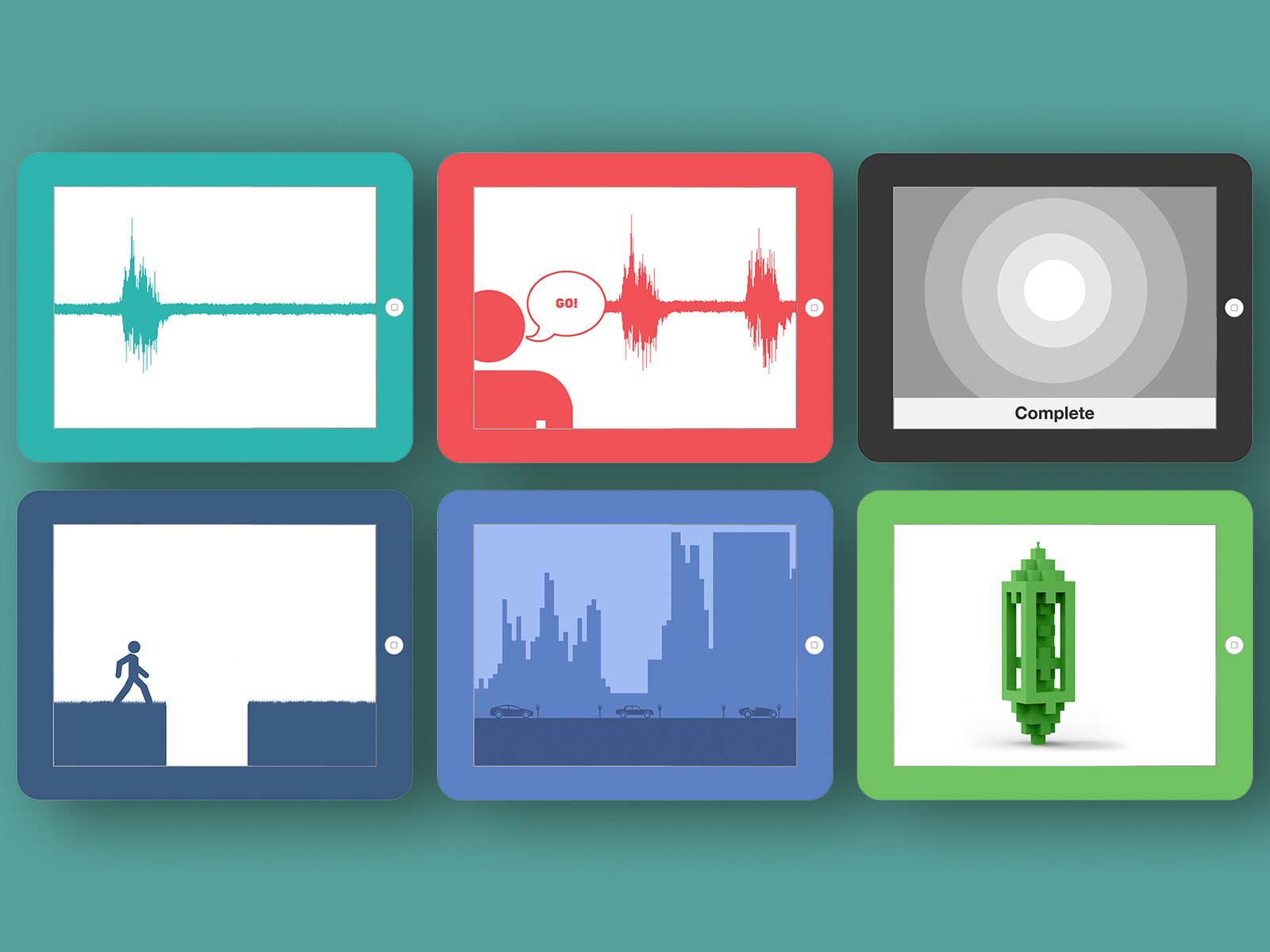
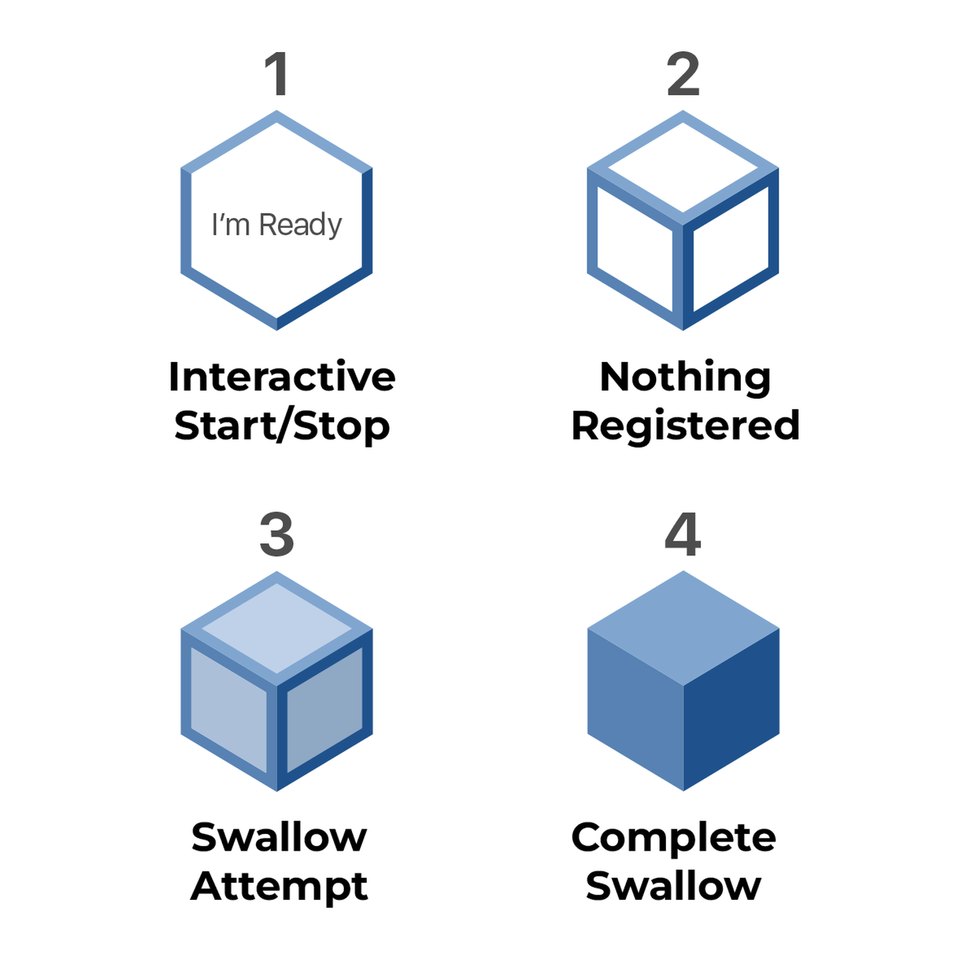
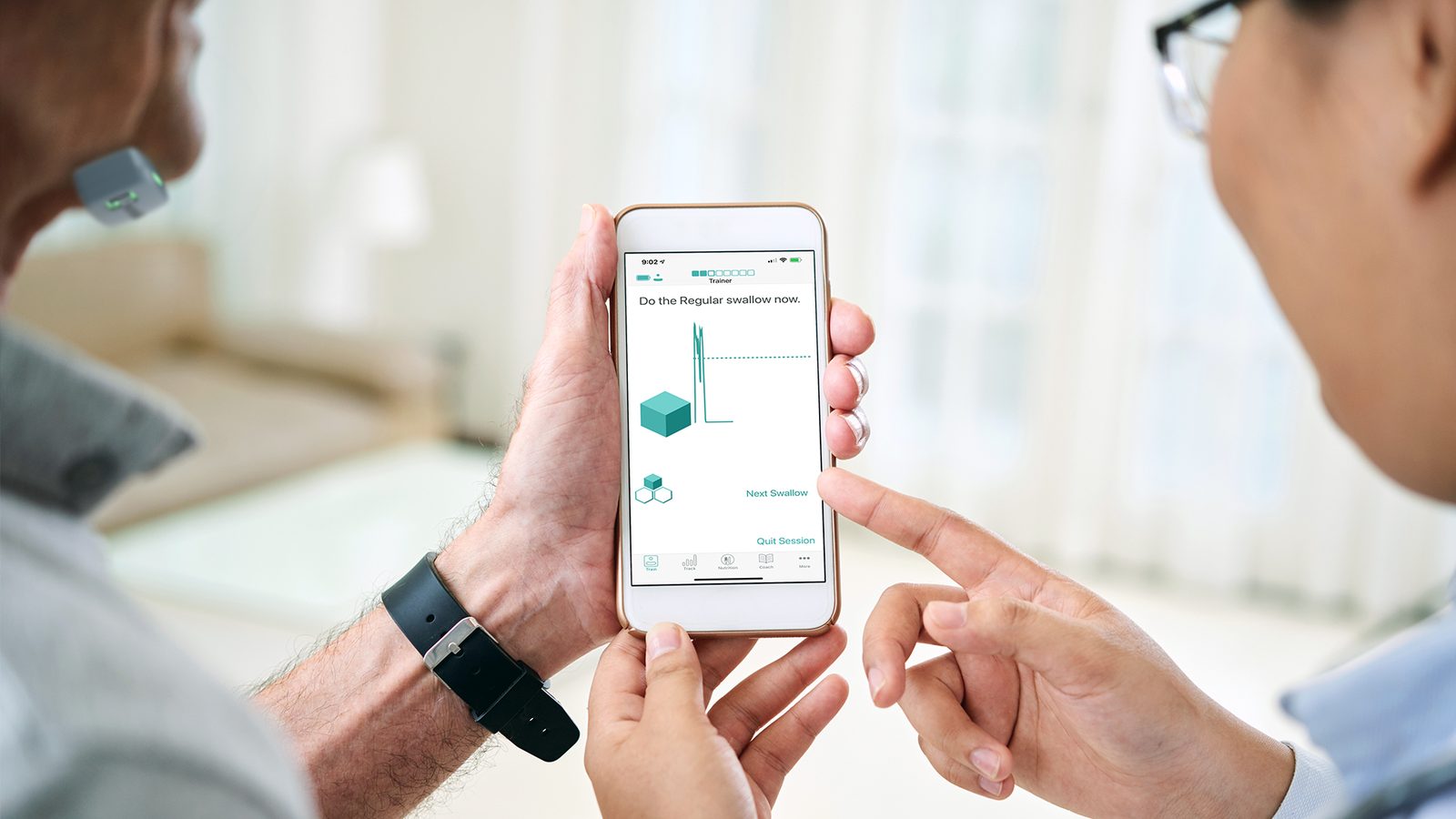
I designed a visual system that uses live biofeedback from the patient’s muscles to set a calibration goal. Every swallow is measured against the goal and shown as a cube: colour is the exercise, fill is the result. Performance and progress are tracked transparently. No fishing metaphors required.


How hard was today?
After each session, patients rate how difficult it felt on a seven-level scale informed by clinicians. Clinicians saw this simple self-reflection as clinically relevant because it kept updates flowing between patient and clinician, so changes to the therapy workouts were driven by the patient’s own rating rather than dictated by the clinician. I rebuilt the original slider so the Cyclops reacts as you drag. Try it.
One language for patients and clinicians
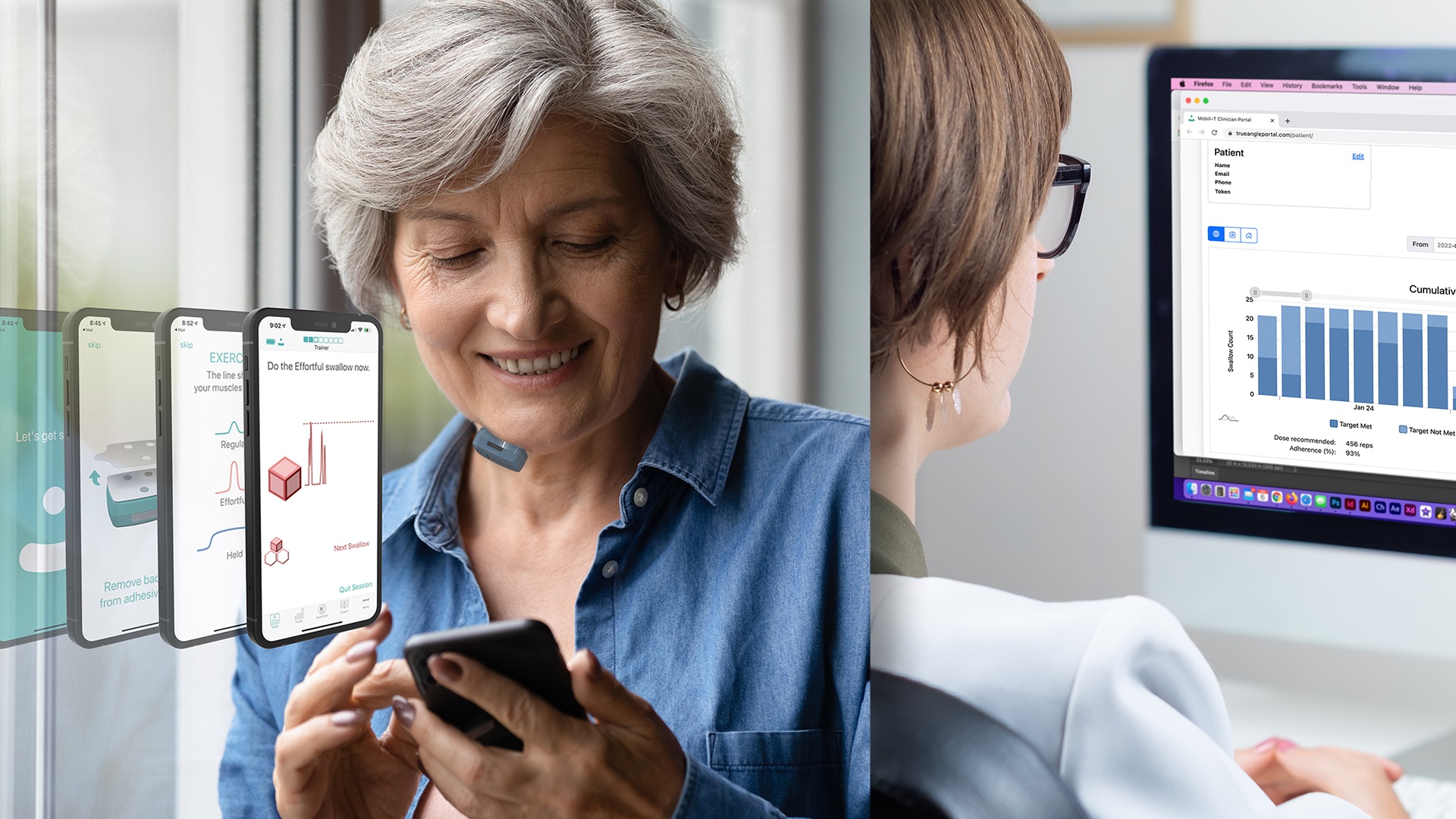
The cube system carries into a real-time clinician portal, so both sides read progress the same way, and plan changes reach patients remotely.
The clinician view, rebuilt
The original clinician portal is no longer available, so I rebuilt it with sample data. Interviews and testing with clinicians revealed a need to see key metrics quickly, and scan for trends across adherence and exercise types before in-person or virtual consults.
Feel free to change dates, switch between exercises, or open the table.
Core: biofeedback in the clinic
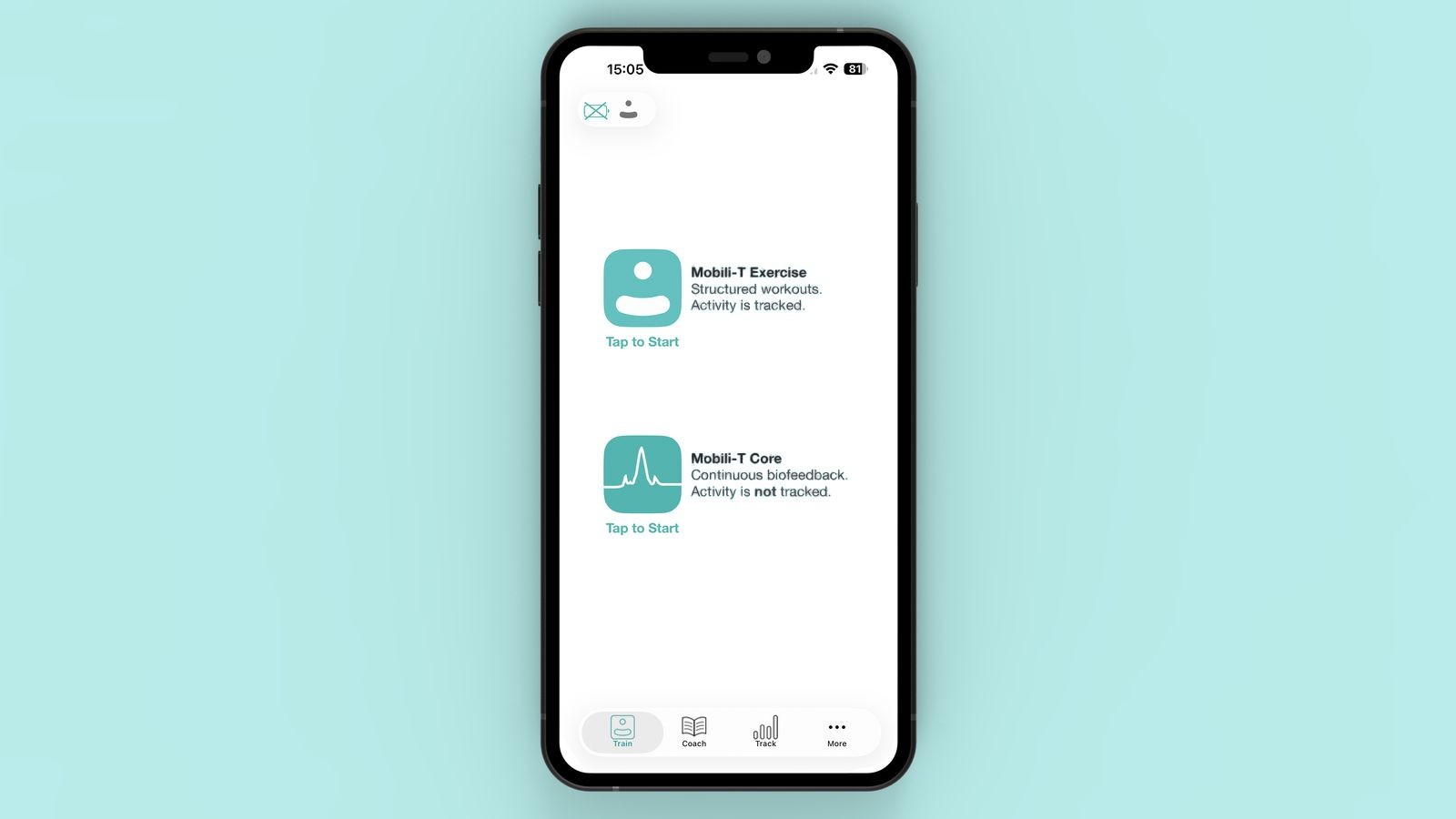
Clinician interviews and usability tests led to Core, a free-form live biofeedback mode for in-clinic sessions. No tracking. Just live biofeedback for assessment.

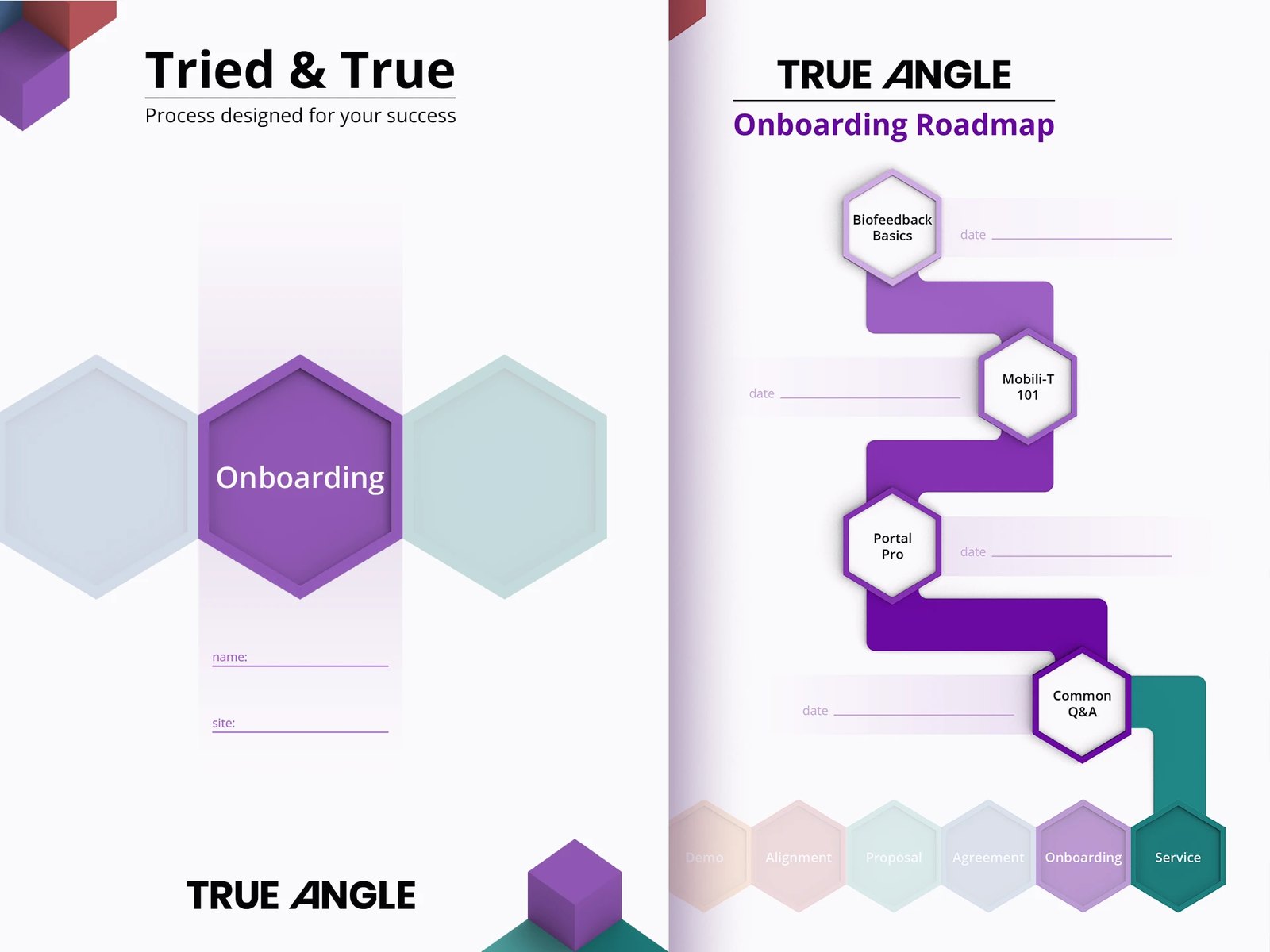
Onboarding is product
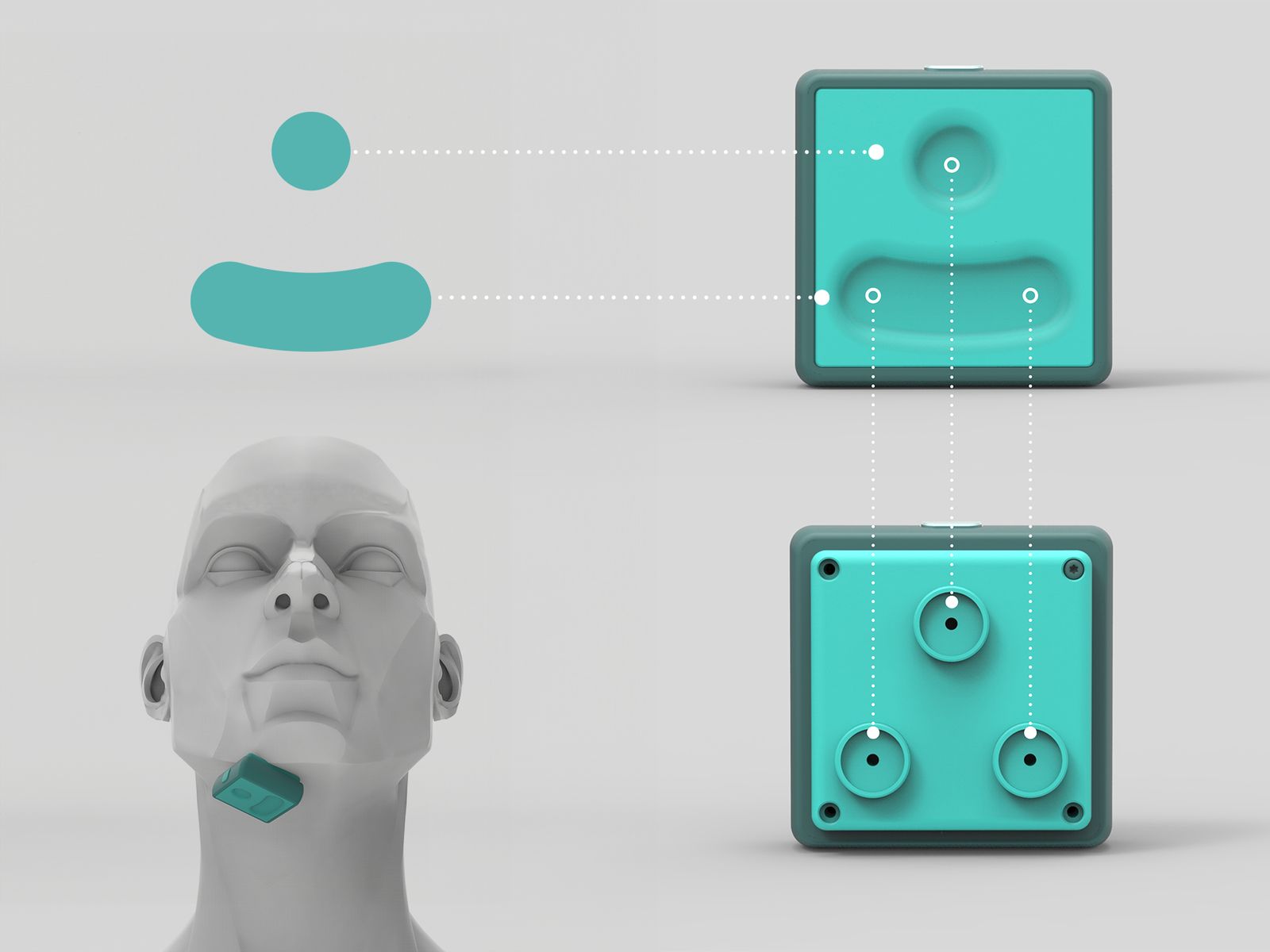
Care teams got training and clear setup protocols. Patients got simpler body visuals, plainer language and The Cyclops, a friendly mark whose eye and smile show where the electrodes sit.
How I led
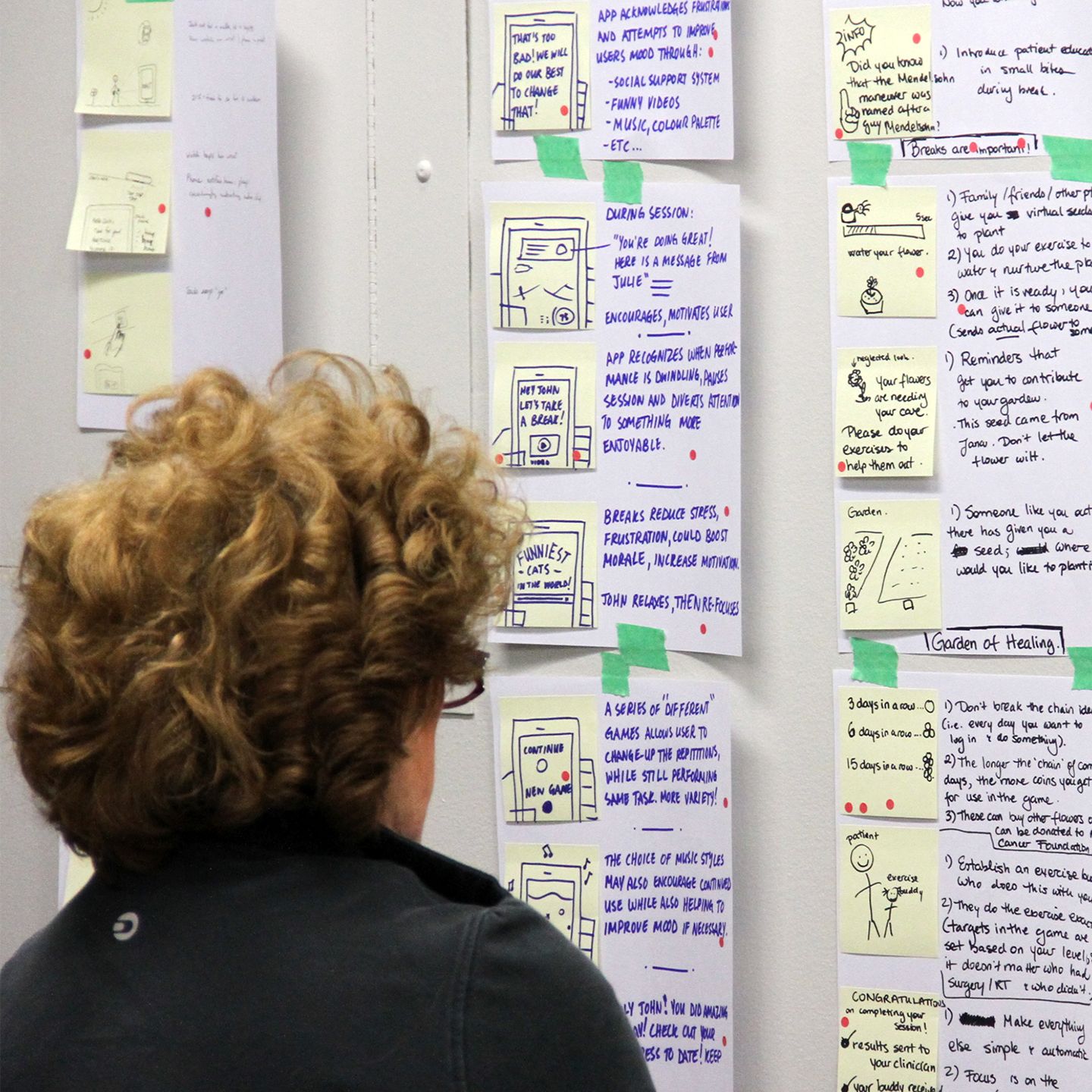
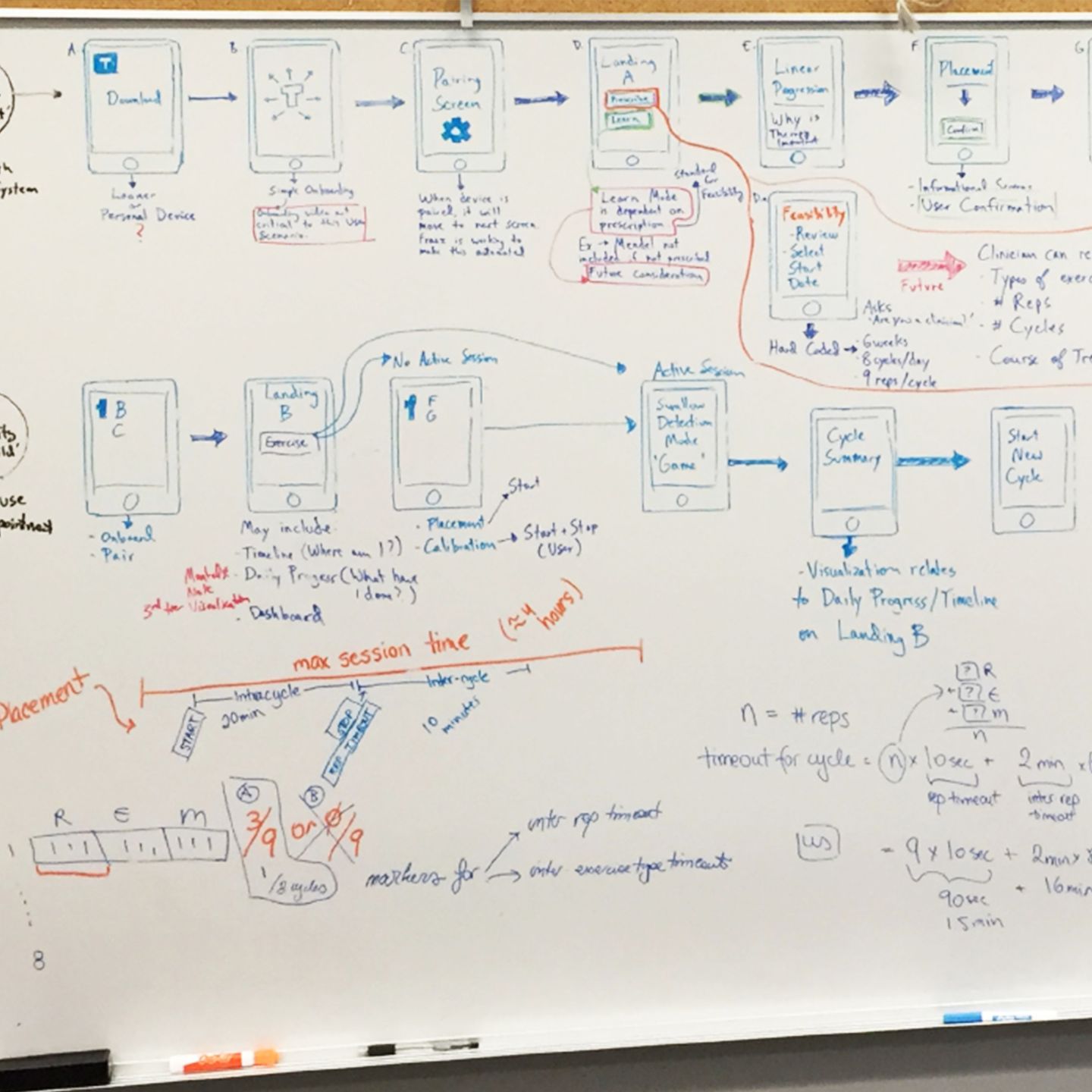
I owned design direction end to end: strategy and experience principles, research turned into shared references, clinician testing, the brand and regulatory instructions, and co-authoring the published research.
Outcome
Adopted by 50+ healthcare organizations, including Stanford, Harvard, Cleveland Clinic and UCLA Health, with therapy for thousands of patients at home and in clinic.
“I was able to take Mobili-T to my office and do my exercises while sitting at my desk. It’s amazing.”
Looking back
Mobili-T reached 50+ healthcare organizations, but the biggest lessons came from what slowed us down. Here is what I would change, and what I now do by default.
- 01
Lived experience first
Early external concepts, like the fishing game, weren’t grounded in patients’ lived experience. Now I bring real users in before any design work starts, so the first concept is informed by them.
- 02
Test who buys
We invested heavily in a direct-to-consumer experience before validating who would actually pay for it. I now test the business model as hard as the product, relying on business model canvases to frame high-level communication.
- 03
Watch therapy happen
We treated the clinical gold standard as the product. More time observing how therapy really happens, at home and in clinic, would have surfaced the gaps sooner.
- 04
Align early
I would bring leadership, product, sales, marketing and engineering together much earlier around who we serve and why they’ll buy, so design and go-to-market pull in the same direction.
What I’d keep doing: building confidence
Some of the most valuable work wasn’t on a screen. One clinician was worried about how they explained onboarding to patients. Instead of handing over a script, we ran mock sessions with the team, which let us prototype the experience, spot where understanding broke down and quickly try changes to the verbal and visual delivery.
Being a sounding board and offering critique for every customer and clinician was a responsibility I enjoyed. It’s a skill I keep sharpening as an educator, helping young designers build their communication and their confidence.
With today’s AI tools
Most of these lessons come down to learning faster, before craft gets expensive. Today I would put interactive concepts in front of patients, clinicians and our own teams within days. That means testing core ideas, like a feedback metaphor or a buying model, while they are still cheap to drop. A concept that misses patients’ needs, wants or physical limitations gets cut after a few days of testing instead of after weeks of polish. The same prototypes give leadership, sales and engineering something real to react to, so alignment forms around evidence rather than opinion. The interactive demos on this page were rebuilt this way.
The judgment stays human. What feels safe to someone who is afraid to swallow is something you learn by sitting with them.