Calm isn’t instructed. It’s felt.
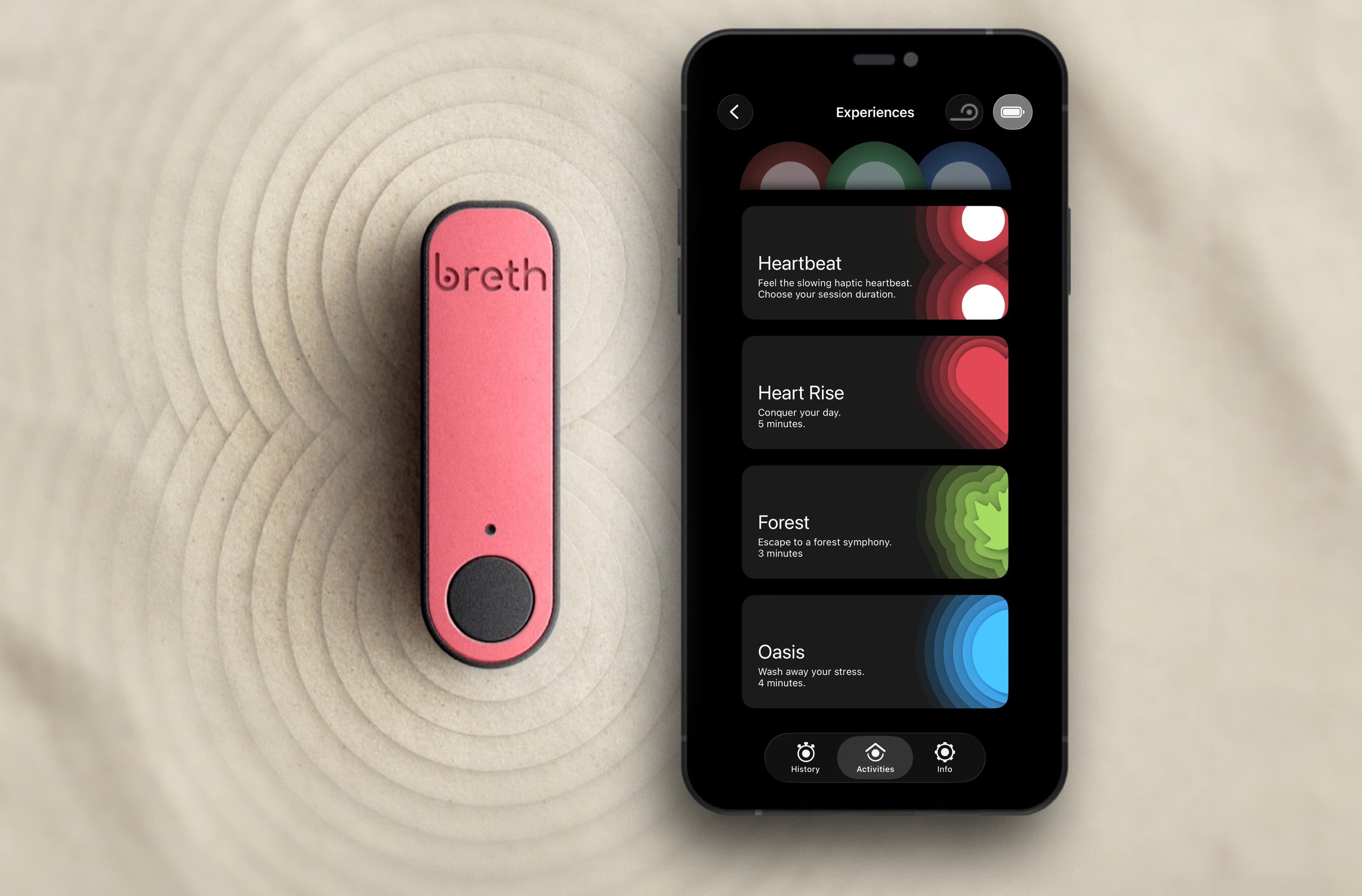
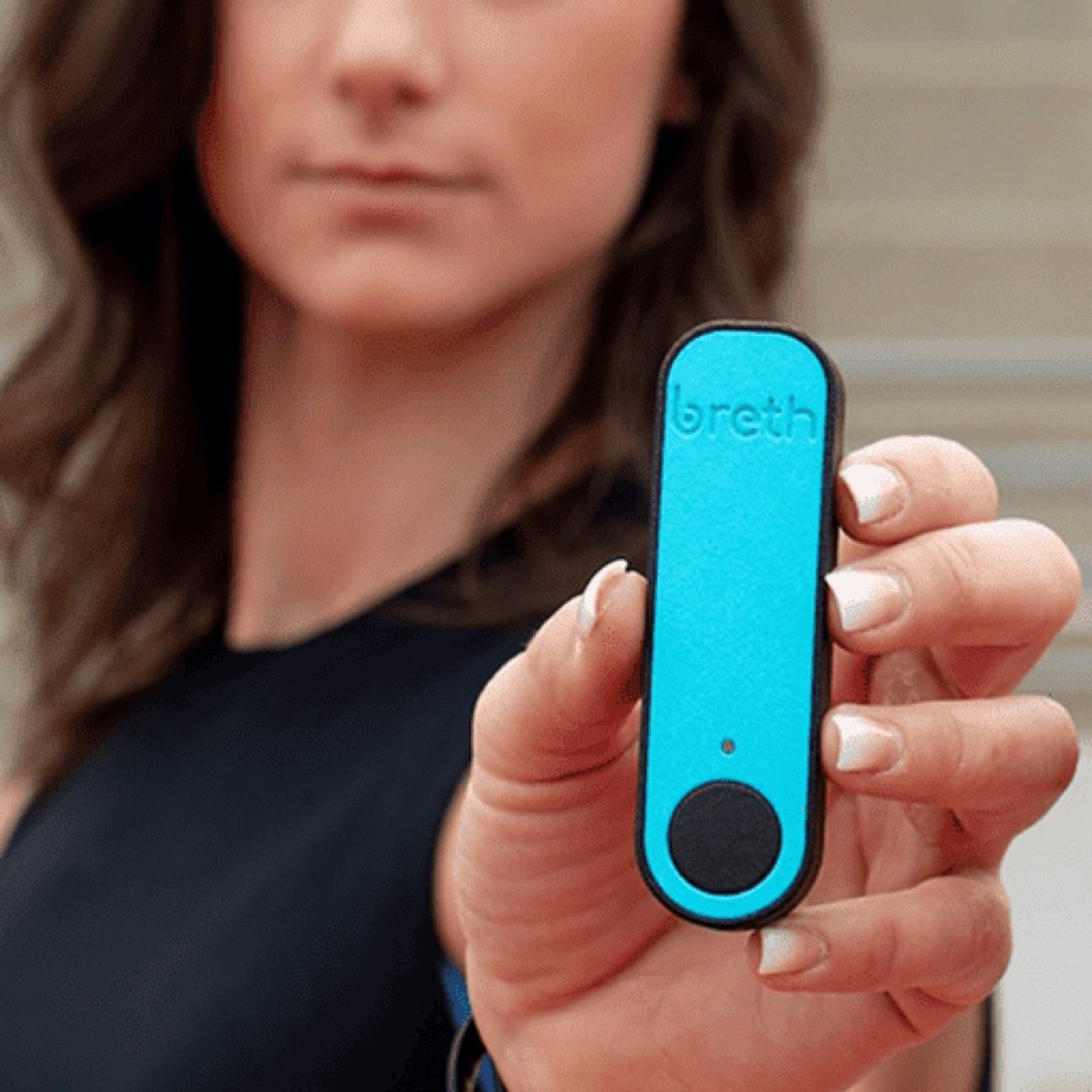
A wearable and app that guides breathing through synchronized haptics, audio and visuals. I led product design from concept through launch, across software, hardware and brand.
- Role
- Product design lead: app, device and brand
- Tiny but mighty design and dev team
- Led by me, CTO Dylan Scott, and Jason Palm, embedded lead
- Timeline
- 0 to 1 in about 12 months
- Outcome
- Successfully funded on Kickstarter and Indiegogo
Felt, not just followed
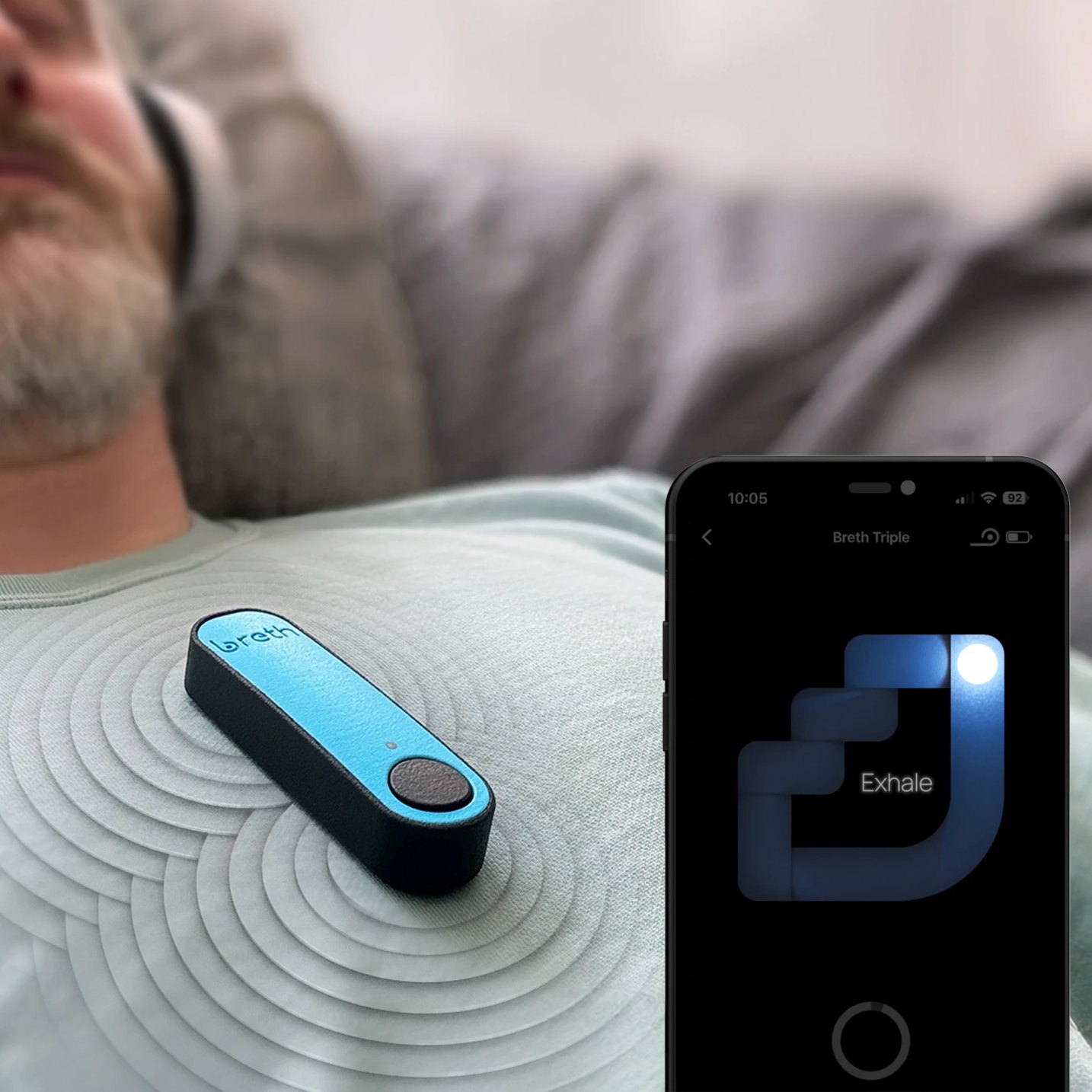
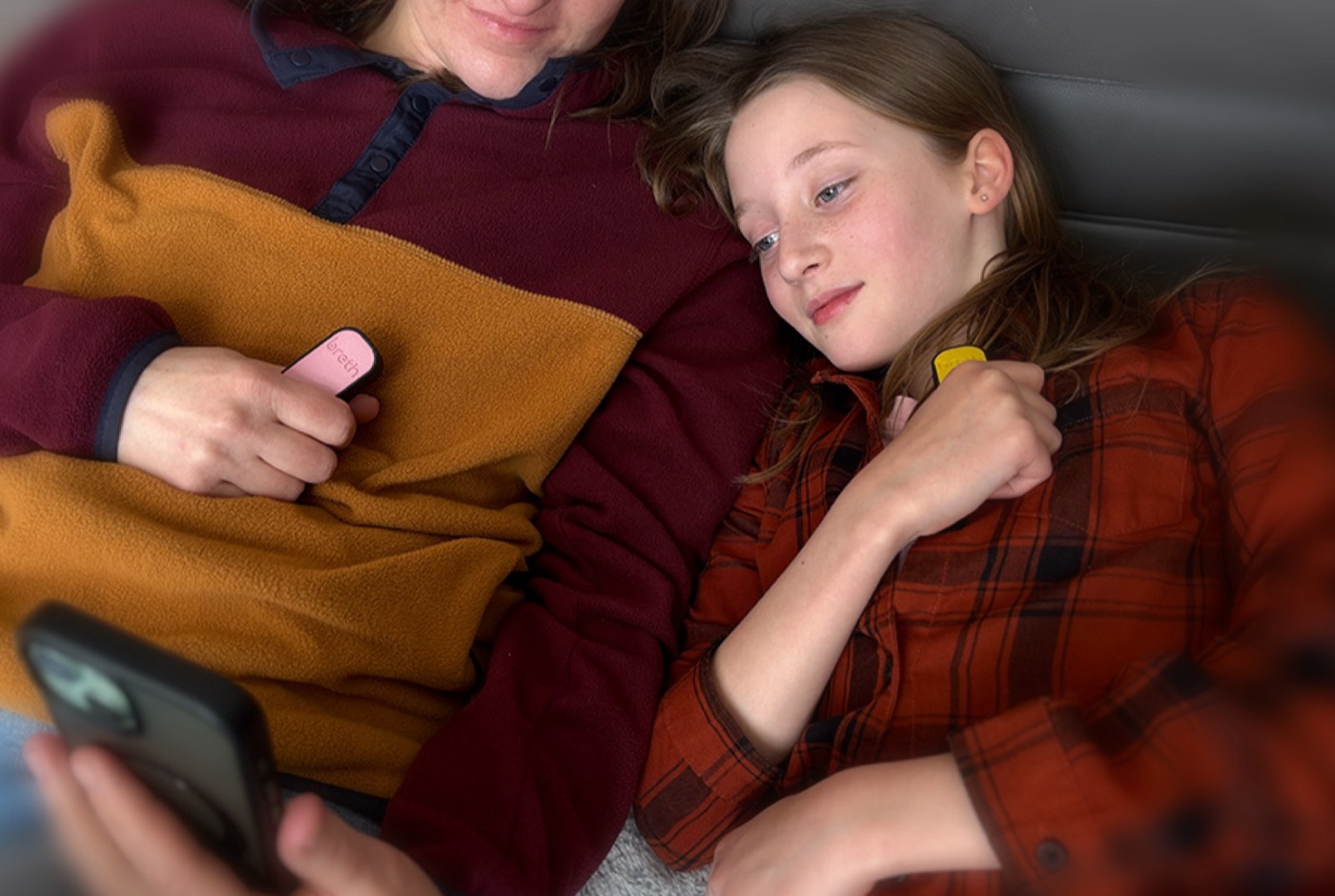
Most breathwork tools rely on counting or a screen, and under stress, attention is the first thing to go. We used the body itself as the interface. Haptic vibrations travel through the chest by bone conduction, spreading calm through the whole body, so you can feel every breathing instruction.
Screenless by design
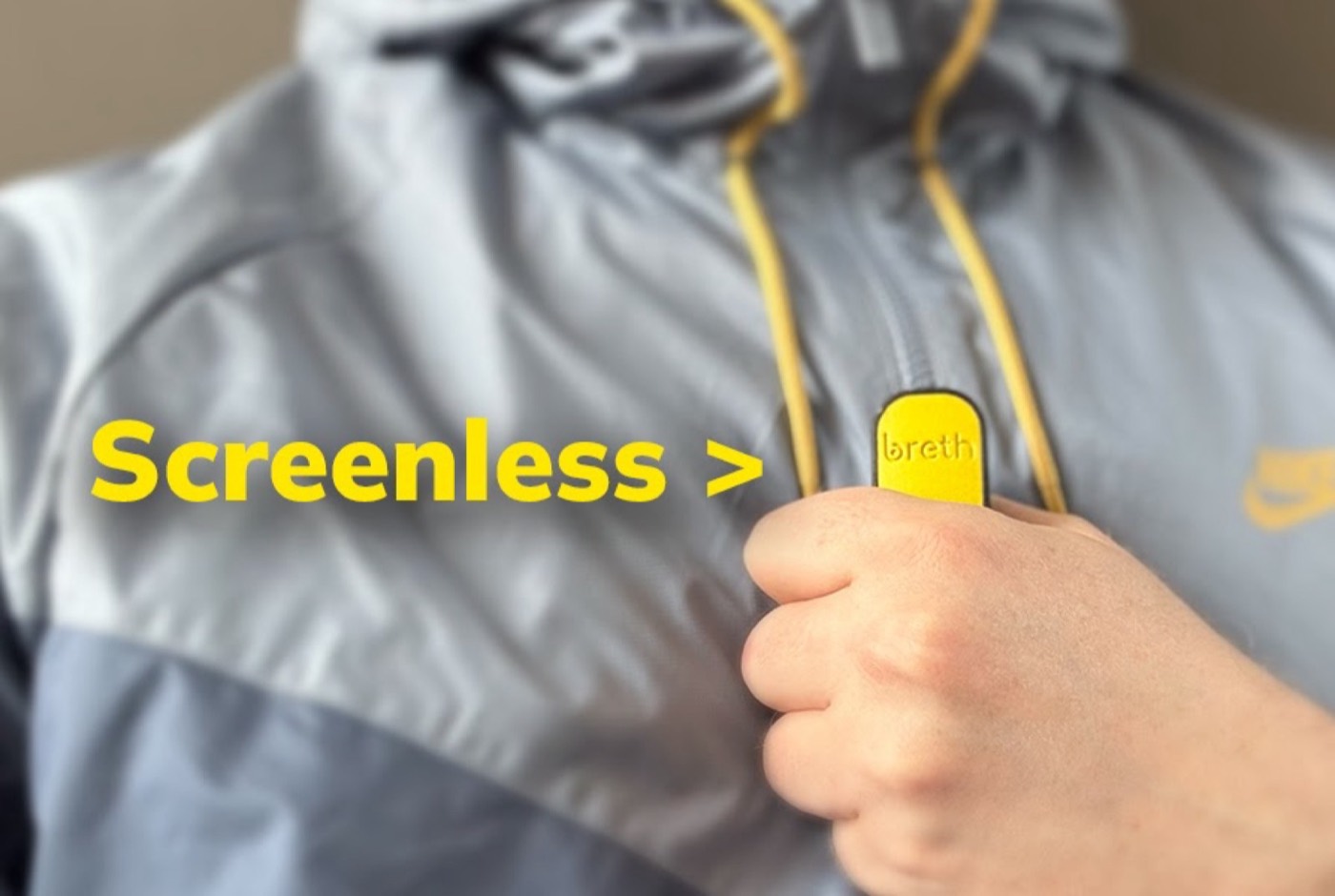
Haptics, visuals and audio each work on their own. Sessions start and finish from the device, and several devices can sync so a family or a class breathes together.
One motion rule set
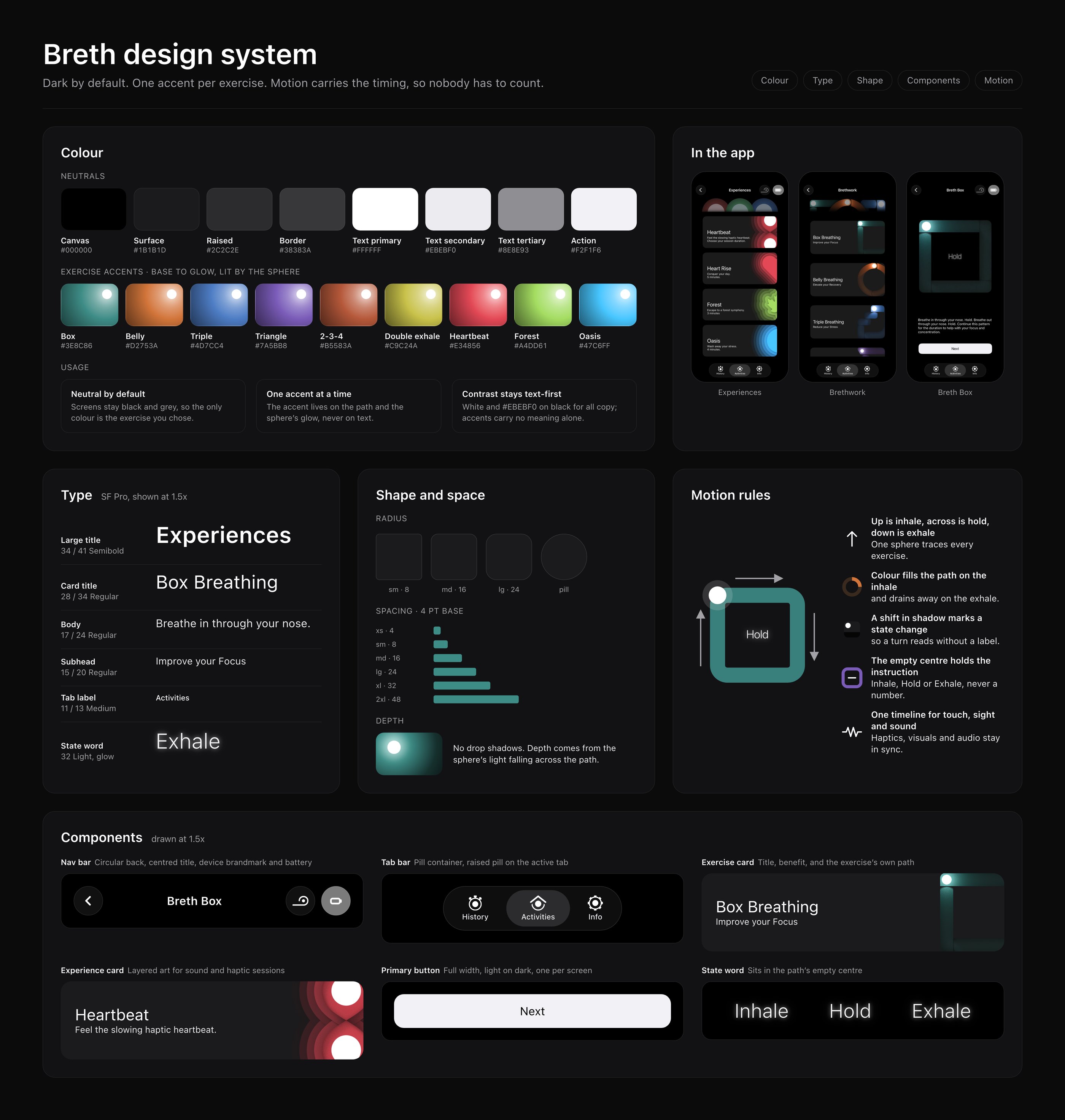
The on-screen visuals share one language, so people new to breathing exercises learn them quickly, then feel confident following the haptics alone in screenless sessions. A single glowing sphere anchors every exercise: up is inhale, across is hold, down is exhale. A path you can trace carries timing without counting, and new exercises became easy to design.
Try the exercises
Every exercise is a path the sphere traces. Pick one to see how it moves.
Showing: Belly
Drawing the vibrations
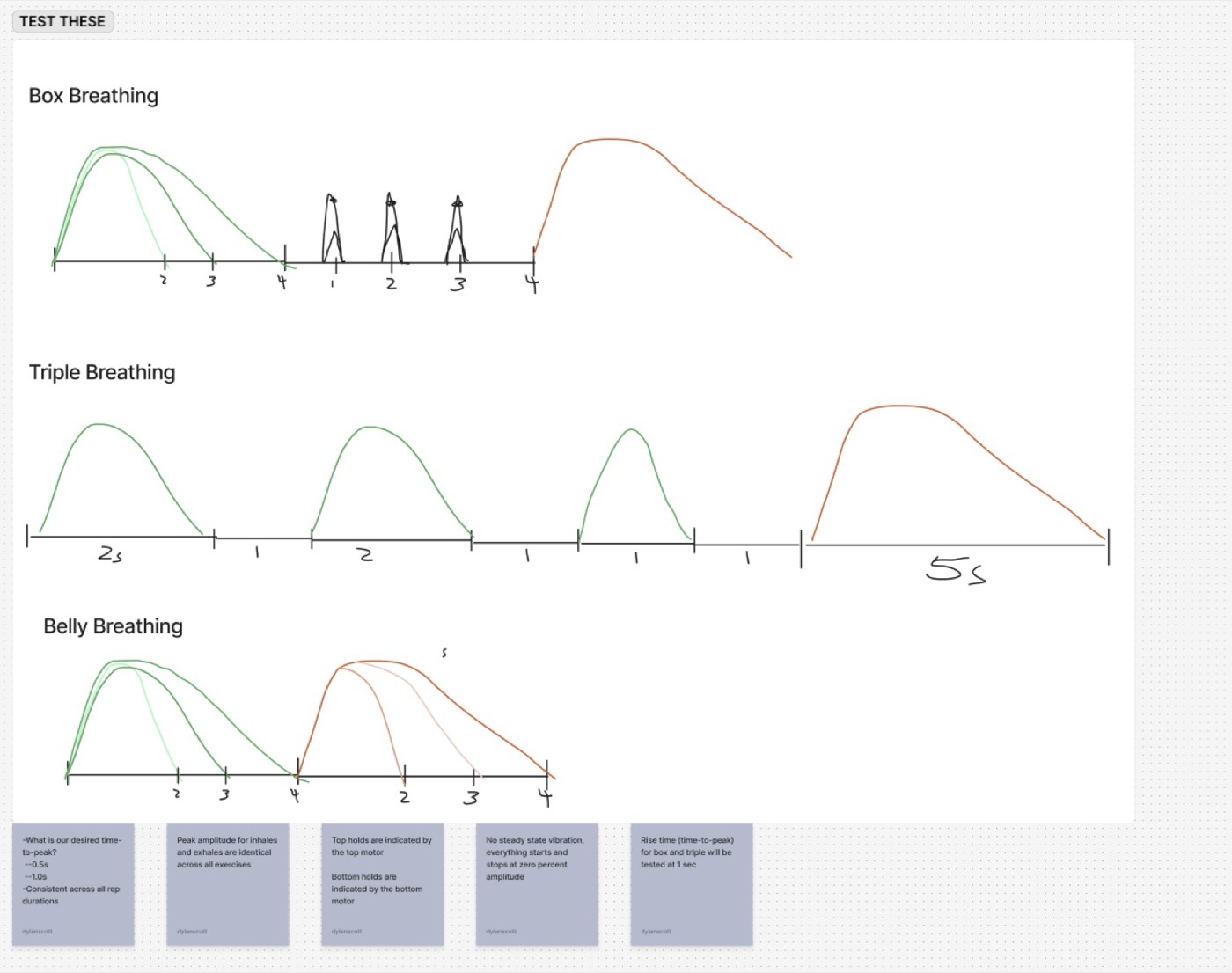
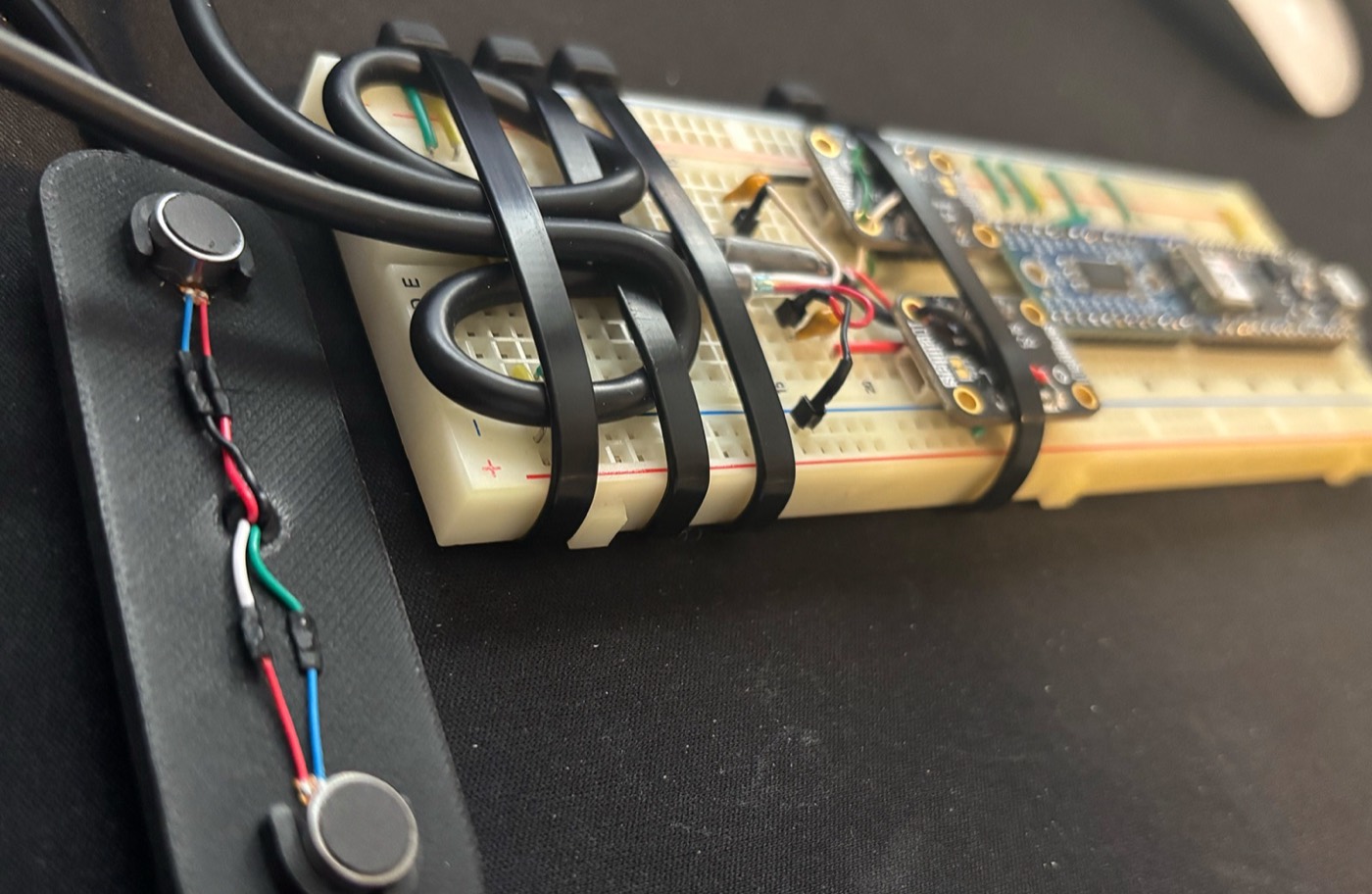
With Dylan Scott, I drew every haptic pattern as a primitive that eases toward peak intensity. Jason Palm built a test rig so I could tune how each one feels against the visuals and sound.
An exploration that became a feature
Haptic Heartbeat
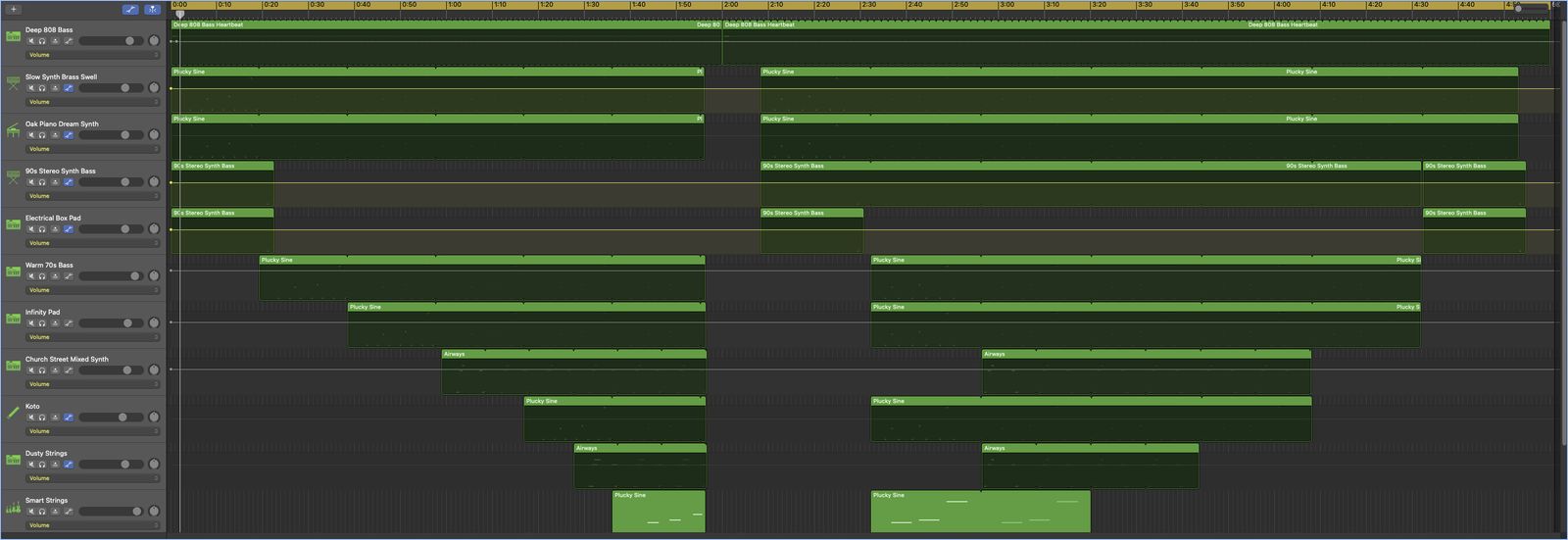
Bass-heavy music on the rig felt silent but powerful. I proposed meditative experiences built on that, translating audio into haptic signals: a heartbeat that slows you into calm, and a rising rhythm for focus.


Wide, then narrow
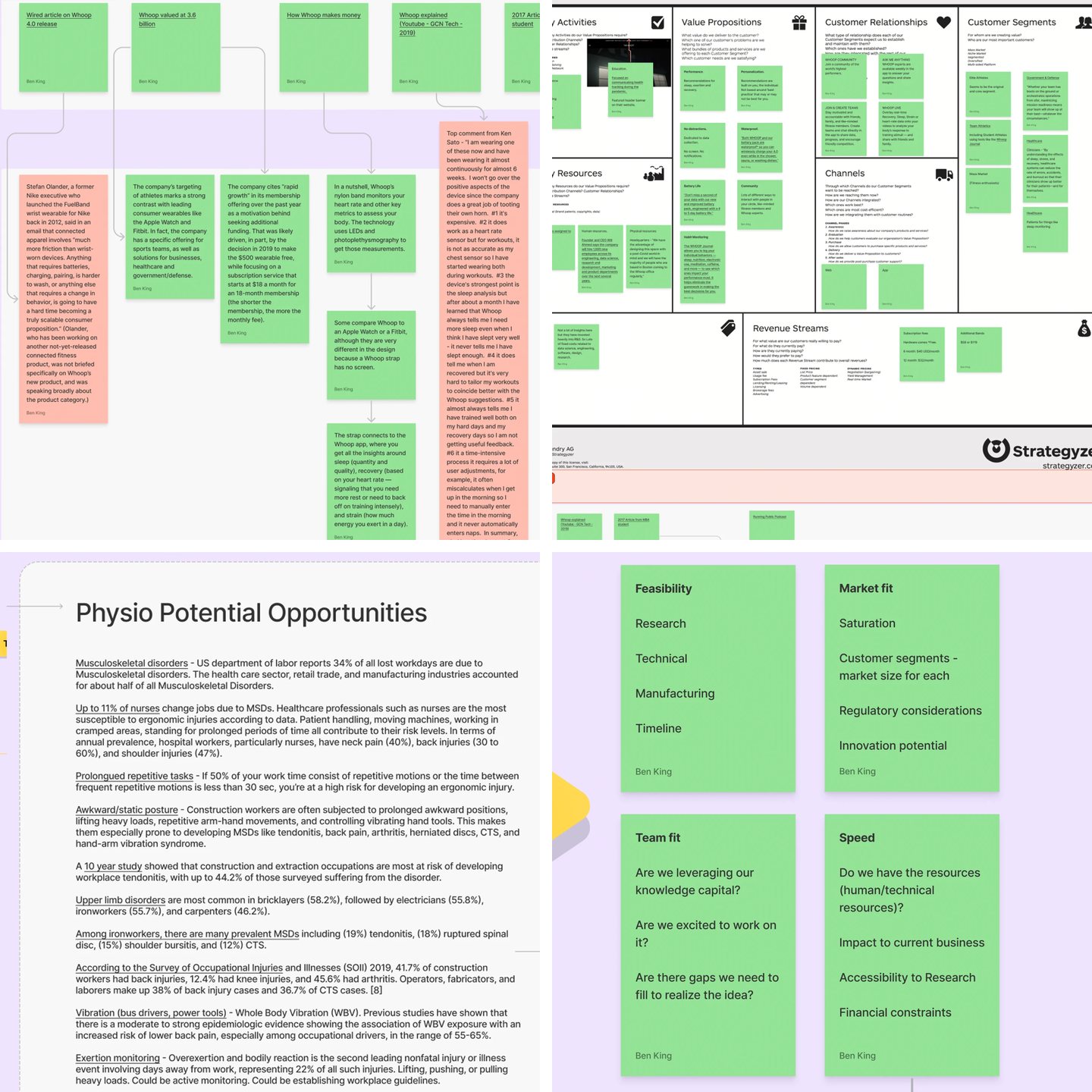
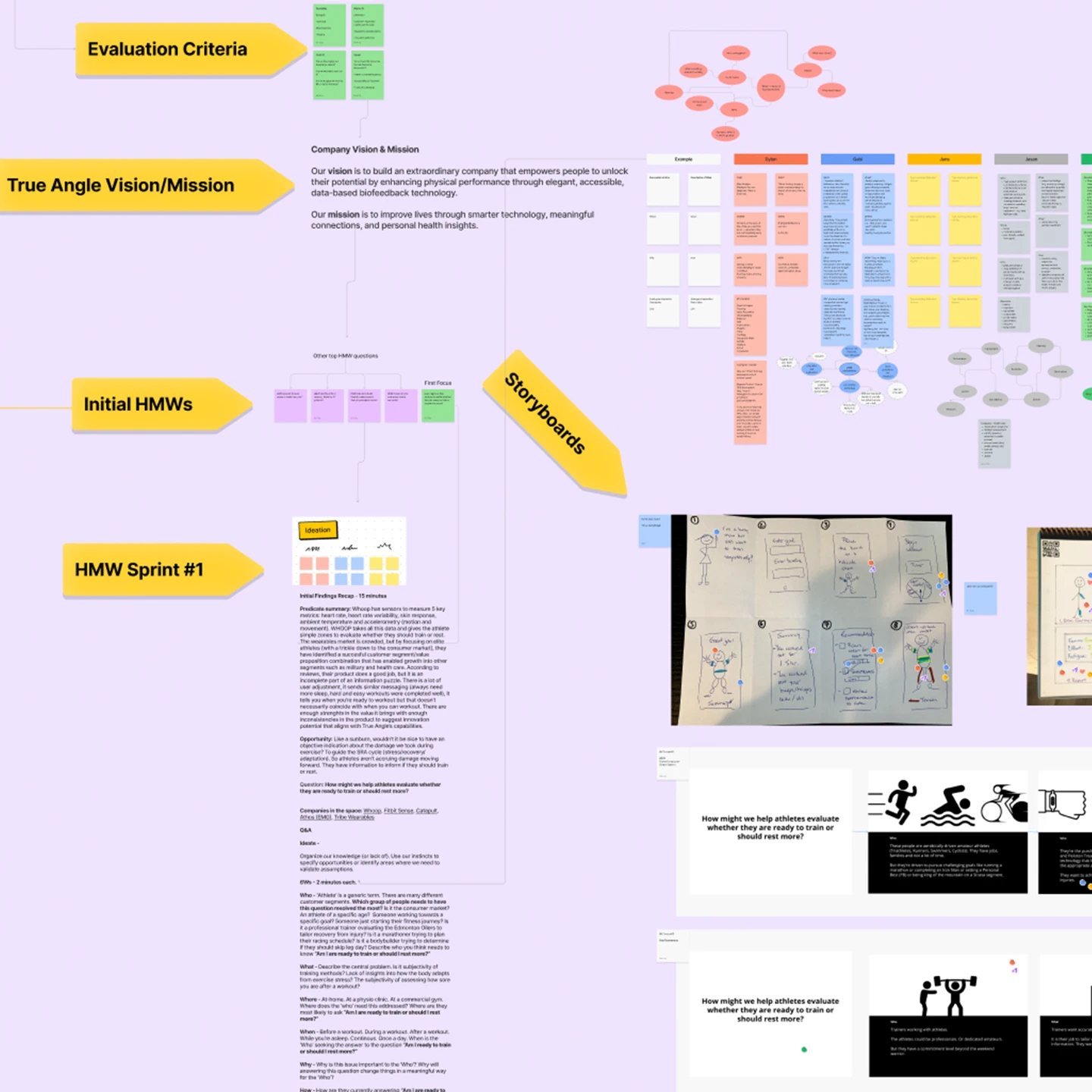
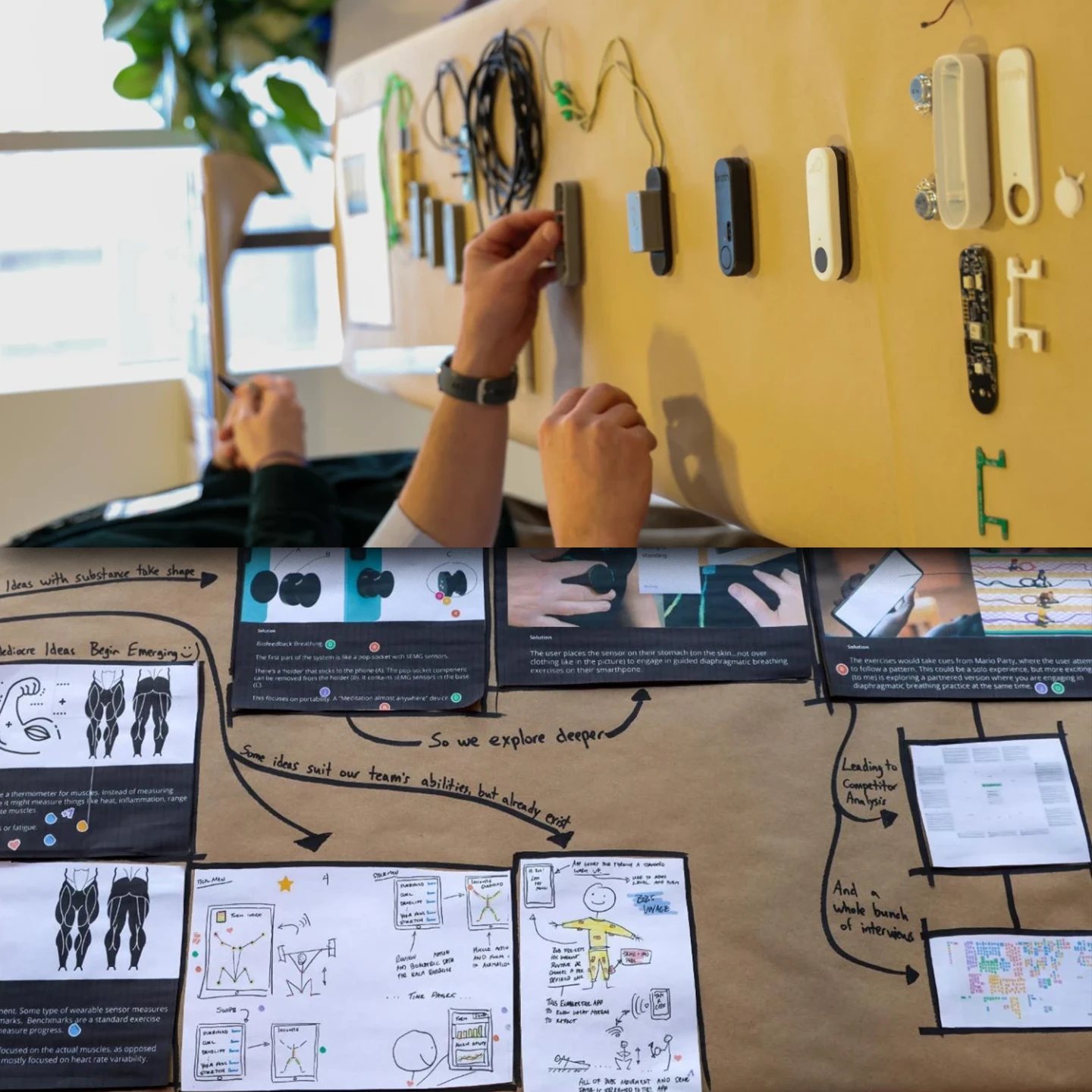
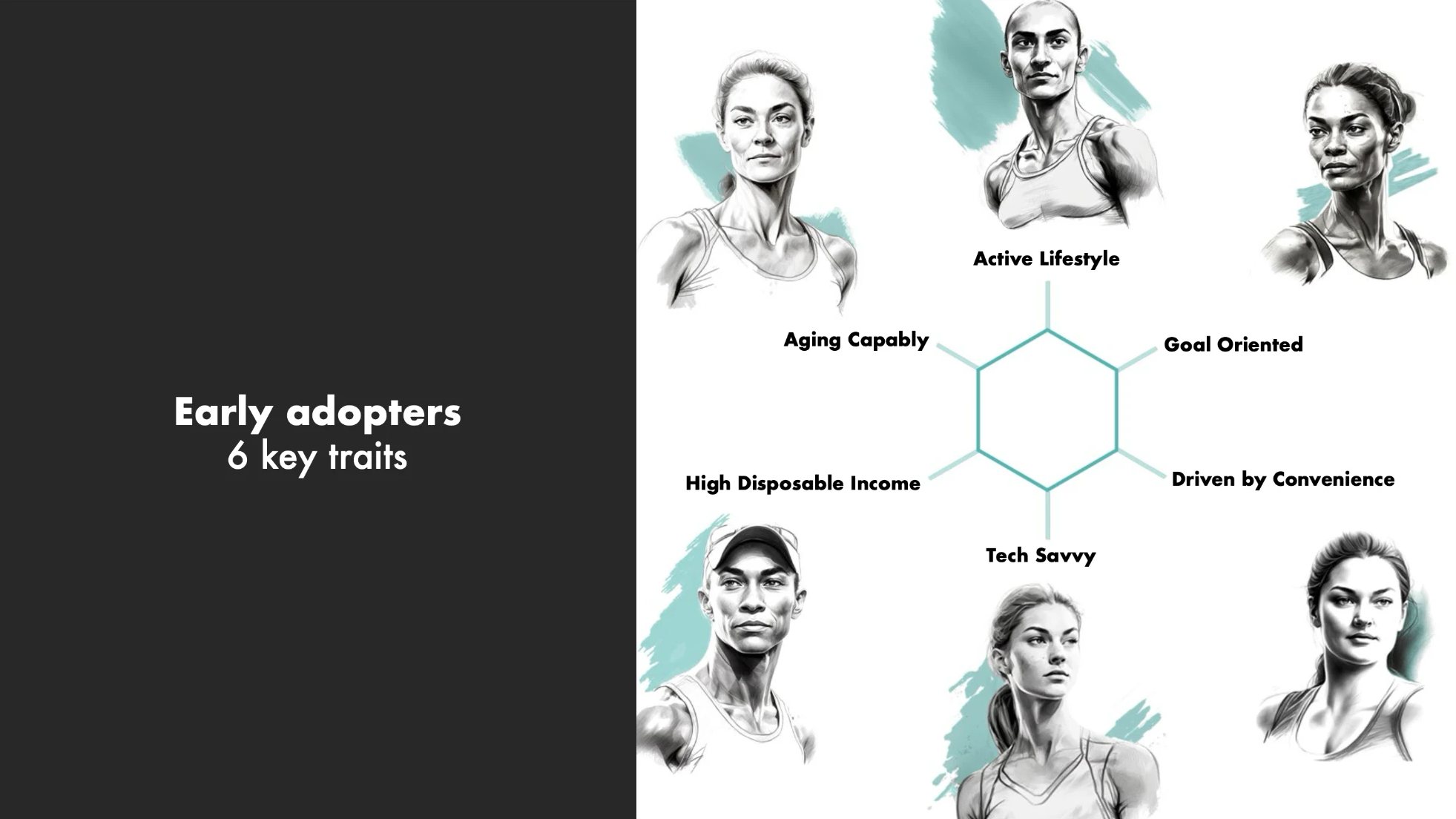
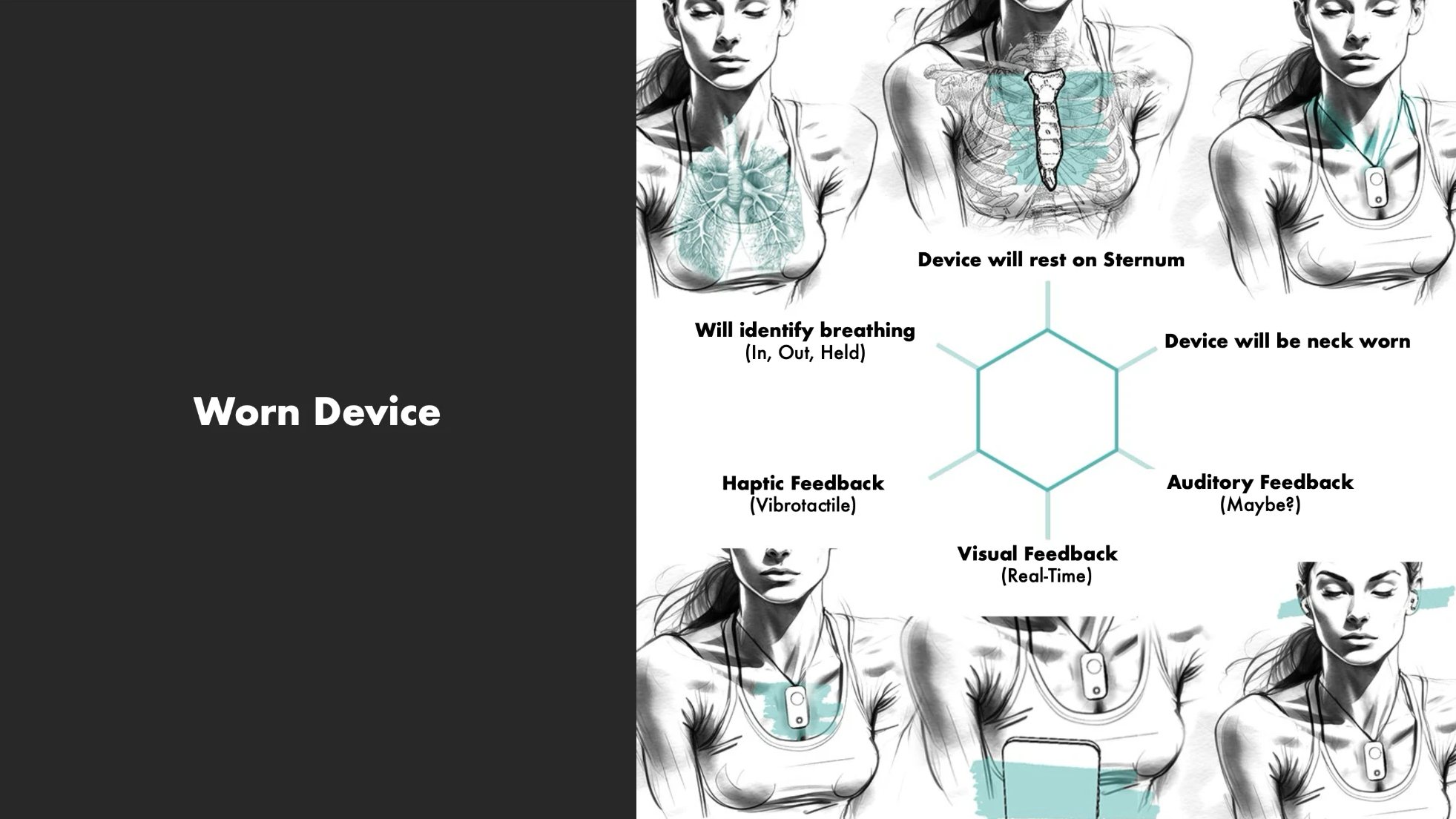
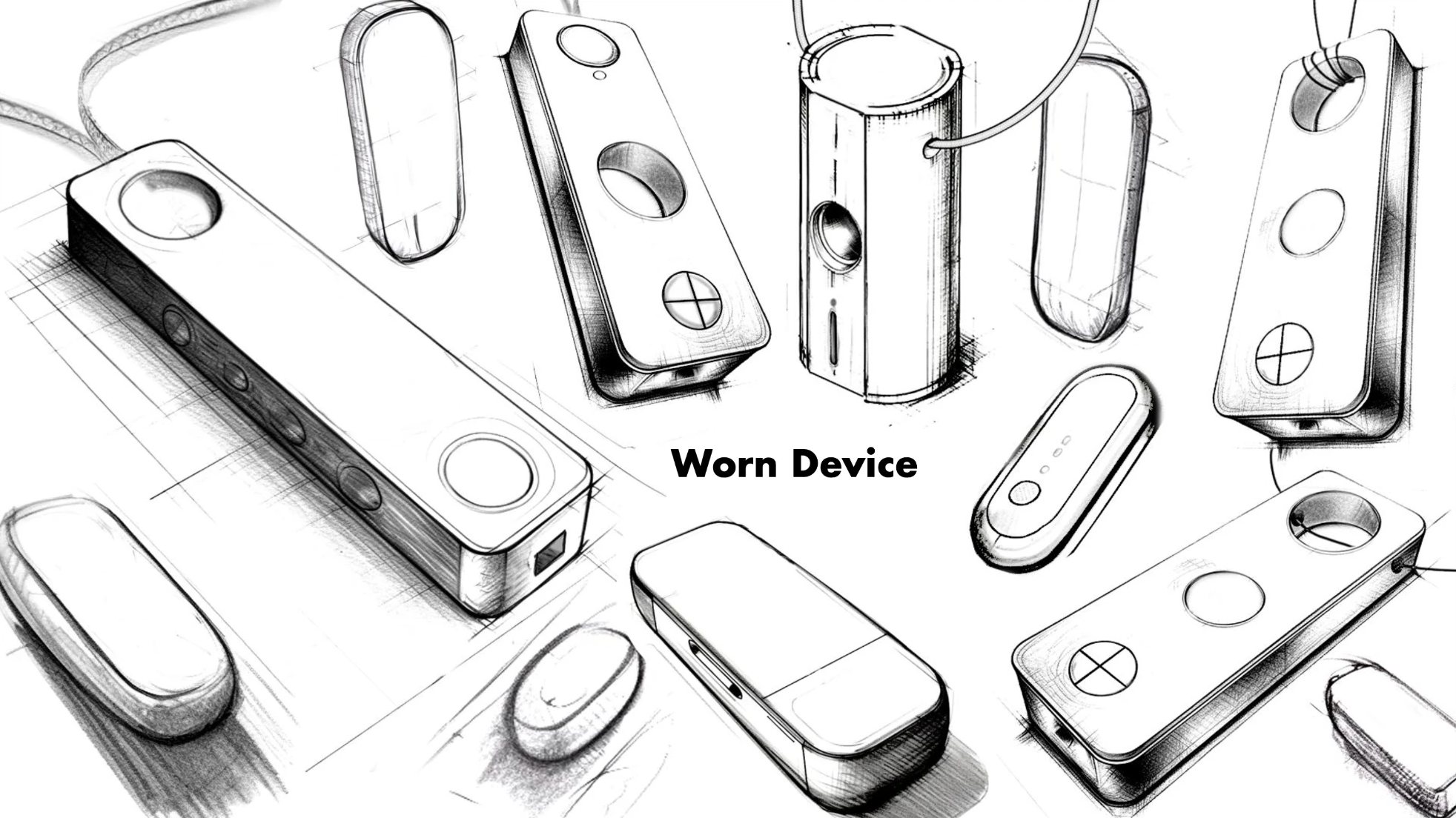
Before Breth had a form, we went wide: competitor research, business model canvases, opportunity scans and interviews. I led design sprints that turned how-might-we questions into storyboards and prototypes, and four criteria kept decisions honest: feasibility, market fit, team fit and speed. What survived became a short list of traits and requirements for a device worn on the chest.
Built to ship
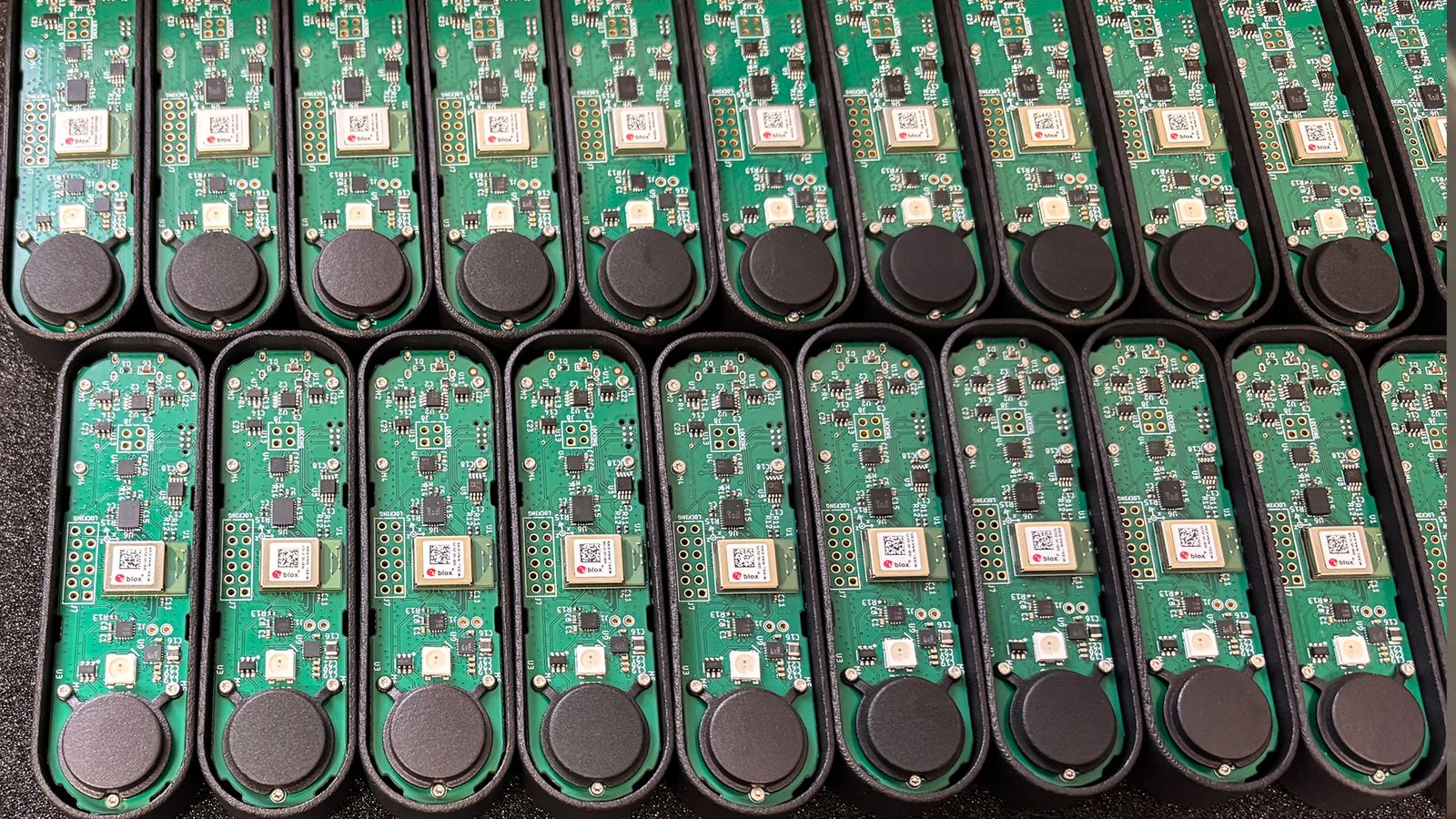
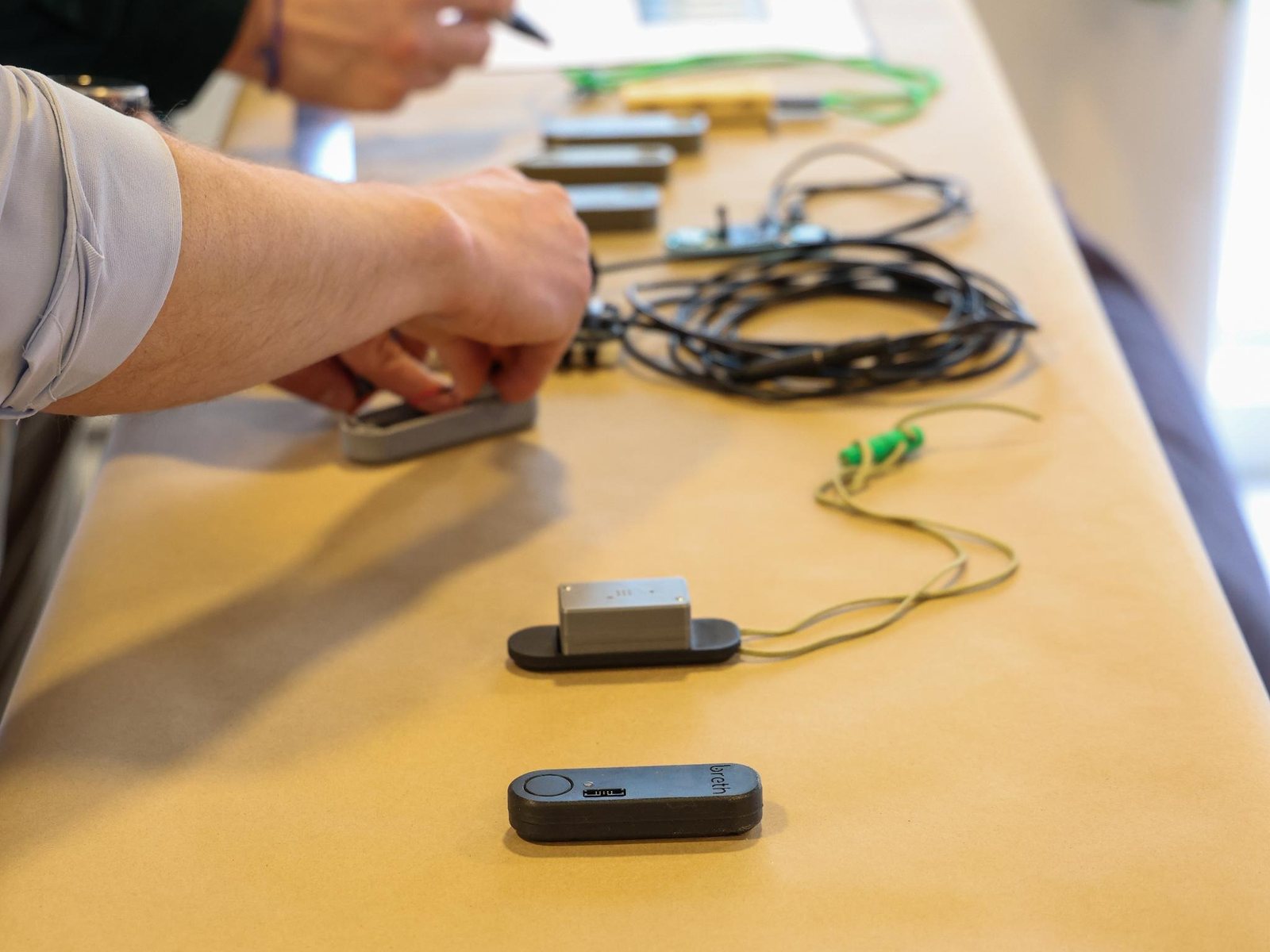
I stayed hands-on from usability sessions to the circuit boards, packaging, assembly and fulfillment, so the product felt like one thing in the hand and on screen.

A launch you could feel
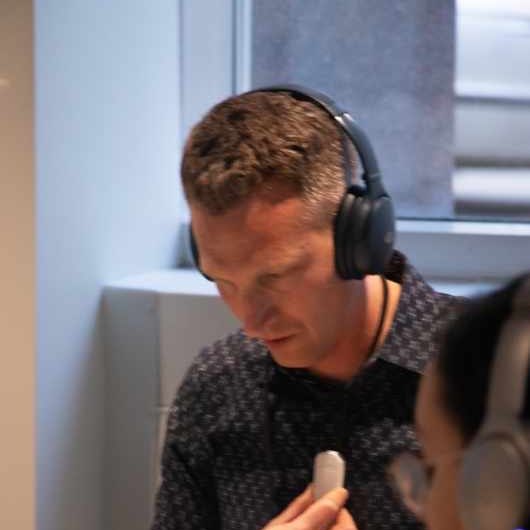
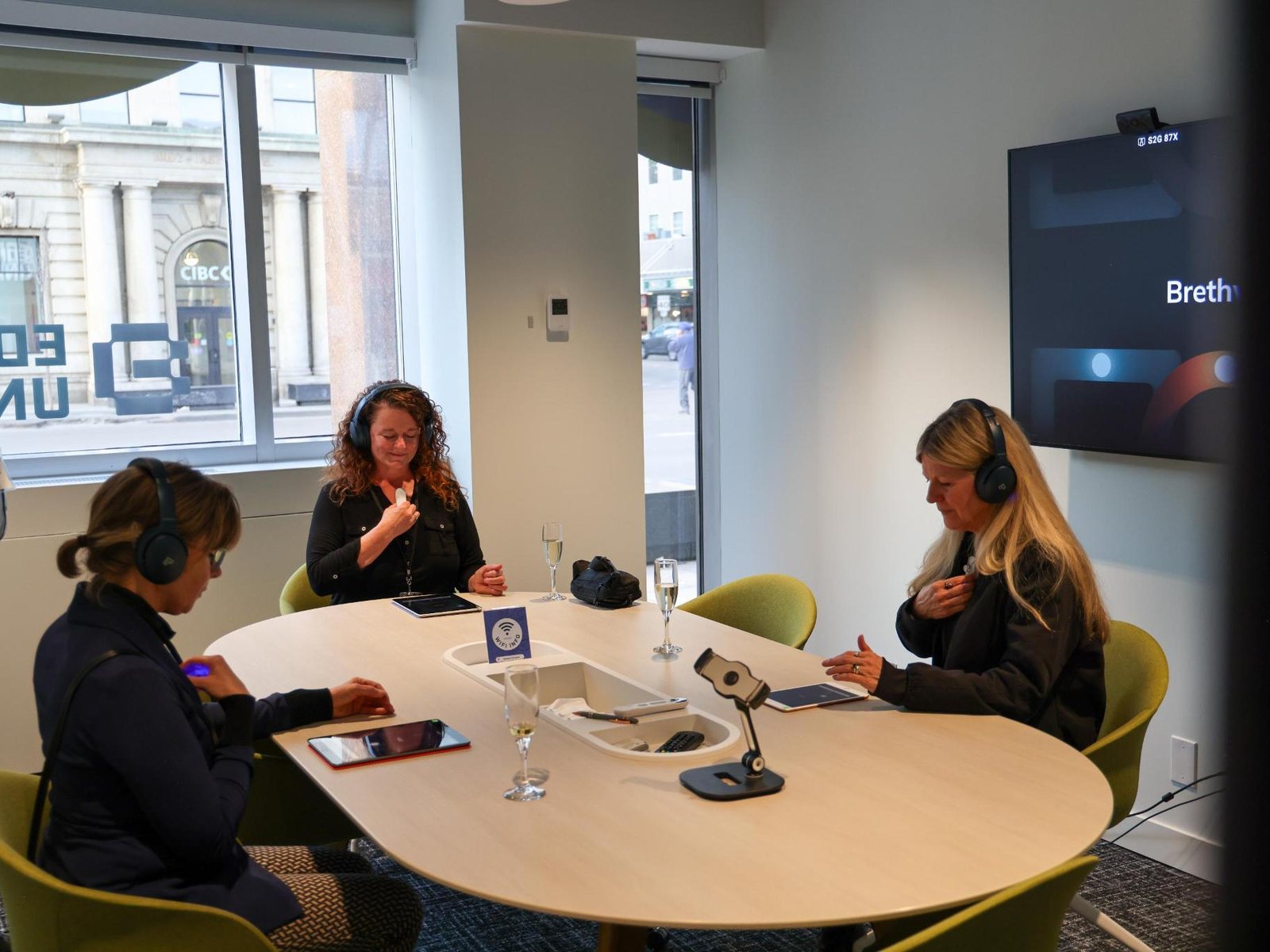
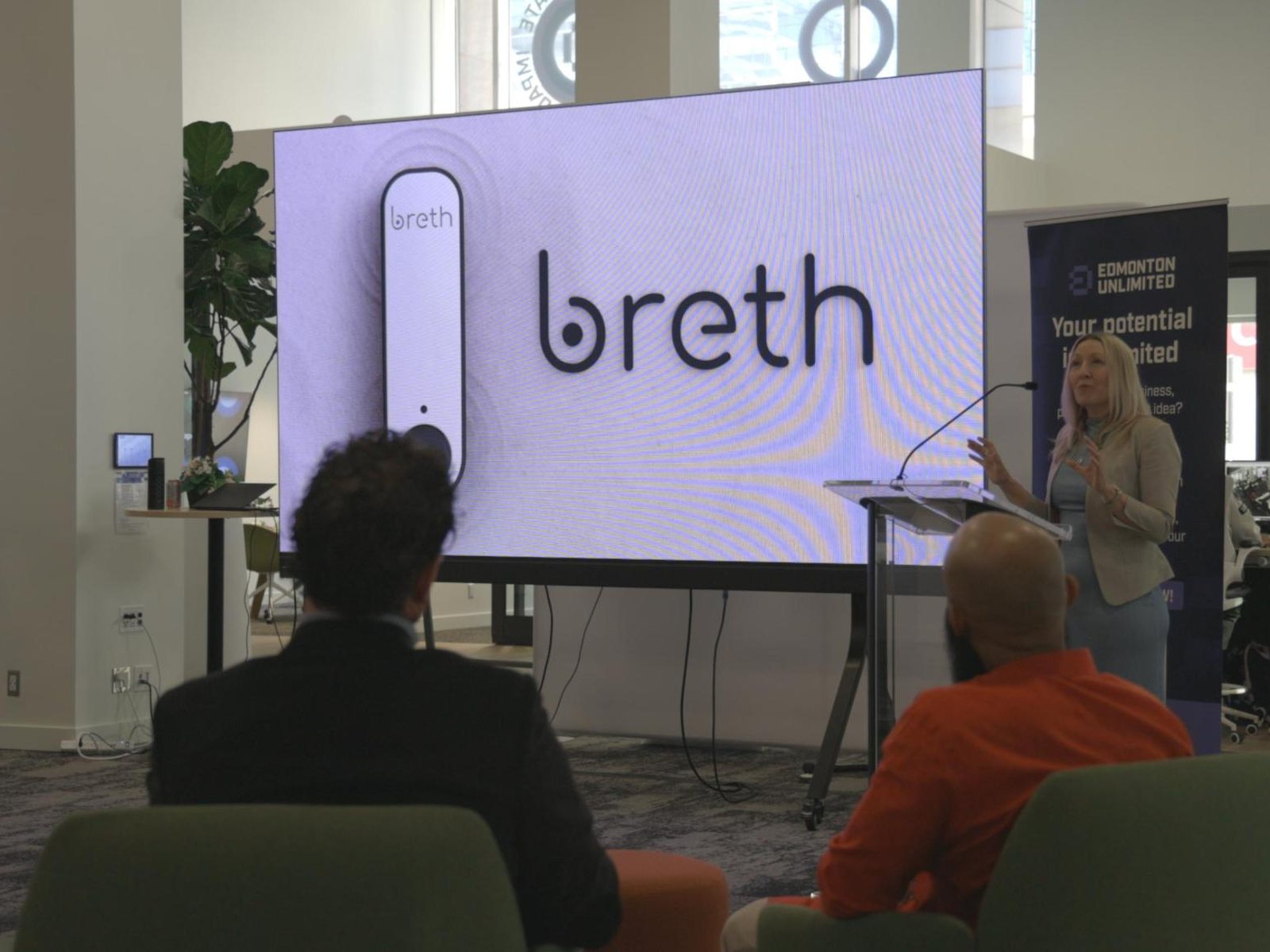
For Breth’s launch party, I designed every interactive experience: the screens, the videos and the hands-on sessions with prototype devices. Instead of a pitch, guests put on Breth and felt a guided session for themselves.
Outcome
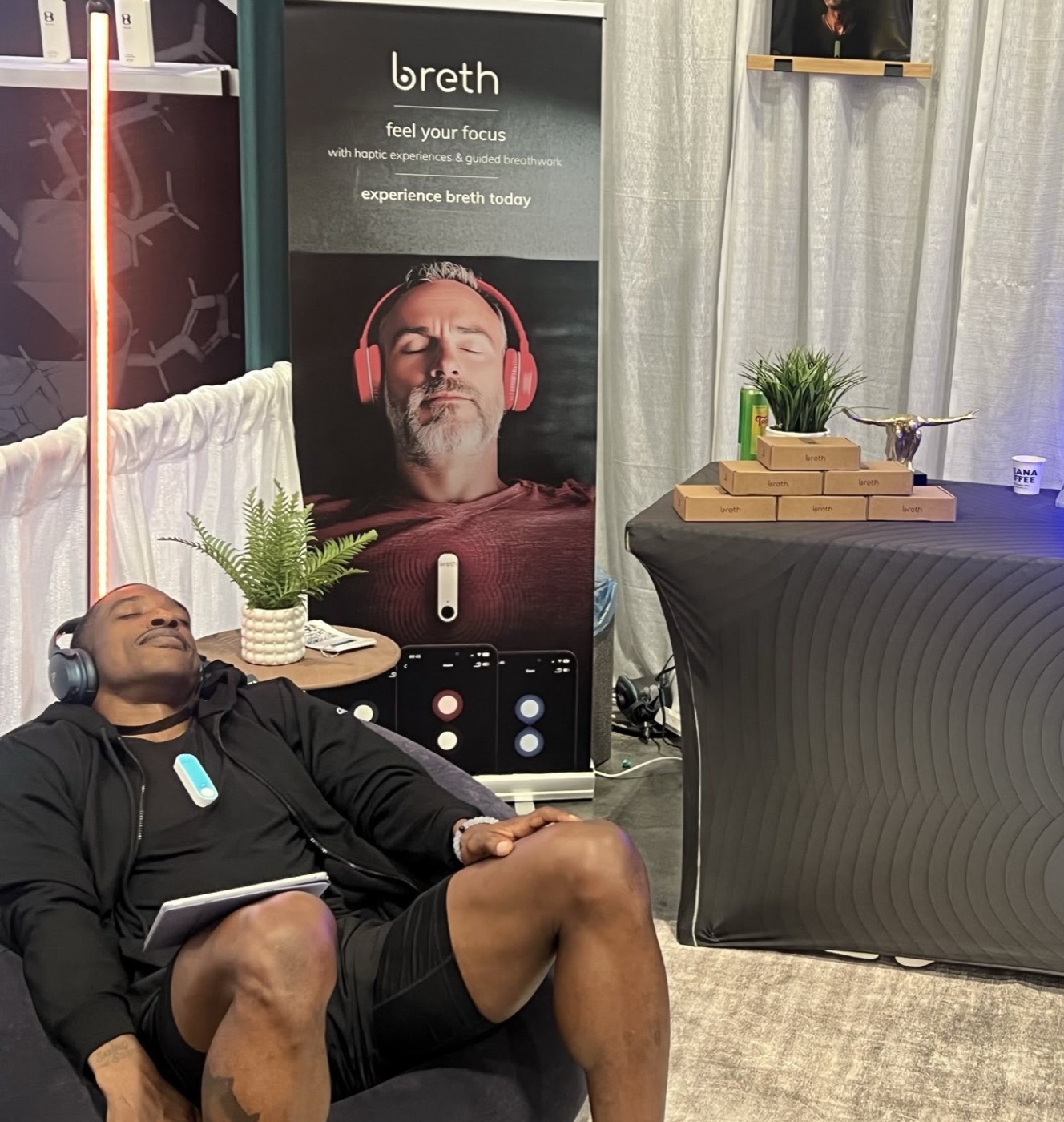
After crowdfunding, Breth sold direct. The reaction we saw again and again: surprise, then calm, then curiosity, then repeat use, from families and classrooms to yoga studios and athletes.
Looking back
Breth went from concept to crowdfunding in about 12 months, led by a tiny design and dev team. That pace taught me as much about how small teams work as about the product itself.
- 01
Roles blur, for the better
Building fast, everyone stepped outside their title. Working with builders whose skills complement each other, who can step in, critique and raise each other’s work, was the most empowering part.
- 02
Structure protects focus
Blurred roles also make it easy to drift into work outside your specialty. Structured meetings, protected focus time and clear criteria (market fit, team fit, feasibility and speed) kept priorities and ownership straight.
- 03
At home in the unknown
Breth stretched me creatively more than any project before it: creative direction across the physical and digital product, brand, marketing, haptics and musical experiences, in a product space with no playbook. Exploring 0 to 1 is where I do my best work.
- 04
Decide, then own it
Small teams can’t staff every bet, so mistakes happen. Building Breth in about 12 months took trust in capable people and decisions we had to live with. Not every one hit the bullseye, but how we navigated them shaped both the product and the outcome.
With today’s AI tools
Breth’s concept work wrapped up just as AI tools were emerging. Today they would take much of the manual load off: sorting interview findings, spotting patterns in industry trends, generating haptic and audio pattern variations to audition on the rig, and testing ideas internally in days instead of weeks.
The judgment stays human. Whether a pattern actually feels calm is something you only learn by feeling it yourself.