How I lead
I’ve led design as an owner: every screen, device, deck and unboxing ran through me. Here’s how I keep that many parts moving in one direction.
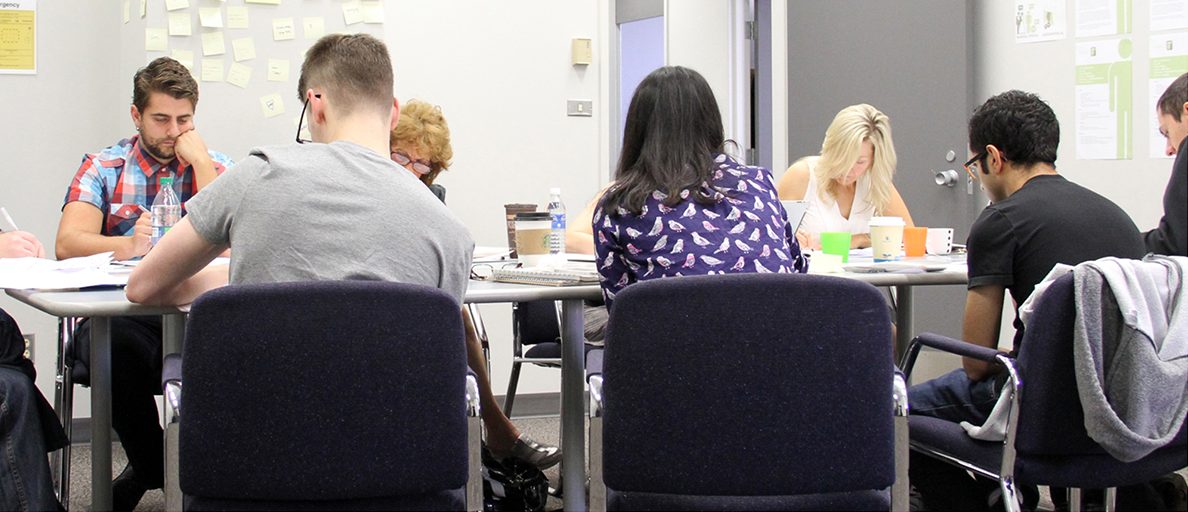
- Role
- Design lead and owner across product, hardware, brand and sales
- Influence
- Engineering, clinical, research, marketing, sales and leadership
- Mentoring
- 10+ years teaching senior product design studios
- Founded
- Design for Health, a course partnering with real patients, clinicians and clinical problems
Principle 1
Make the decision visible
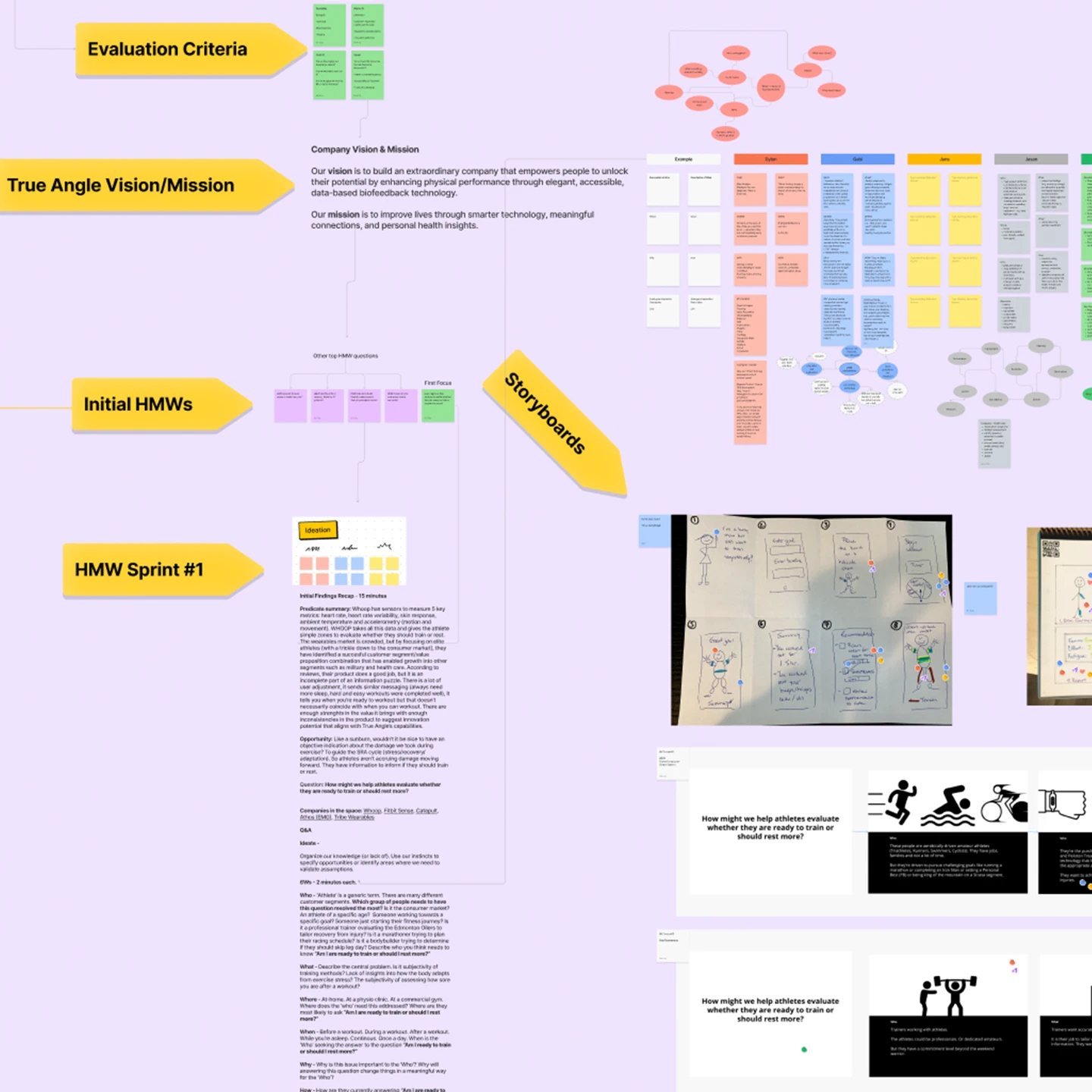
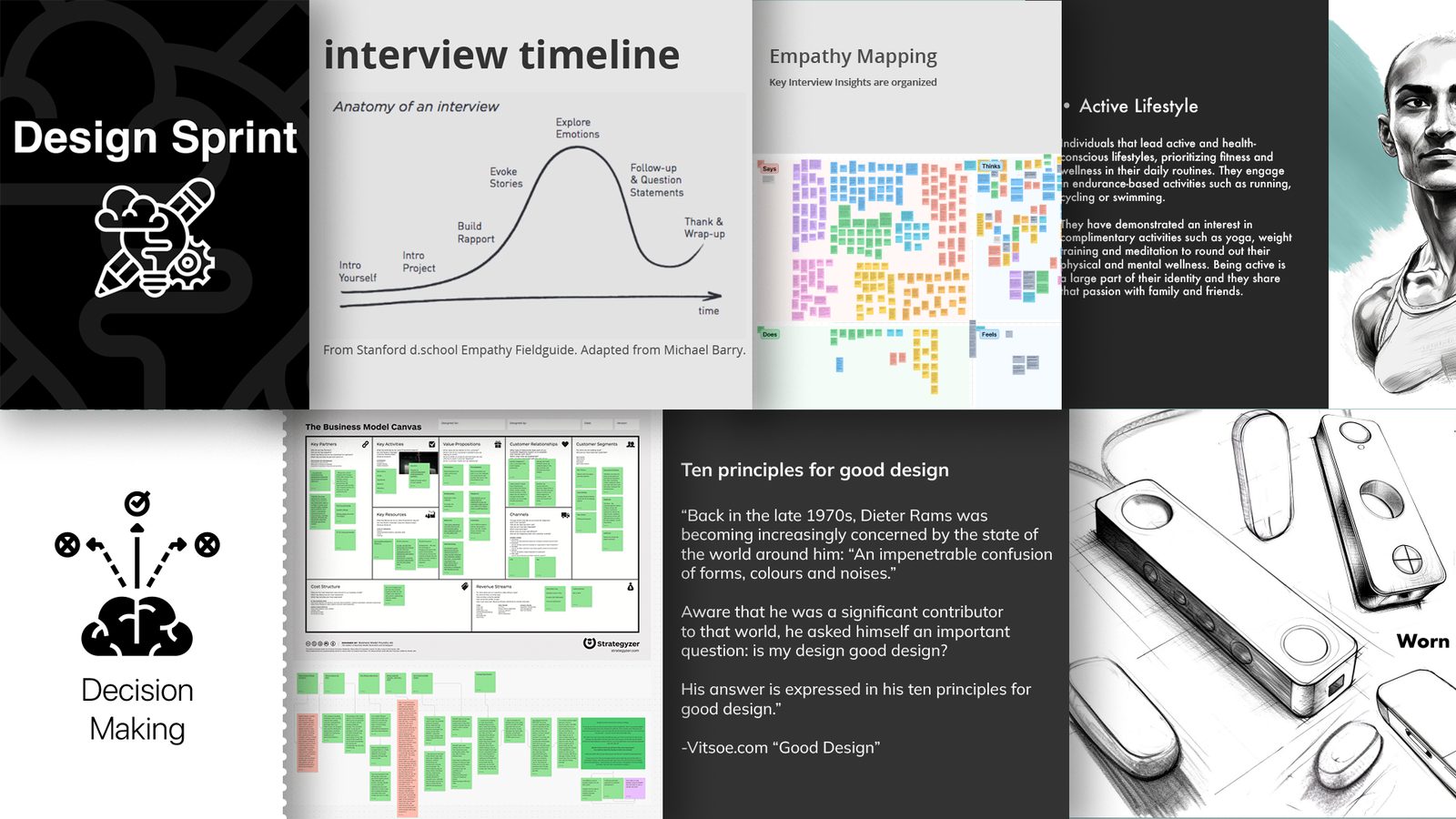
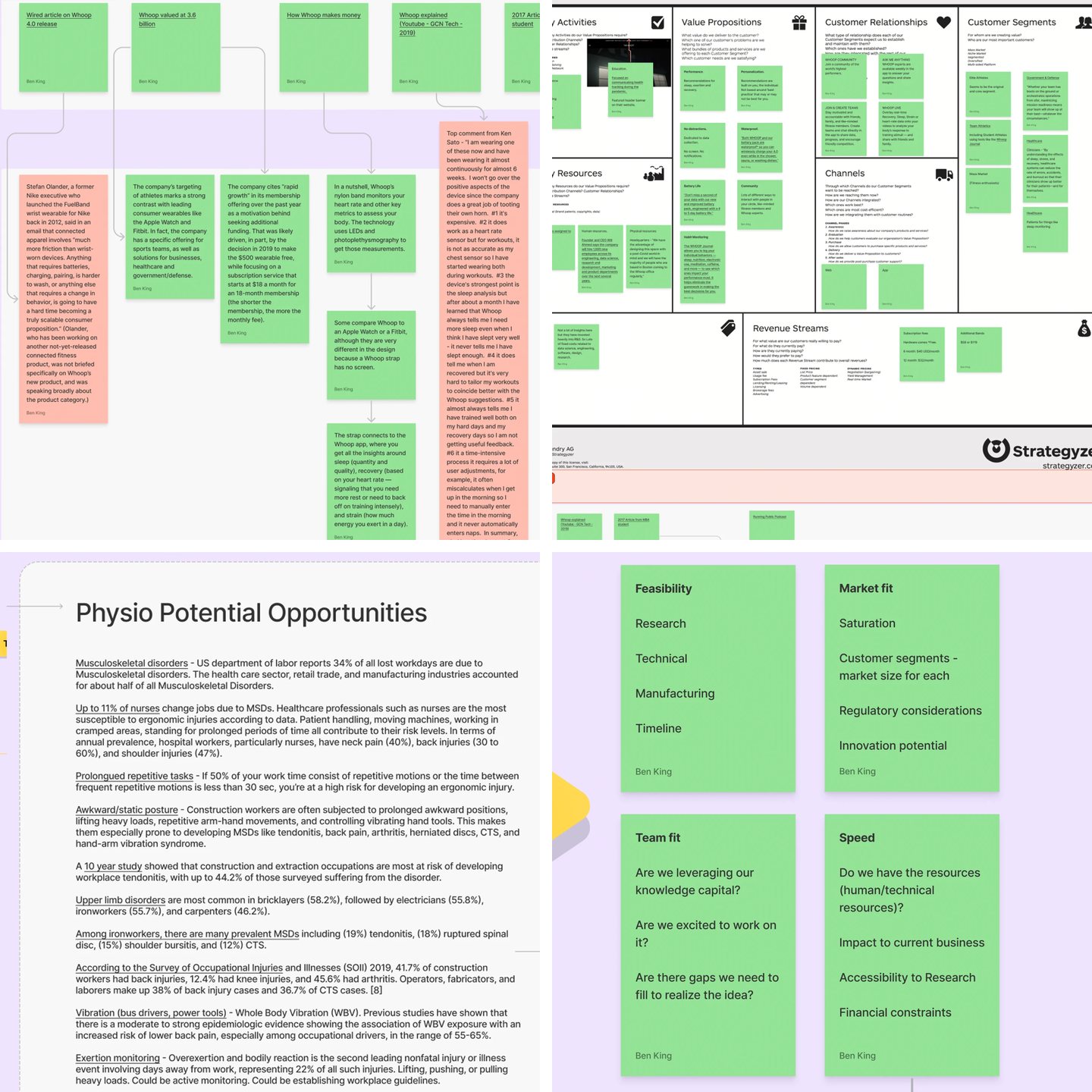
Sprints, decision matrices and heatmapping turn a room of opinions into a choice everyone can see the reasoning behind. I run them just as well on a shared digital board as on a wall, with remote and in-person teams, and use AI to speed up synthesis so the team spends its time on the decisions. See it at True Angle
Principle 2
Research with people, not just data
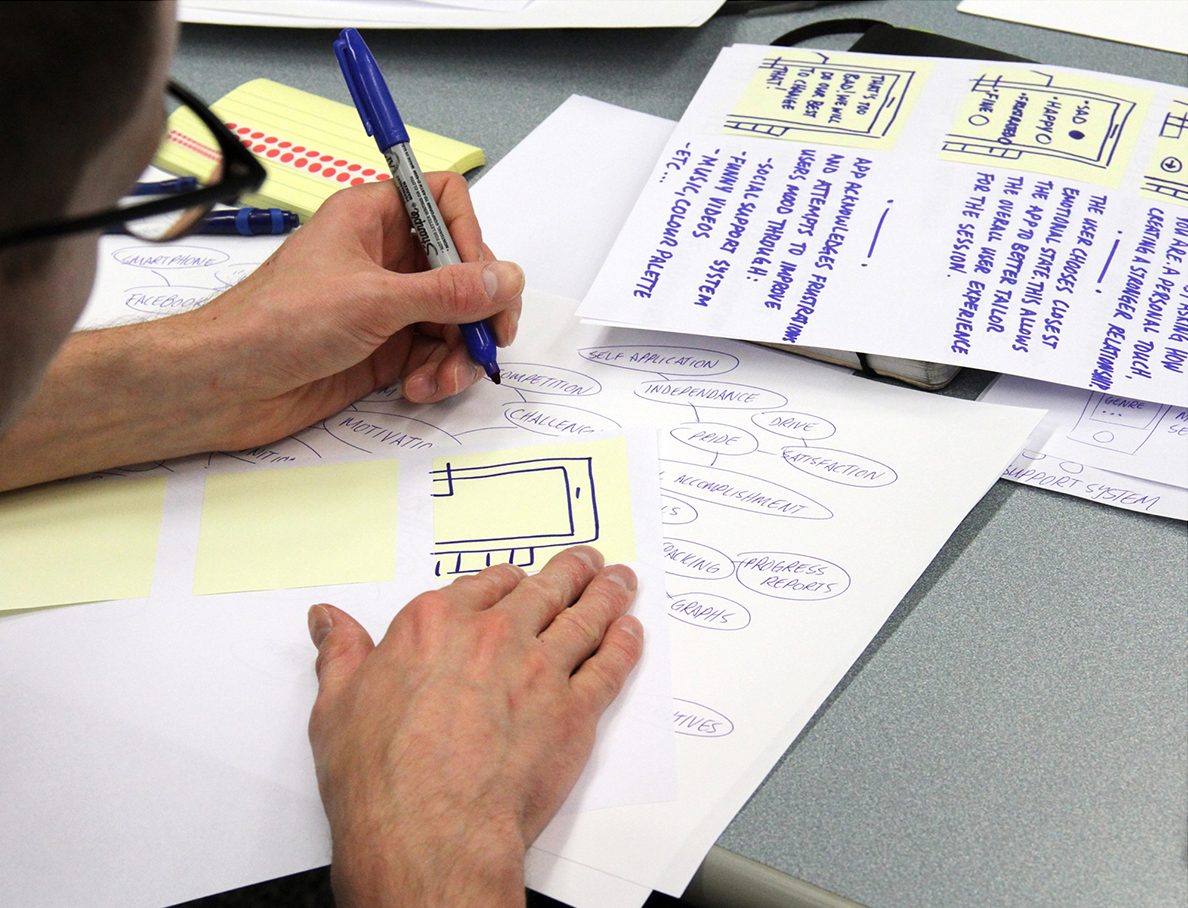
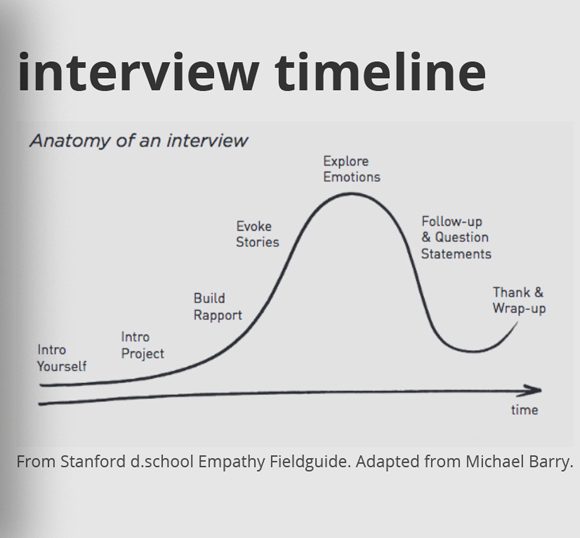
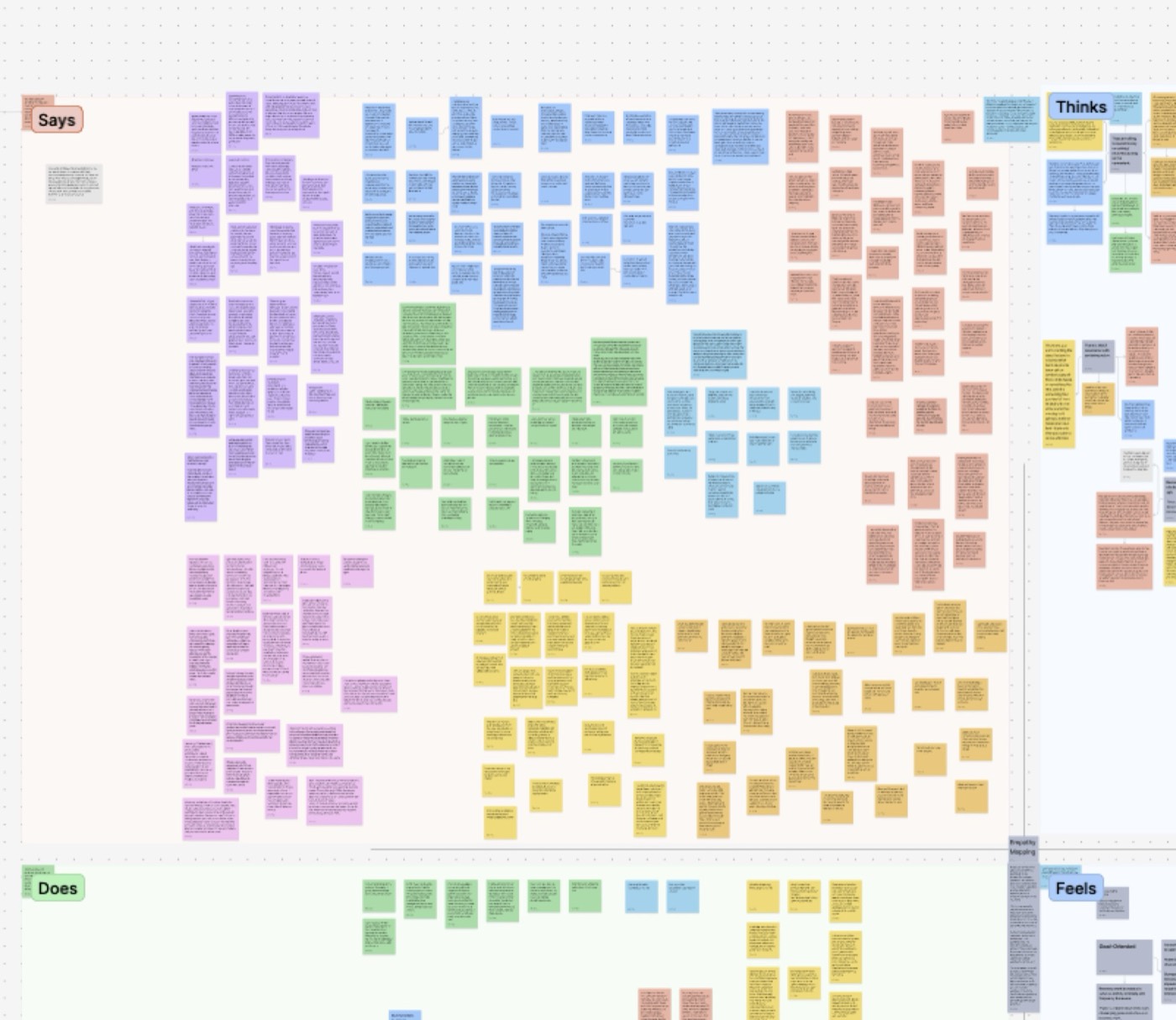
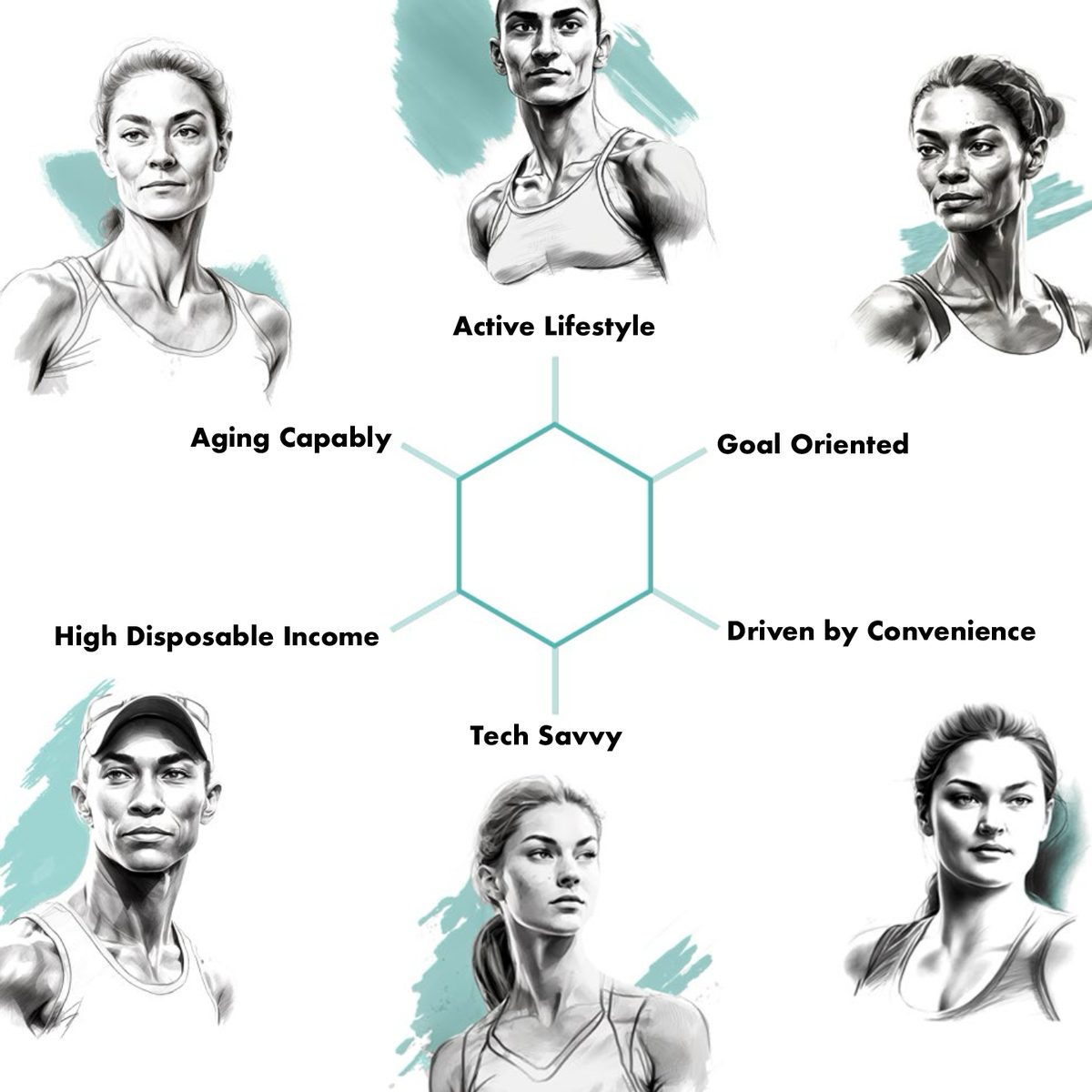
Interviews built to draw out stories, empathy maps to share them, and cultural probes when people are too tired for a traditional study. See it on Mobili-T
Principle 3
Build systems people can use without me
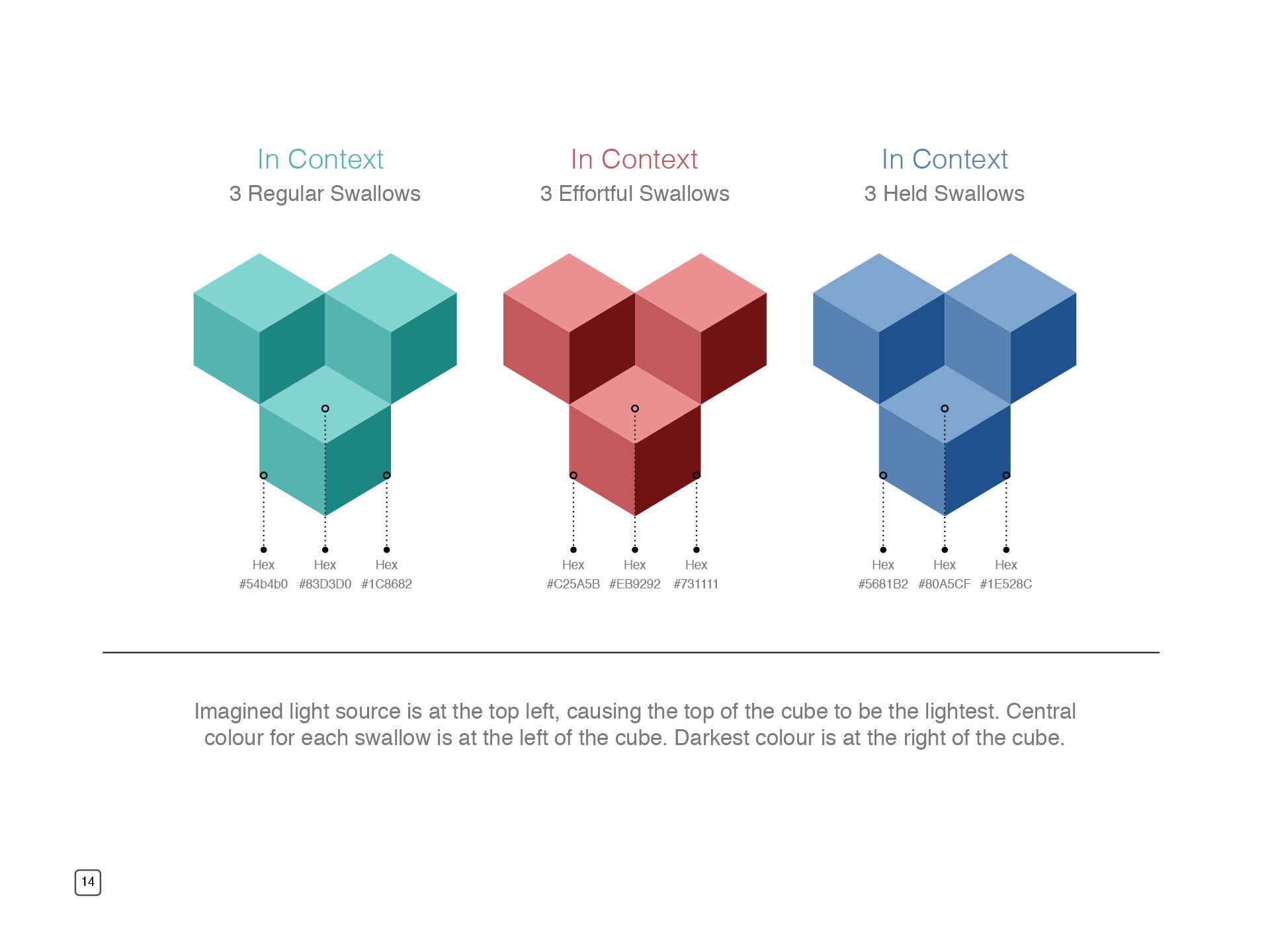
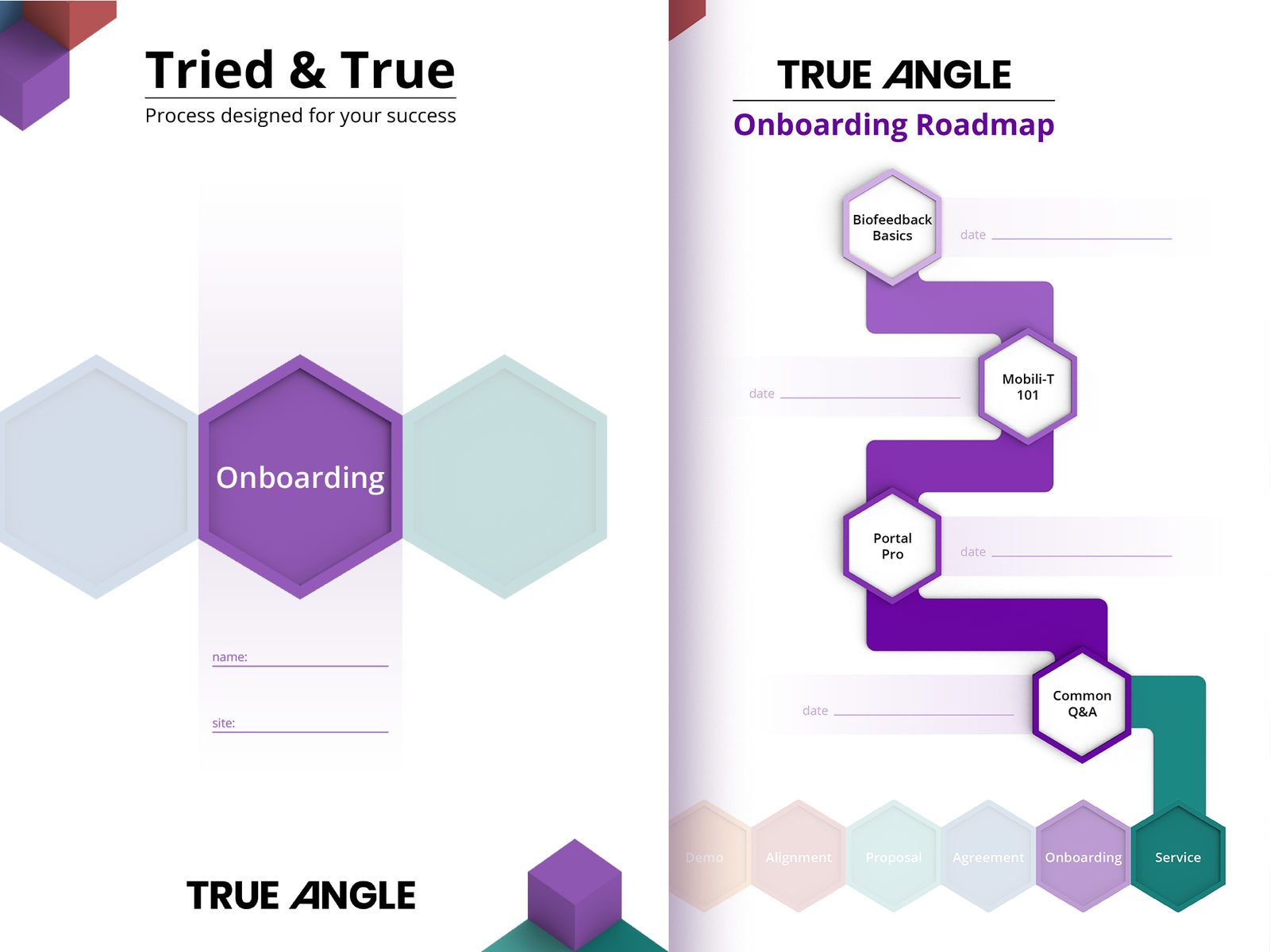
Brand books that explain the why, deck libraries teams adapt themselves, and onboarding that runs on its own. Sales and marketing shipped on-brand work without waiting on design. See Design ownership
Principle 4
Treat critique as a skill
“What do you think?” rarely helps. Good critique asks what problem is being solved, how well the design solves it, and what’s missing. I build it into daily discussions as well as deeper product discovery sessions, like sprints.
A framework, not a rigid process
It aligns teams, grounds decisions in research, and moves ideas from concept to a validated product.
- 01
Discover
Interviews, usability testing and behavioural mapping, inside the real constraints of regulated work.
- 02
Ideate
Sprints, storyboards and concepts, balancing people, feasibility and business.
- 03
Prototype
Fast iteration across software and hardware, co-created with customers (when it makes sense).
- 04
Validate
Real-world feedback on usability, adherence and outcomes, so it’s ready to ship.
Teaching
For more than a decade I’ve lectured senior product design studios at the University of Alberta, helping designers move from makers to decision-makers. I founded Design for Health, a course where students work with real patients, clinicians and clinical problems. In some years it was also open to medicine, engineering and computing science students.
From a class project to a restaurant pilot
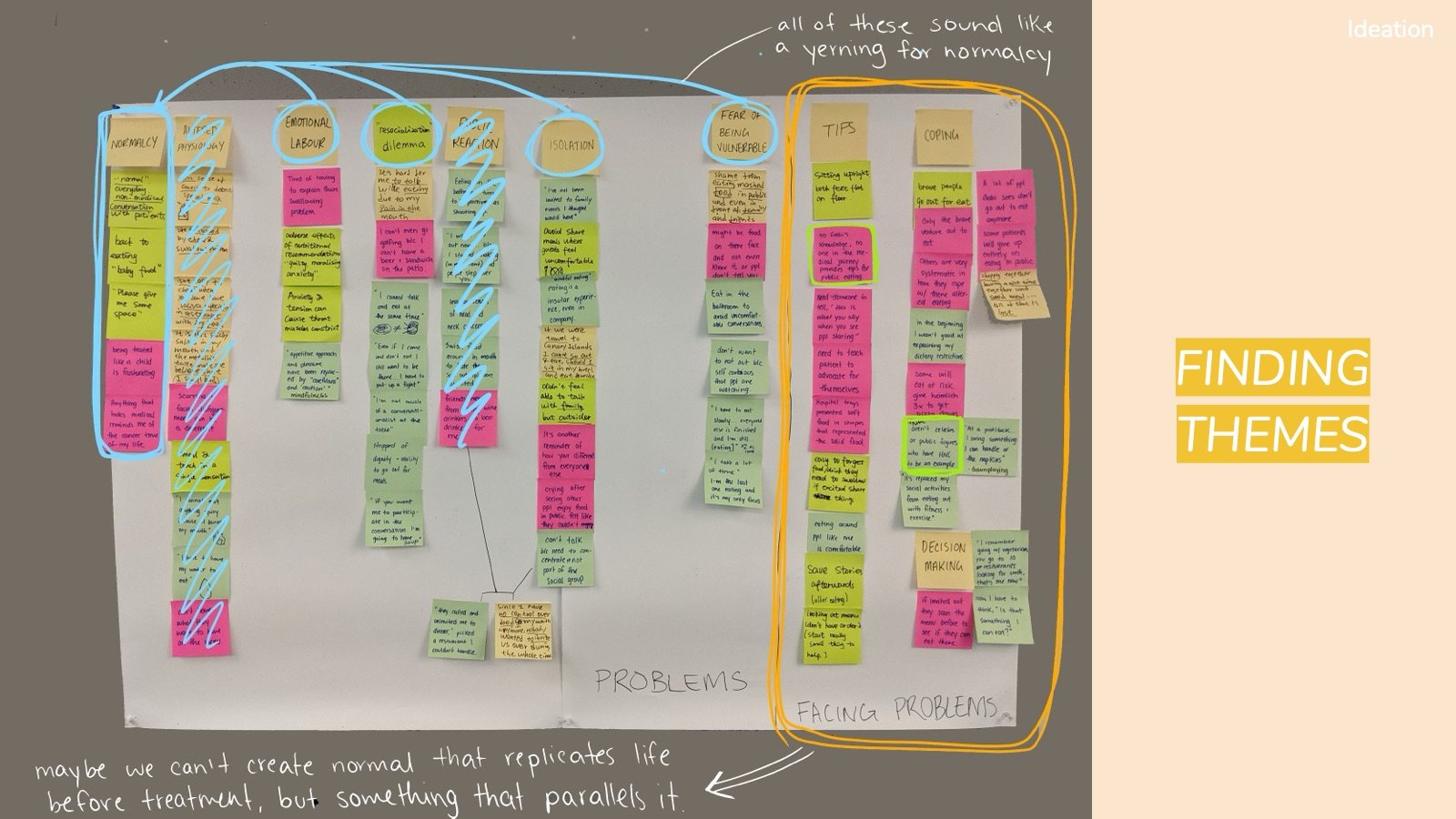
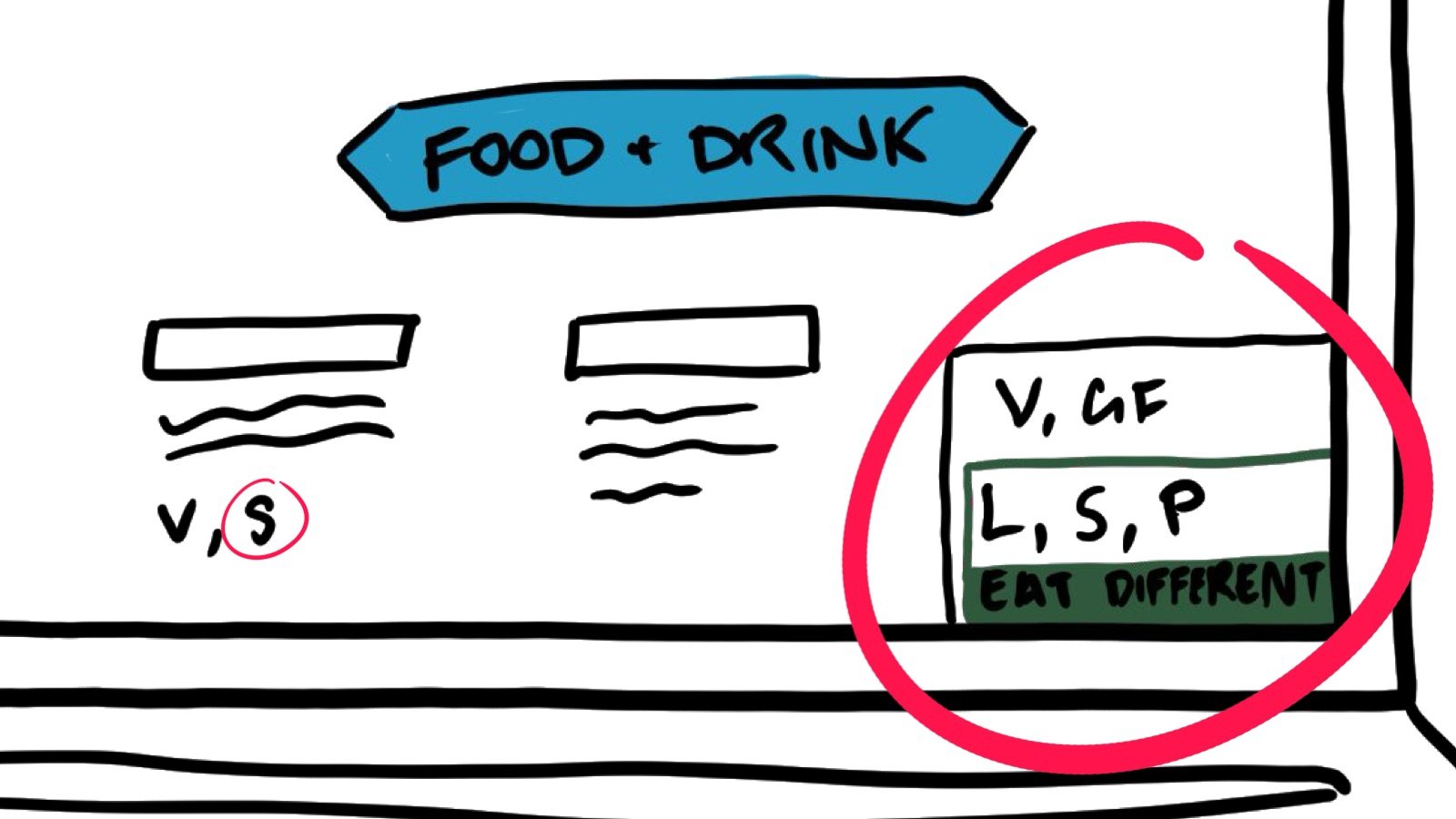
In one Design for Health course, I connected students with speech-language pathologist Dr. Gabriela Constantinescu and several people living with dysphagia after head and neck cancer. Junqi Wang, Yuchen Fu and Julie Kuhn designed Eat Different, later piloted as Eat Easy, a way for restaurants to offer and clearly mark easy-to-swallow meals, so eating out could feel social again instead of isolating.
Julie carried it forward as a health research assistant at the University of Alberta, interviewing people with swallowing difficulties, clinicians, chefs and restaurant owners, and securing a restaurant pilot. The menus were covered by Global News. The work paused during the pandemic, but it shows what happens when students design with real patients and clinicians.

Think global, act local
In my intermediate industrial design course, the UN Sustainable Development Goals give students a research starting point, and then I send them out to talk to the people a problem actually affects. Projects have ranged from colour-coded waste sorting for campus restaurants to a booth that lets people held at the Edmonton Remand Centre safely communicate with the outside world. The University of Alberta wrote about the approach in 2022.