Explorations
Research and side projects: ideas I chased outside a product roadmap, from a design thesis to a printer that tells your fortune.
Side project · AI and hardware
Houracle
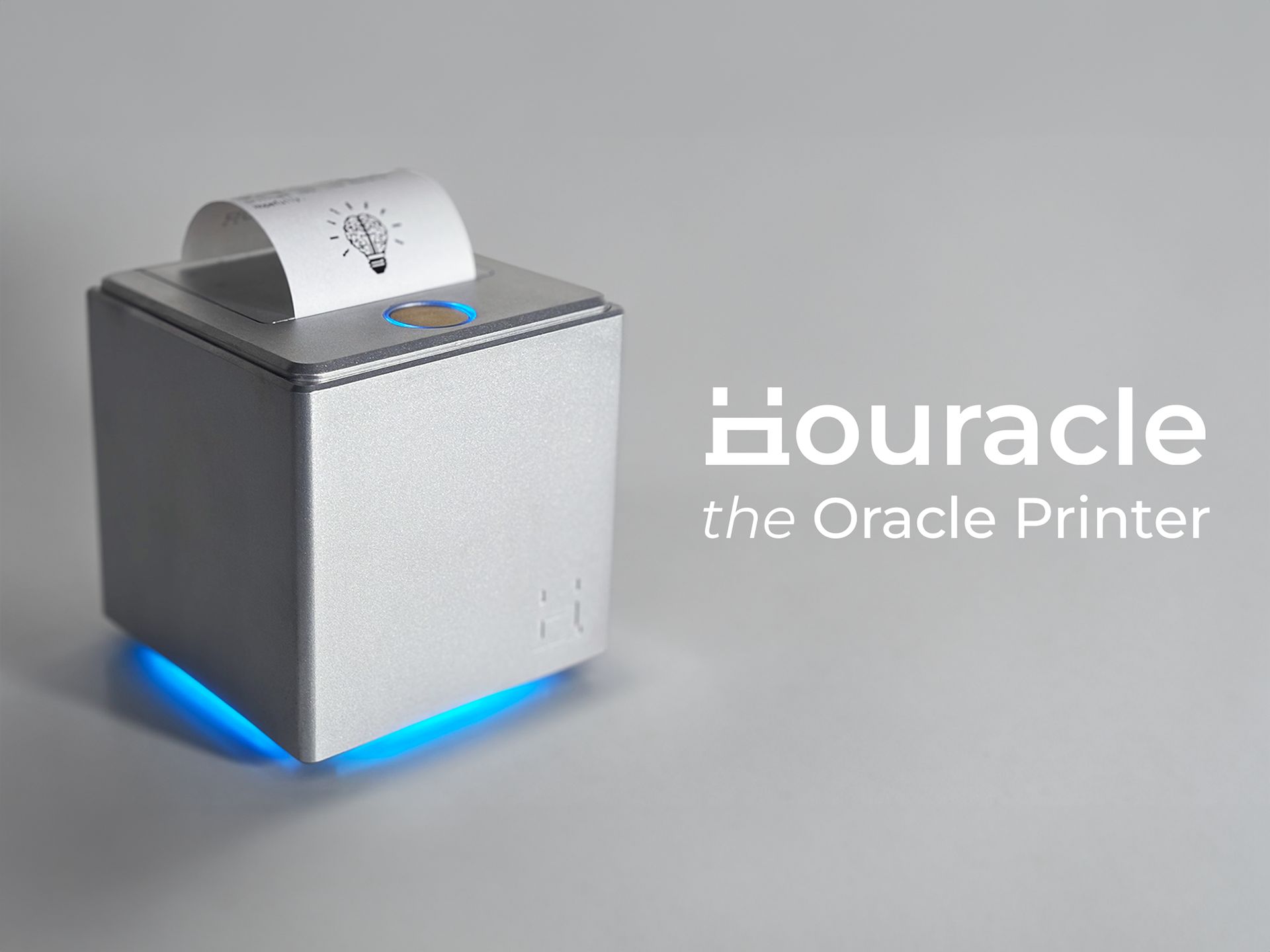
A one-button oracle printer, made with Dylan Scott and Jason Palm. Press it and it prints a fortune, fact, joke or riddle tuned to that exact moment, generated by AI and curated by us. No app, no screen, just a small printed reset.


One button, no screen
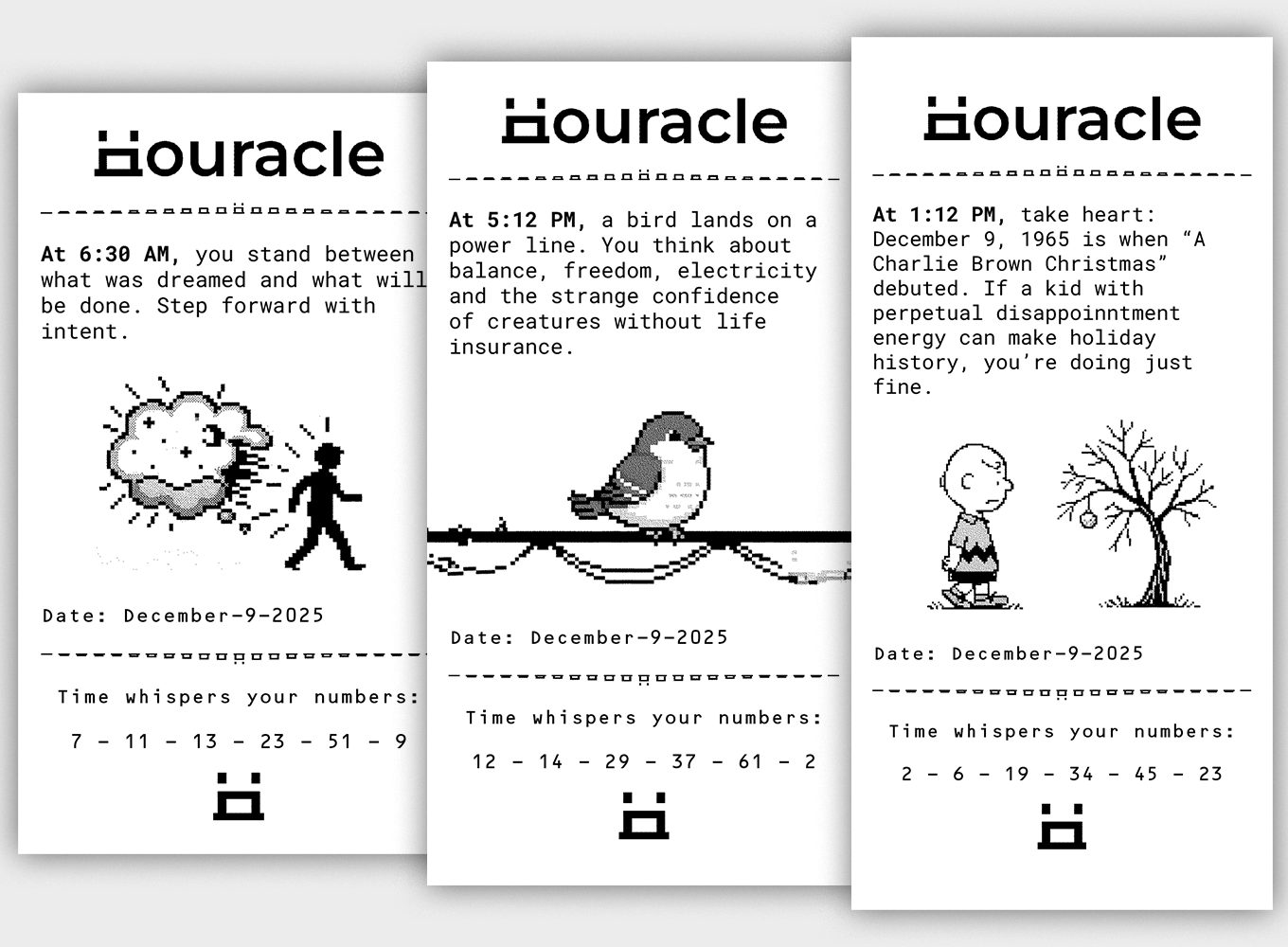
The whole interface is a single press. A gold button with an LED ring, a hidden paper exit and a base that glows in your colour. The sound and motion of the print are the feedback.
Designing the print
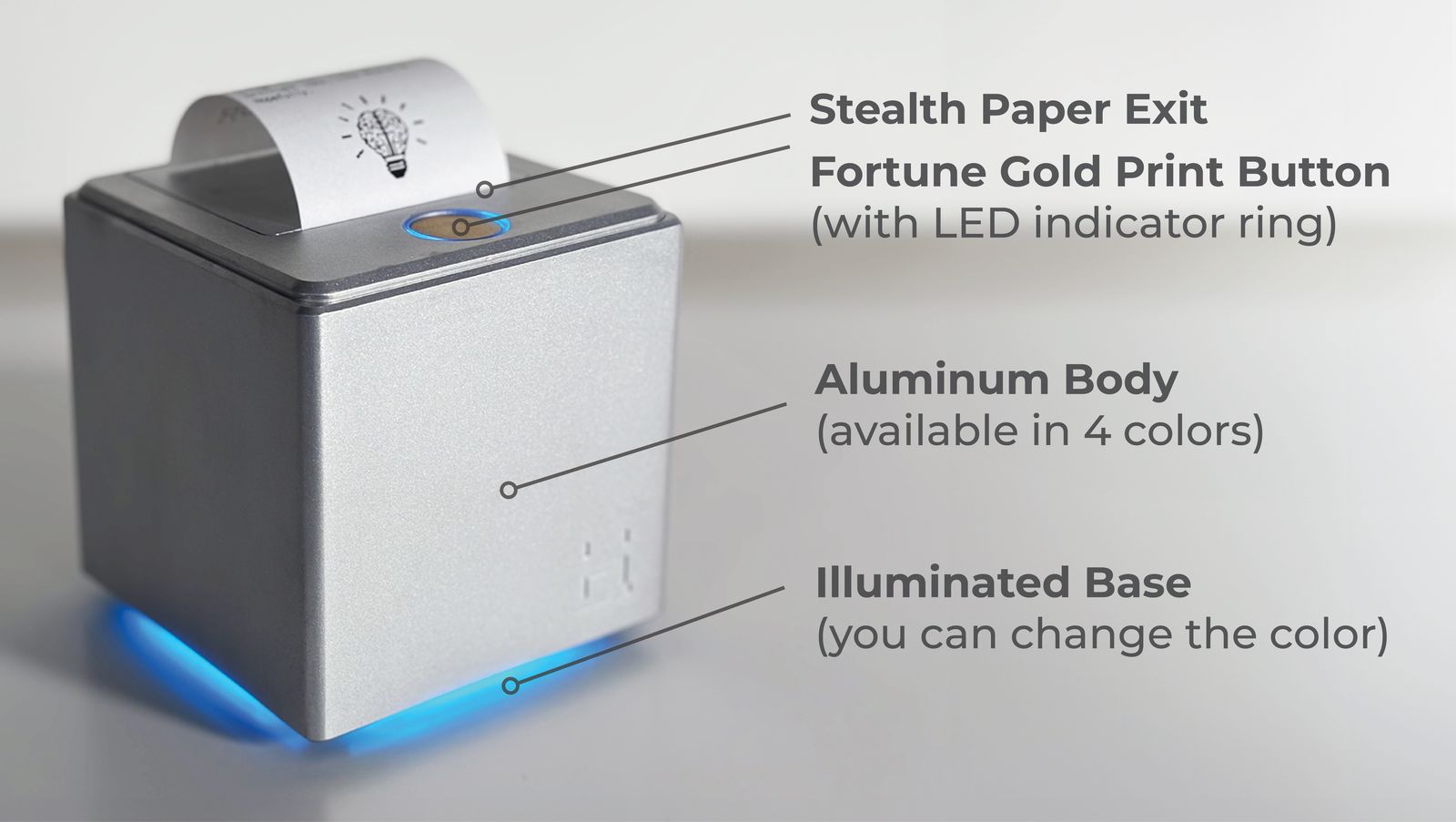
The slip is the product. Each one carries the exact time, an original fact, fortune, joke or riddle, a drawing, and lucky numbers whispered by that moment. Riddle answers print upside down so they don’t spoil the surprise.
Exploring the form
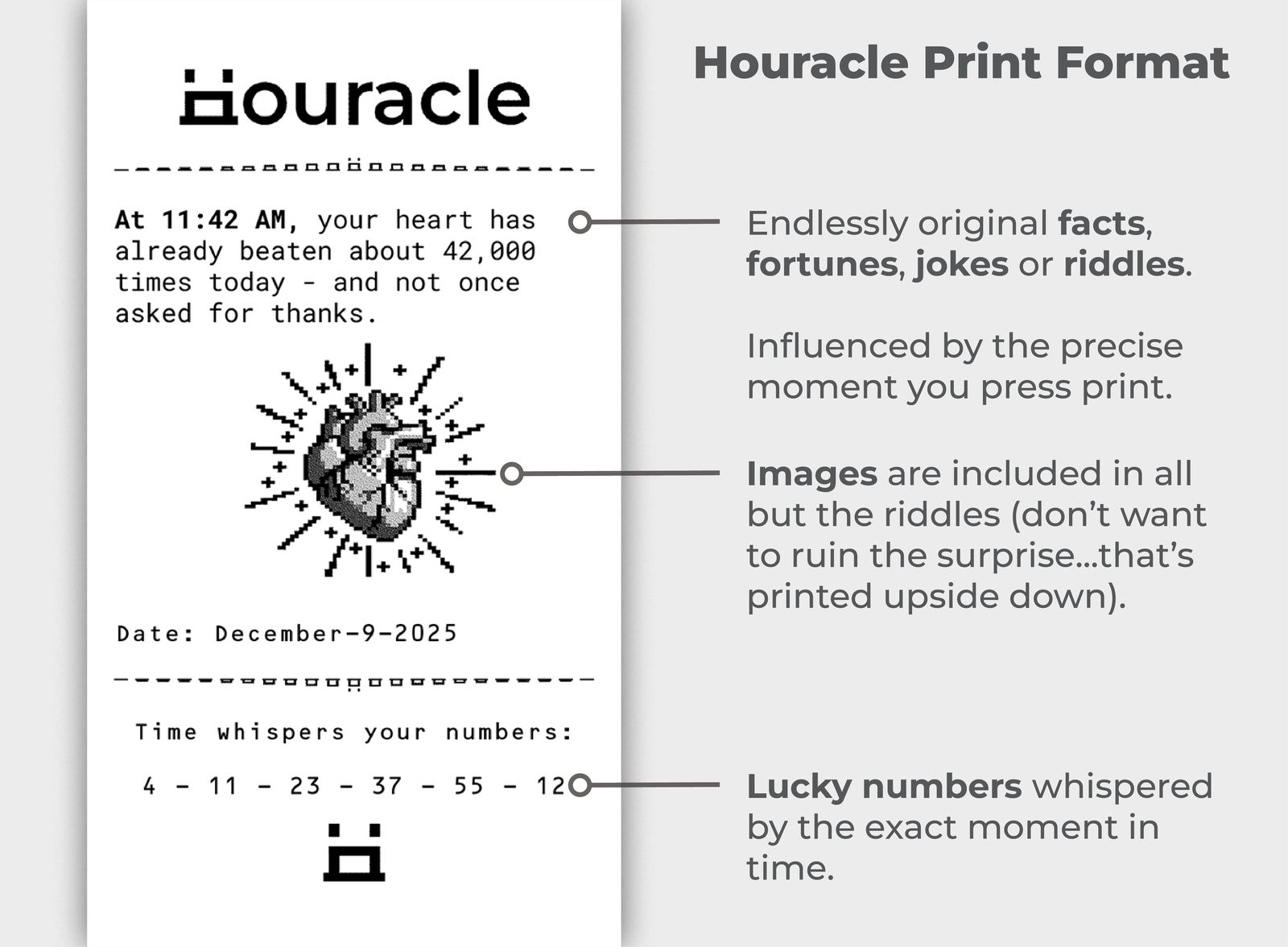
Earlier, we explored a desk version with an e-ink display and a slider, in several shells, before landing on the single-button cube.
An identity with a face
The “H” mark doubles as a character, so the product feels like it is talking to you. Its shape also echoes the device: the print emerges from the H’s negative space, the way a slip rises from the top of the cube.
That character carried the Kickstarter video, the campaign and our social posts.

Small moments of delight
Years of health product work showed us that people value self-care but rarely have time for it. Houracle started as a side project at True Angle to offer a lighter reset: a microbreak that brings back the surprise of being a kid. The first version, an e-ink clock with five modes (fortune, fact, joke, riddle and surprise), was featured by Yanko Design. When component costs, tariffs and supply chains shifted, we simplified it into the screenless cube, with the same intent.
I led concept design, interaction and UX, the UI of the e-ink version, industrial design direction and the design of the print. We launched on Kickstarter, then cancelled partway through because of outside factors, with no pledges processed. I’m still proud of the curiosity and delight it created.
Master of Design thesis · Bespoke eyewear
Dispatch
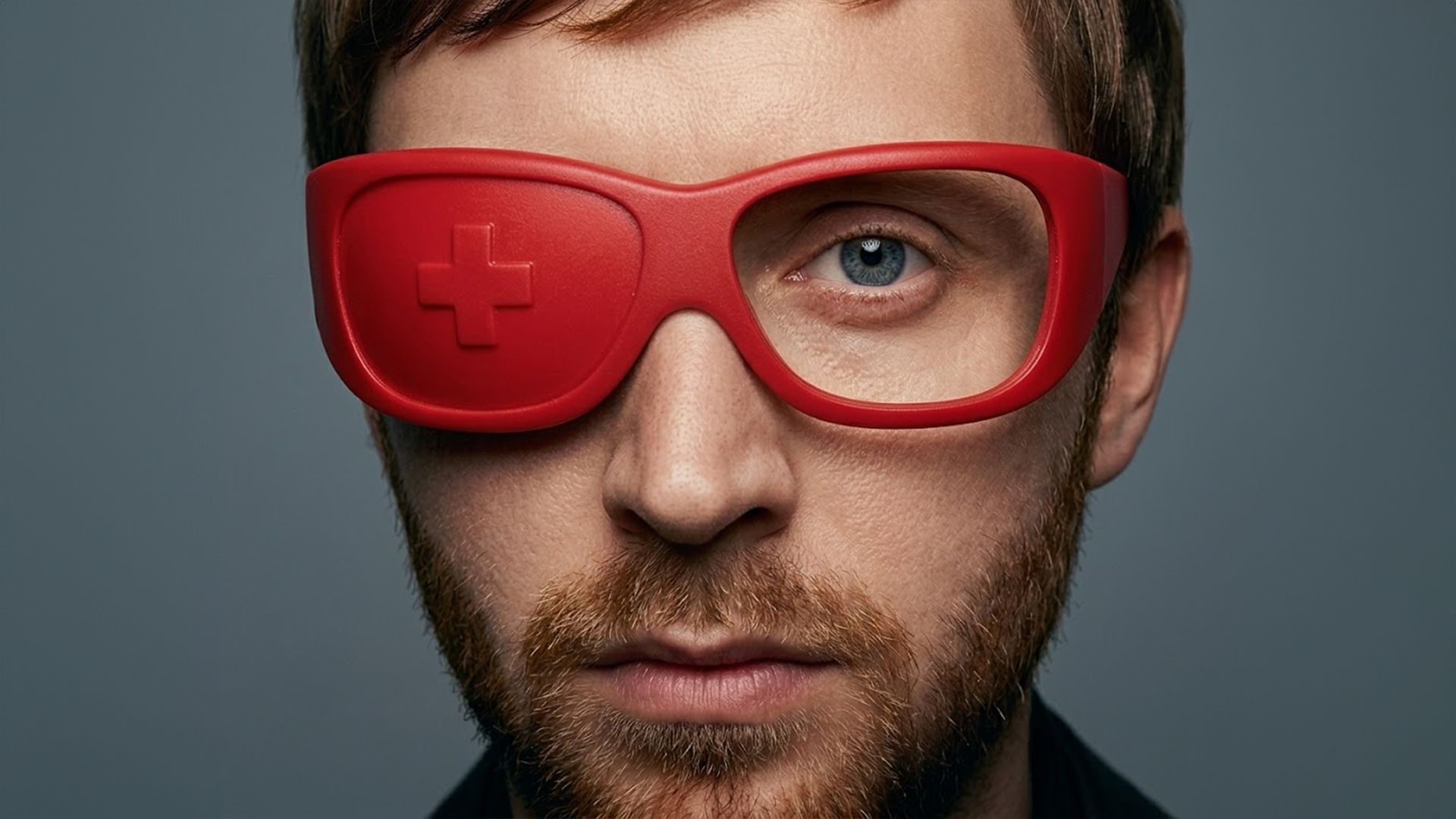
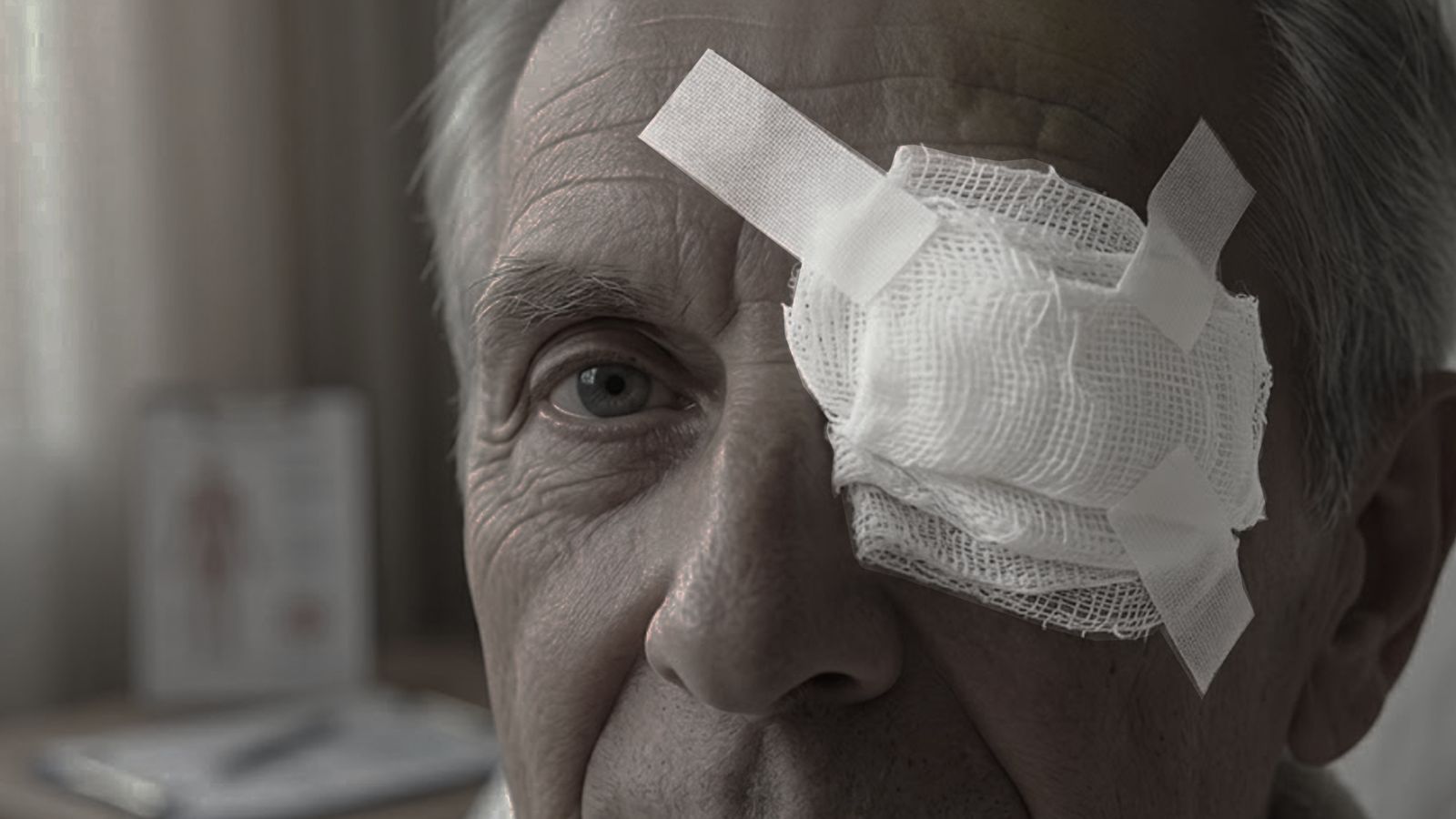
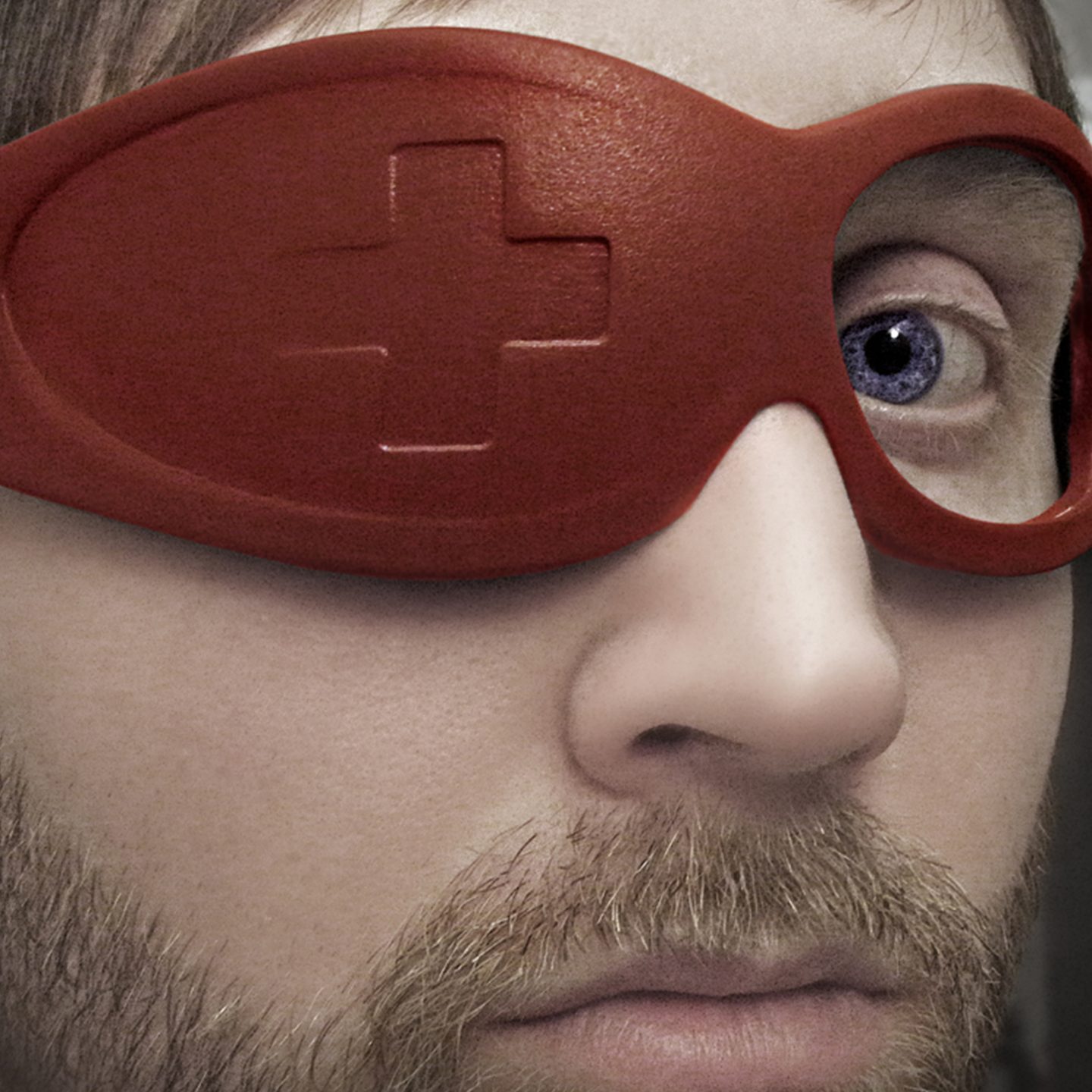
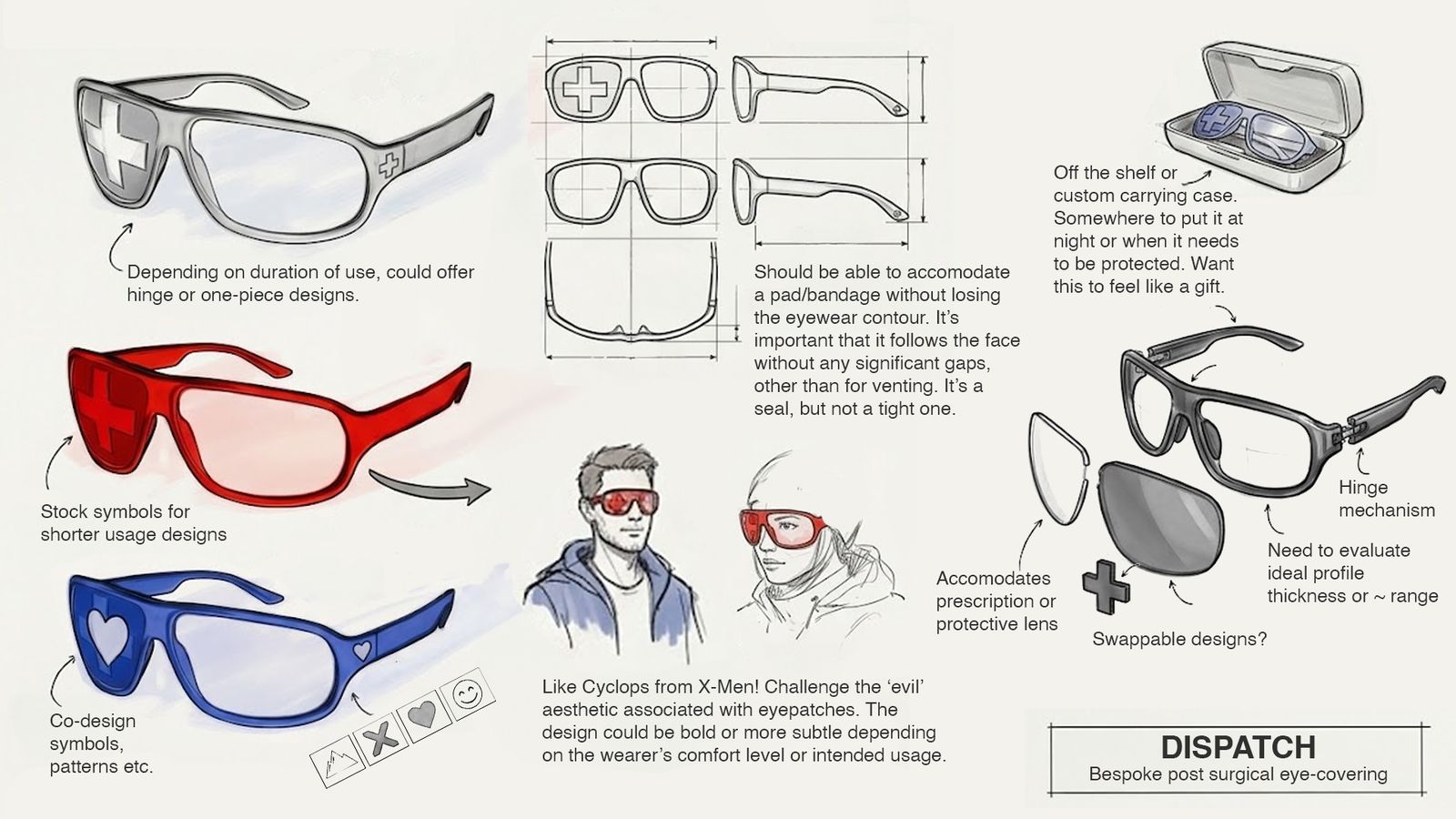
Post-surgery eye coverings are usually clinical and disposable. My Master of Design thesis used 3D scanning and printing to make custom-fit eyewear that treats coverage as self-expression rather than concealment.
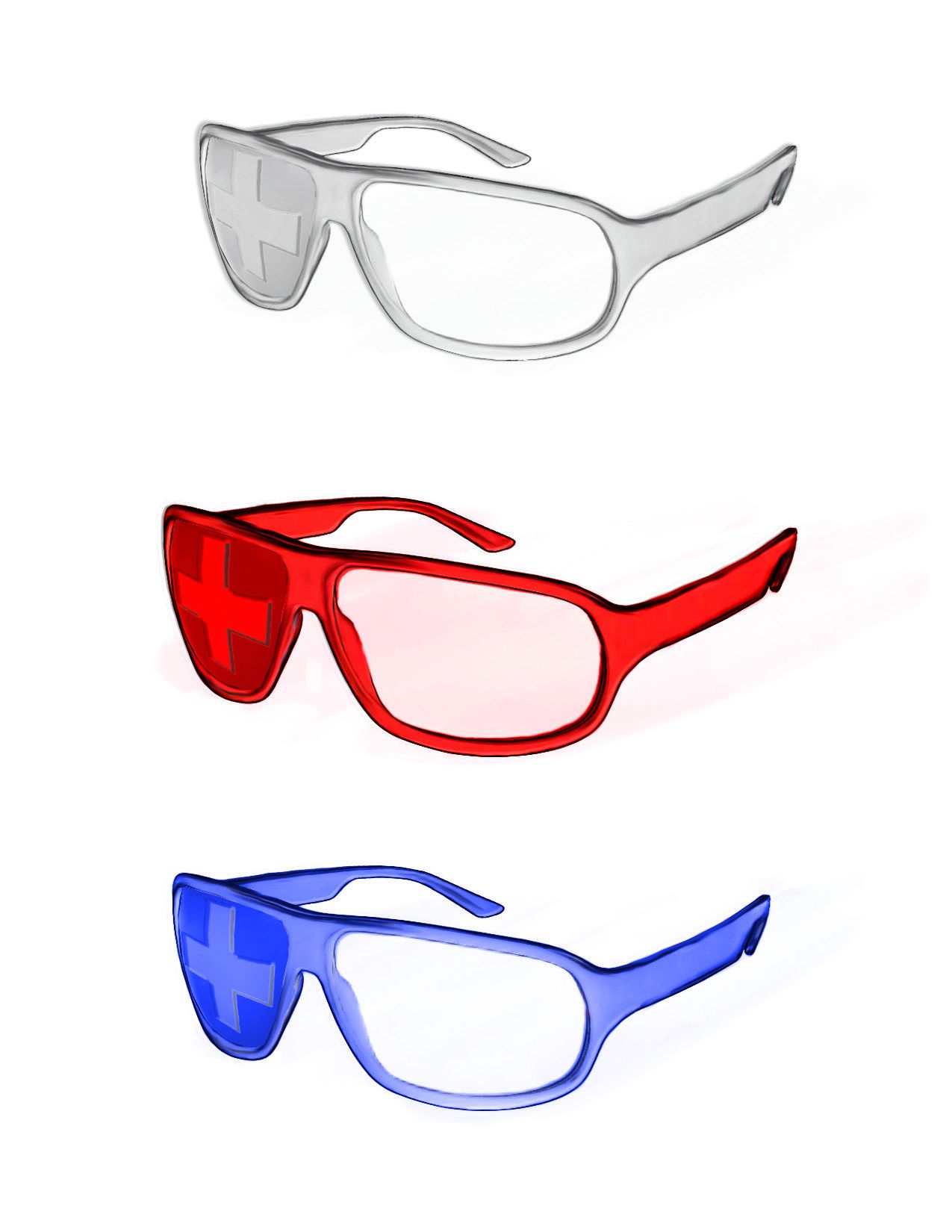
Ideation
Frames, covers and lenses explored on paper before anything was modelled.
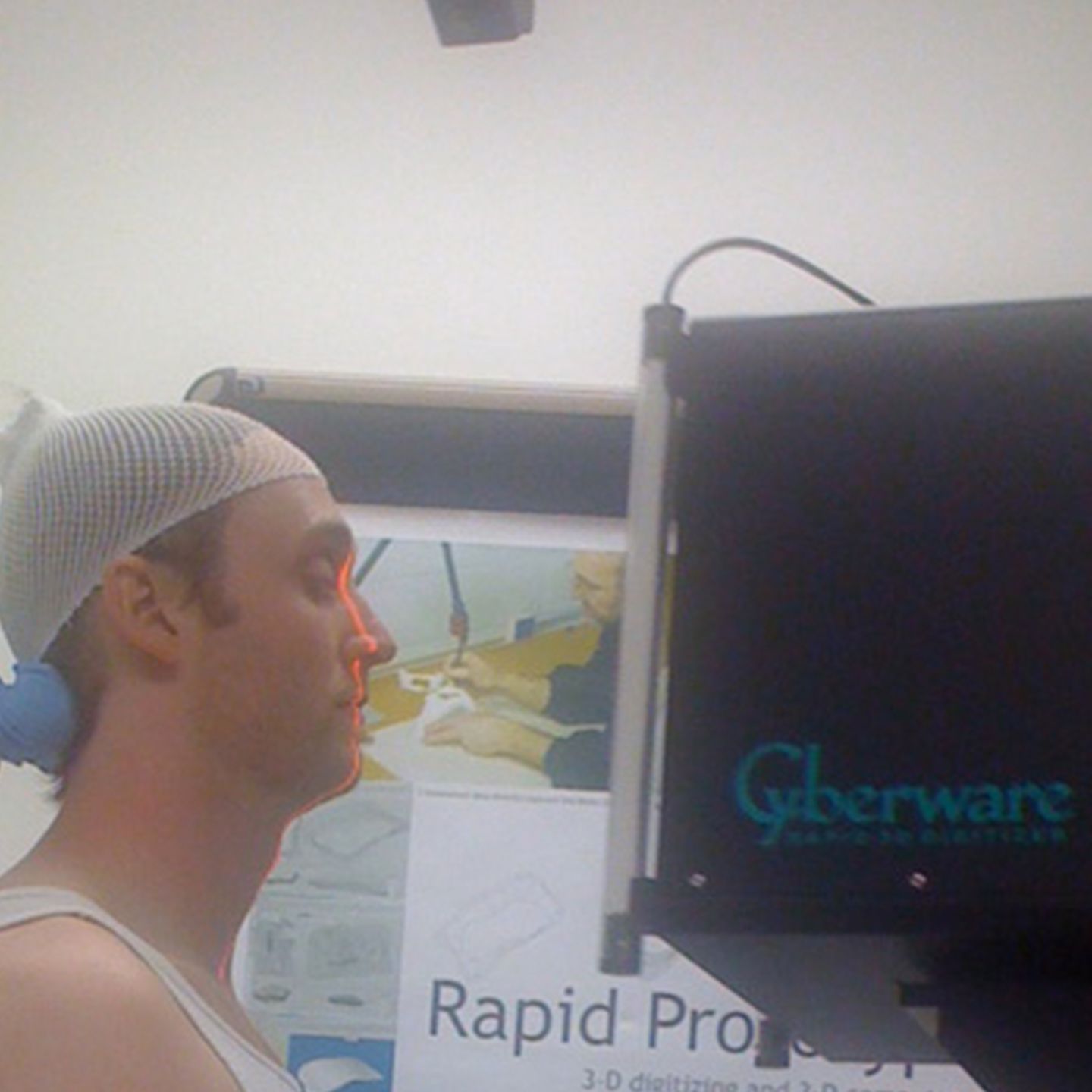
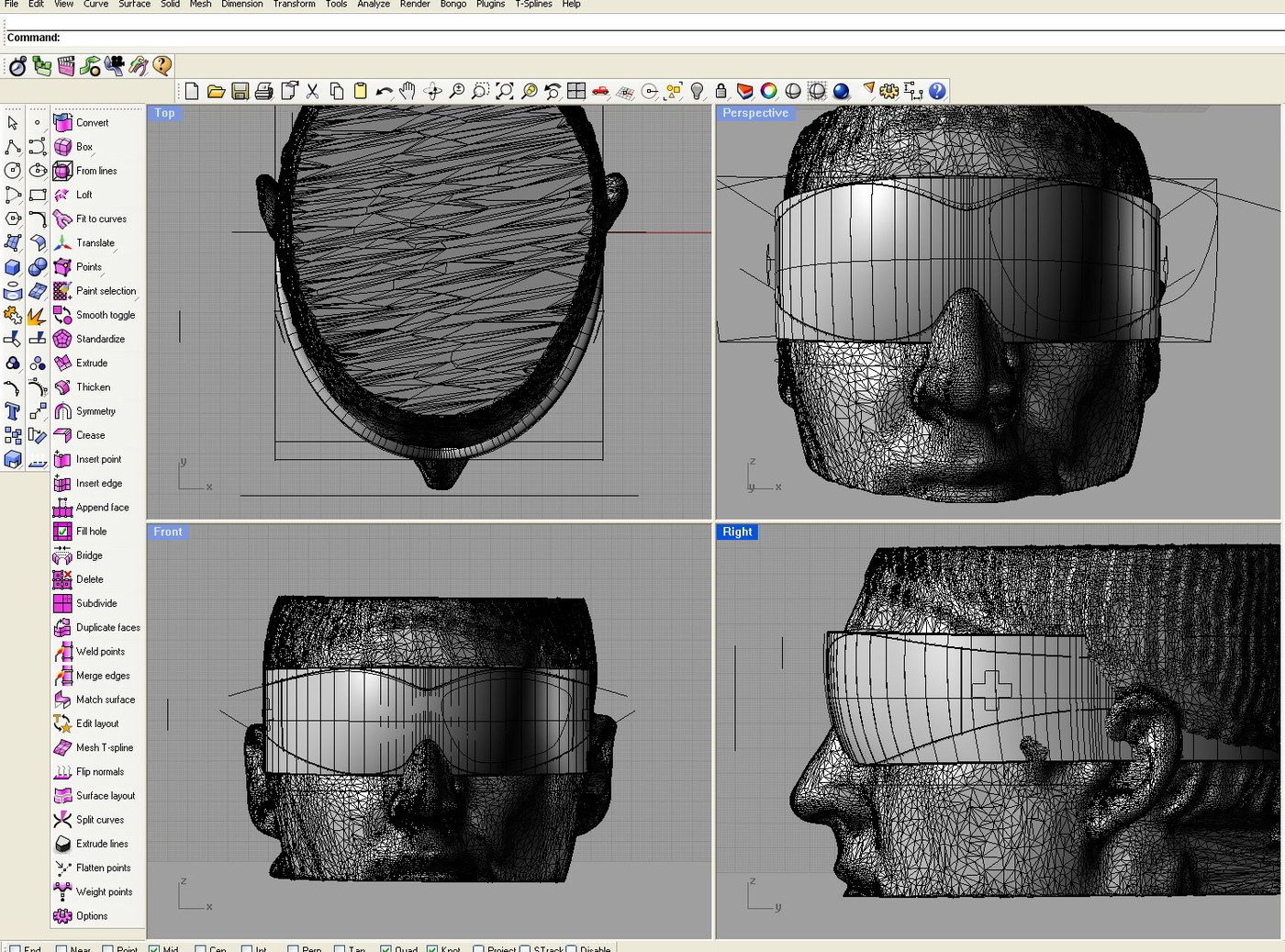
Capture and model
A 3D scan of the wearer’s head becomes the base the frame is modelled around, so the fit is exact.
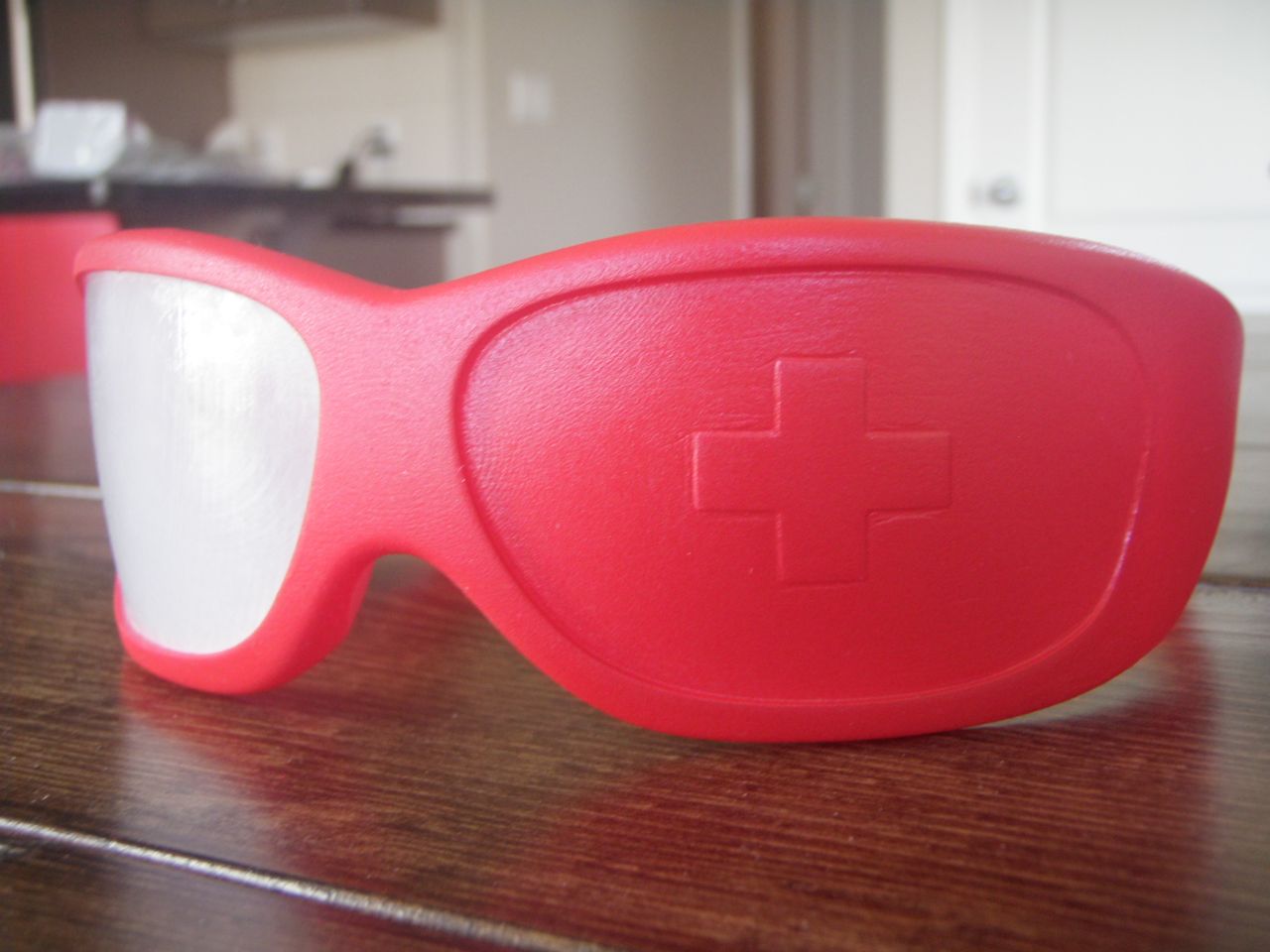
Prototype
Printed, fitted and worn.
Beyond eyewear
I applied the same scan, model and print process to concepts for a prosthetic leg and a hearing aid: devices people are usually expected to hide, redesigned as something they would choose to show.
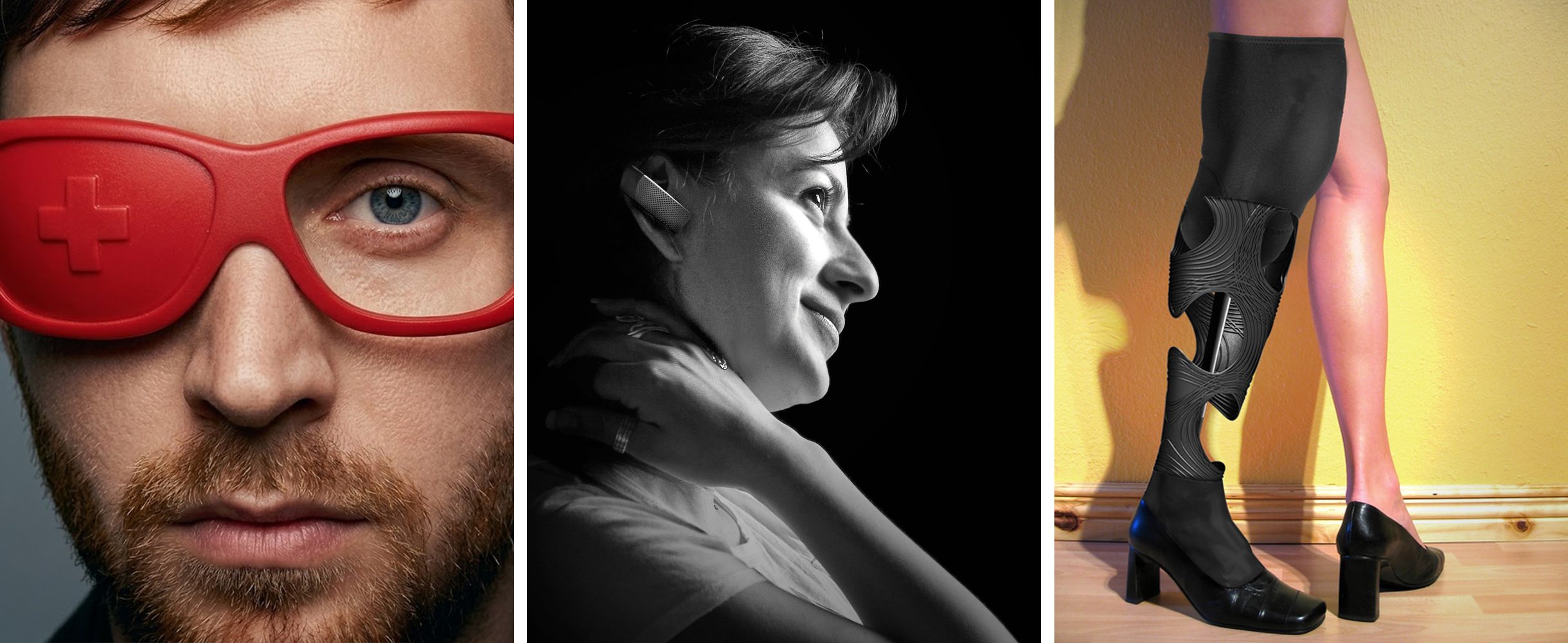
Removing the disguise
Medical devices are usually designed to disappear. My thesis argued for the opposite: a customizable workflow borrowed from medical modelling lets people take part in designing the things they wear every day. That turns coverage into self-expression, and anxiety about how others see you into confidence.